

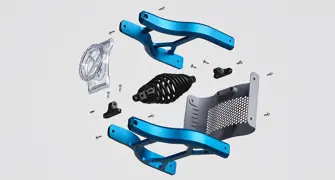
TPU Elastomer
TPU (thermoplastic polyurethane) is a versatile material as it offers flexibility, durability, and resistance to abrasion and chemicals
Protolabs TPU Capabilities


Manufacturing with TPU
| TPU parts can be produced using various manufacturing processes. The ideal production method is determined by quantity needed, geometry, and the desired properties of your part. Some common methods include: |
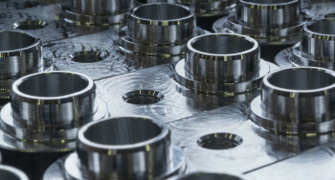
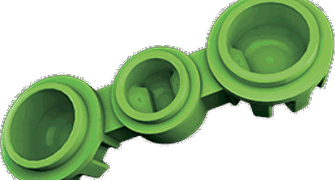
Injection MouldingThis is the smart way to go if you need production quantities of your TPU part, using one of the two Pearlthane resins (Pearlthane 11T85, Pearlthane 11T95P) mentioned earlier. |
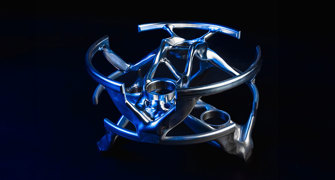
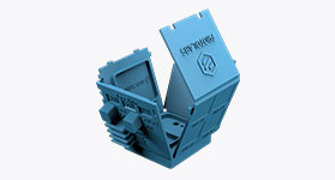
3D PrintingUsing 3D printing offers the chance to prototype parts without paying for tooling. Once you have a part that satisfies your requirements for form, fit, and function you can move on to higher quantities, which are often handled using injection moulding. 3D printing is also available for low-volume production. |
Advantages and Disadvantages of TPU
Advantages of TPU
|
Disadvantages of TPU
|
Applications of ABS
| TPU’s balance of flexibility, durability, chemical resistance, and comfort makes it a versatile choice across industrial, medical, and consumer products. It bridges the gap between rigid plastics and soft rubbers, enabling both functional and ergonomic designs. |
| Industry | Applications | Why TPU is Suitable |
|---|---|---|
| Automotive | Flexible couplings, gaskets and seals, hydraulic and fuel hoses, protective cable sleeves, tubing for fluid and air systems | High elasticity for tight seals, abrasion and wear resistance, oil, grease and chemical resistance, flexibility and kink resistance |
| Medical | Catheters, flexible connectors, medical-grade tubing, seals in pumps, syringes and valves | Biocompatibility (medical grades), hydrolysis and sterilization resistance, transparent grades for flow visibility, consistent performance under fluid exposure |
| Consumer / Wearables | Sports bands, fitness trackers, smartwatch straps, shoe soles and midsoles, overmolded grips for tools and equipment | Comfortable for skin contact, sweat and abrasion resistance, energy absorption and rebound, soft-touch slip-resistant surface |
| Industrial | Pneumatic hoses, fluid transfer tubing, seals in pumps and valves, cable sleeves for equipment protection | High tear resistance, long-term durability under mechanical stress, chemical resistance, flexible yet strong in harsh condition |
Comparing Materials Similar to TPU
| There are several materials that are similar to TPU in terms of their properties and applications. These materials are commonly used for their elastomeric properties, but they each have distinct characteristics: |
| Material | Flexibility | Durability | Temperature Range | Chemical Resistance | Applications | Advantages | Disadvantages |
|---|---|---|---|---|---|---|---|
| COPE | Moderate to high | Excellent tensile strength | Moderate to good (-40°C to 120°C) | Good to excellent | Automotive parts, electric/electronic applications | High elasticity, excellent mechanical properties | Comparatively less flexible than TPU |
| Liquid Silicone Rubber | Very high | Excellent | Wide (-50°C to 250°C) | Excellent | Medical devices, baby products | Stability over a wide temperature range | Higher cost, more complex processing |
| PEBA | High | High durability | Wide (-40°C to 140°C) | Good | Sport equipment, medical devices, consumer goods | Excellent flexibility and impact resistance | More expensive than TPU, TPO |
| SBC | High | Moderate | Moderate | Limited | Packaging, personal care products, toys | Soft touch | Limited to low-stress applications |
| Silicone | Very high | Excellent | wide (-60°C to 180°C) | Excellent | Medical devices, kitchenware, electronics | Heat and cold resistance, flexibility | Higher cost, lower tensile strength |
| TPO | Moderate | Moderate, prone to degradation over time | Moderate (-40°C to 70°C) | Moderate to good | Automotive, roofing, door panels | Cost-effective and durable | Lower end of temperature- and chemical- resistance |
| TPU | High | Excellent, abrasion-resistant | Moderate (-40°C to 80°C) | Good | Automotive, footwear, sports equipment | Abrasion- and tear- resistance, flexibility | Limited temperature range compared to silicone |
| TPV | Moderate to high | Good, with improved chemical resistance | Wide (-60°C to 135°C) | Good to excellent | Automotive sealing, gaskets, construction | Combines elasticity with heat resistance | Typically, more expensive than TPO |
Key Takeaways
|


