
What Is Ductility? Material Selection for Engineers
Need a material that bends but doesn't break? Discover how ductility shapes design and performance

Ductility is how much a material can deform before it breaks. Think of bending a paperclip into different shapes compared to snapping a dry pasta stick in half. The paperclip stretches and twists without failing, while the pasta fractures almost immediately.
Ductility determines whether a part bends or breaks when it matters most. From crash-resistant car panels to flexible medical devices, this property affects safety, performance, and manufacturing options.
What Is Ductility?
Ductility is the ability of a material to stretch, bend, or elongate without breaking. Metals like copper, aluminium, and gold are known for high ductility and can be drawn into wires or stretched a long way before they fracture.
Engineers usually measure ductility by:
- Percentage elongation: How much longer a material becomes before breaking. If it goes from 100mm to 150mm, that’s 50% elongation.
- Percentage reduction in area: How much thinner the specimen gets at the breaking point.
It's helpful to understand ductility alongside related properties to get the complete picture of how a material will perform. Toughness is the total energy a material can absorb before failure, and malleability is the ability to deform under compression (like hammering into sheet). On a stress–strain curve, ductility shows up in the plastic region—the stretch beyond the yield strength where permanent deformation happens.
Materials can behave in either a ductile or brittle way. Ductile materials show warning signs like necking (when the material thins to form a visible 'neck') before they break, which is why they’re valued in safety‑critical designs. Brittle materials skip that stage and snap suddenly.
Typical ductility ranges
- Many polymers can exceed 200% elongation
- Ductile metals such as copper and aluminium typically range between 20–60%
- Brittle metals may show less than 5%
- Ceramics and glass often have elongation under 1%

Importance of Ductility in Manufacturing
Understanding how ductility impacts the final part helps engineers make better material choices.
- Process capability: Ductile metals can be bent, stamped, or cut into complex shapes without cracking. Brittle metals, on the other hand, may snap or chip when put through the same processes. Similarly, ductile plastics can be moulded into hinges or flexible parts that keep working after repeated use, while brittle plastics are much more likely to crack.
- Safety: Ductile parts bend or stretch before breaking, giving visible warning where sudden failure could be dangerous. This behaviour helps engineers predict how parts act under stress.
- Design trade-offs: Too much ductility and parts may bend when they should stay stiff. Too little and they can snap without warning. The right balance depends on whether you need rigidity, impact resistance, or controlled flexibility.
- Manufacturing tolerance: Ductile materials handle small process variations and tool wear without cracking. Brittle ones may break from even slight deviations in force or positioning.
Ductility Across Manufacturing Technologies
Ductility plays a role in every major manufacturing process, though in slightly different ways:
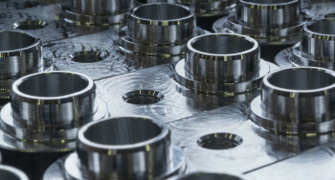
- CNC Machining: Metals with high ductility are easier to cut and form without cracking.
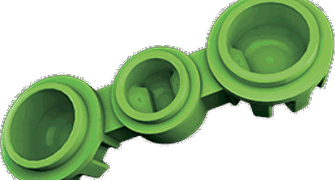
- Injection Moulding: Plastics rely on ductility for features like living hinges and flexible components.
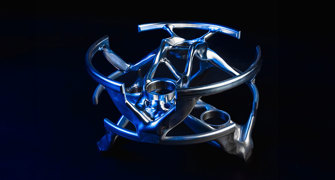
- 3D Printing: In 3D printing, ductility helps parts survive repeated flexing.
How Ductility Is Tested
The standard test is a tensile test (ASTM E8 for metals, ASTM D638 for plastics), where a specimen is pulled until it fractures. Engineers measure the force and the elongation during the test to calculate properties such as yield strength, tensile strength, and ductility. Other methods include bend tests and impact tests, which help assess ductility under different loading conditions.
Example: If a steel specimen starts at 50mm and breaks at 62mm: Percentage elongation = ((62 - 50) / 50) × 100 = 24%
It's important to note that results depend on factors like temperature, strain rate (typically 0.5-50 mm/min for standard tests), and sample preparation. That means the same material can behave differently depending on how and where it’s used. Engineers often use ductility data as inputs in Finite Element Analysis (FEA) simulations and when setting safety factors.
Factors Affecting Ductility
Several key factors influence how ductile a material will be in your specific application, from external conditions like temperature, to internal factors such as composition and processing. Understanding these drivers helps you predict real-world outcomes:
Temperature
Most materials become more ductile at higher temperatures, which is why hot forming processes are common. Cold temperatures often make materials brittle.
Material Composition
Pure metals are often very ductile, but mixing in other elements (alloys) can reduce that. With plastics, additives can make them either more flexible or more rigid.
Processing Methods
Cold working makes metals harder but less ductile, while heat treatment can bring ductility back. For 3D printing, the way layers are laid down changes how much a part can flex before it breaks.
Microstructure (grain size), how quickly the load is applied (strain rate), and even the environment (like corrosion) can also make a difference.
Comparison of Ductility Across Materials
Different materials available through Protolabs offer varying levels of ductility to match specific applications:
|
Technology |
Material |
Elongation |
Applications |
Notes |
|
Aluminium 6061 |
12-18% |
Aerospace, automotive |
Good ductility/strength balance |
|
|
|
Stainless Steel 304 |
40-60% |
Food processing, structural |
Highly ductile and formable |
|
|
Titanium Ti-6Al-4V |
10-14% |
Medical, aerospace |
Strong but less ductile |
|
|
Cast Iron |
0-2% |
Engine blocks |
Strong but brittle |
|
Polypropylene |
200-600% |
Living hinges, packaging |
Excellent ductility |
|
|
|
TPU |
300-600% |
Seals, flexible parts |
Elastic and resilient |
|
|
Nylon PA 6/6 |
40-80% |
Gears, bushings |
Tough and ductile |
|
|
Polycarbonate |
80–120% |
Safety equipment |
Impact resistant |
|
|
Acrylic (PMMA) |
2-5% |
Optical components |
Transparent but brittle |
|
ABS |
10-30% |
Prototypes, housings |
Good toughness |
|
|
|
Nylon 12 |
20-50% |
End-use parts |
Excellent balance |
|
|
TPU |
200-500% |
Flexible parts |
Very high elongation |
|
|
PLA |
6-10% |
Prototypes |
Stiff but brittle |
Applications That Rely on High Ductility
Certain industries and applications depend on high ductility because it can impact safety, reliability, and product life.
- Automotive: Ductile metals in crumple zones absorb impact energy by bending rather than shattering.
- Aerospace: Ductile alloys prevent sudden fracture in critical components under cyclic loading, like in turbine blades or fuselage joints where a brittle crack could be catastrophic.
- Medical: Ductile plastics like TPU allow flexible tubing that withstands repeated bending.
- Consumer Electronics and Robotics: Ductile plastics enable snap-fit joints and living hinges that flex thousands of times.
Design Considerations Based on Ductility
Understanding how ductility affects part performance helps engineers make smarter design decisions:
- Design intent: Decide whether it’s acceptable for your part to bend. Ductile materials may deform permanently under load.
- Trade-offs: Balance ductility with stiffness and strength. Very ductile materials can bend too much, while brittle ones may resist bending but snap suddenly.
- Manufacturing impact: Ductile metals are easier to bend and form, but they can be harder to machine because they work-harden. In 3D printing, ductility depends on layer orientation (anisotropy).
- Avoid sharp corners: Rounded corners spread stress more evenly and reduce crack risks.
- Plan for deformation: Think ahead about where bending or stretching could occur, especially in structural areas.
- Match materials to joints: When joining ductile and brittle materials, mechanical fasteners like bolts or screws work better than welding.
Further Reading
Looking for more guidance on picking the right material? Check out these resources:
- Selecting the Right Material for 3D Printing: A practical guide to choosing 3D printing materials based on what your part needs to do.
- Design Tips: Quick, actionable best practices for designing parts across different manufacturing processes.
- CNC Machining Materials Guide: A focused look at material options for CNC machining.
Get Started with Your Next Project
Need a material that bends without breaking? Upload your design to get a free, instant quote.
Frequently Asked Questions
What's the difference between ductility and toughness?
expand_less expand_moreDuctility measures deformation before breaking. Toughness measures total energy absorbed before fracture.
What's the difference between ductility and malleability?
expand_less expand_moreDuctility is the ability to stretch under tension, while malleability is the ability to deform under compression.
Does ductility change over time?
expand_less expand_moreYes. Fatigue, corrosion, and other environmental effects can reduce ductility during a part's lifetime.
Can 3D-printed parts be ductile?
expand_less expand_moreYes. Nylon 12 and TPU both offer excellent ductility, while PLA is relatively brittle. Print orientation also affects results.
Is high ductility always necessary?
expand_less expand_moreNo. Some applications need stiffness or wear resistance more than ductility. It depends on the application.
Is there a simple way to test ductility without a full lab?
expand_less expand_moreA basic bend test or even stretching a thin sample can give a quick sense of ductility, though precise values require standard tensile testing.


