
Guide to Gas Welding
A quick guide to what gas welding is, how it works, and where it’s used in manufacturing today.

What Is Gas Welding?
Gas welding uses a high-temperature flame, created by burning fuel gas with oxygen, to melt and join metals. The most widely used form is oxyacetylene welding, which burns acetylene with oxygen and is hot enough to melt steel. Adjusting the flame gives precise heat control, making it useful for thin metals or detailed work.
The welder manages both heat and filler material by hand, allowing accuracy but requiring skill. While it’s no longer the leading choice for high‑volume production, it remains valuable for repairs, prototyping, and field work.
How Gas Welding Works
Gas welding starts when oxygen and acetylene (or another fuel gas) mix in a torch and ignite. The flame can reach over 3,000°C, which is hot enough to melt steel. The welder directs the flame at the joint while adding a filler rod.
The flame has three zones: an inner cone of unburned gases, a reducing zone where most welding happens, and an outer envelope that shields and preheats. Adjusting oxygen and fuel creates three flame types: neutral (for most steels), carburising (cast iron, some non‑ferrous metals), and oxidising (brass, bronze).
To control heat, the torch is moved in small circles or weaves (zigzag or loop‑like motions to spread heat). Filler rods usually match the base metal.

Gas Welding in Manufacturing
Gas welding has a modest but useful role in modern manufacturing. It isn’t usually part of high-volume production lines, but it’s still beneficial in situations where portability and control are priorities. You’ll often see it in sheet metal fabrication, prototype development, and repair work. It also complements processes like CNC machining, but modern CNC capabilities can also allow for complex geometries to be machined as single pieces, eliminating welding altogether.
Common Applications
Gas welding is used across several industries, from automotive repairs and prototyping to industrial equipment maintenance. It shows up in a handful of practical scenarios:
- Sheet metal work: Handy for enclosures, ducts, and lightweight structures where strength matters more than looks.
- Repairs and maintenance: Its portability makes it a viable solution for fixing broken parts, especially on older equipment without spares.
- Custom assemblies: Used to build fixtures, jigs, or one‑off fabrications that might later be machined to final size.
- Prototypes: Lets engineers check fit and function before investing in injection moulding tooling or machining.
- Small batches: Cost-effective when you only need a few parts and want to avoid the setup time of automated welding.
Materials Used in Gas Welding
Gas welding can be used on several manufacturing metals, though some are easier than others:
- Mild steel: The simplest to weld with oxyacetylene, mild steel is reliable for most basic jobs.
- Stainless steel: Weldable but needs care to avoid warping and to keep its corrosion resistance.
- Aluminium: Tricky because it conducts heat quickly and forms a tough oxide layer. Special fluxes help, but TIG welding is often preferred.
- Cast iron: Can be welded with preheating and patience, though it's a slower process.
- Copper and brass: Both can be welded, but brass needs a slightly oxidising flame to stop zinc loss.
Filler rods are usually matched to the base metal—steel for steel, stainless for stainless, etc. Special rods exist for joining dissimilar metals, but success depends on the materials.
For more detail on different metals, check our guide to manufacturing metal parts.

Advantages of Gas Welding
For engineers, gas welding offers some practical advantages:
- Budget-friendly setup: Simple equipment keeps prototyping costs low, especially for small runs or repairs.
- Precision on thin metals: Flame control helps avoid burn‑through, which is useful when designing sheet metal parts under 3mm or working near heat‑sensitive areas.
- On-site flexibility: No power supply needed, so engineers can test or repair parts in the field.
- Gentle heating: Lower heat input reduces stress and cracking, which is helpful when working on older parts or evaluating repair strategies.
Limitations of Gas Welding
Despite its advantages, gas welding has a few limitations:
- Slow: Other processes like MIG or TIG create welds much faster.
- Poor scalability: Great for one-offs or small batches, but inefficient for larger production runs compared with automated options.
- Limited on thick materials: Anything beyond 6mm often needs multiple passes, which adds time and cost.
- Warping risk: The broad flame creates a large heat‑affected zone, which can distort thin sections or long welds unless carefully managed.
Alternatives to Gas Welding
Gas welding isn’t the only option. Engineers often compare it with other methods that offer different benefits, whether it’s speed, cleaner finishes, or better performance for specific materials.
Comparison Table: Welding Alternatives
| Method | How It Works | Best Used For |
|---|---|---|
| Arc welding | Uses electricity to create an arc that melts metals together. Includes methods like MIG, Stick, and TIG. | Large projects where speed matters more than fine control. |
| Ultrasonic welding | High-frequency vibrations bond plastics or thin metals without heat. | Injection moulding parts, electronics, and medical devices. |
| Laser welding | Focused laser beam melts metal at the joint with high accuracy. | Automotive and electronics, where precision and repeatability are key. |
| Friction stir welding | Rotating tool stirs and joins metals without melting them. | Aerospace and transport industries, requiring strong, reliable joints. |
| Brazing | Low-temperature filler metal flows between surfaces by capillary action. | Joining dissimilar metals, thin-to-thick sections, or when minimising heat input. |
| Soldering | Very low-temperature filler, mainly for electrical conductivity. | Electrical assemblies and hermetic seals. |
Beyond Welding
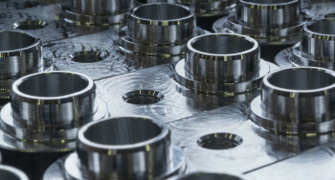
Welding isn’t the only way to join or build parts. In many cases, processes like CNC machining or metal 3D printing eliminate the need for traditional joinery altogether. By producing parts as a single piece, these methods simplify designs, reduce weak points, and cut assembly time.
Does Protolabs Offer Gas Welding?
While gas welding isn’t part of our standard offering, Protolabs can support similar needs through secondary services like ultrasonic welding, heat staking, and assembly. For custom welding requests, including TIG, reach out to [email protected].
Design for Welding
When designing for gas welding, it helps to think ahead in the CAD stage. A few things to keep in mind:
- Joint design: Butt joints give clean results with precise fit-up. Lap joints handle gaps better but can add stress. T- and corner joints can also be tricky and need careful torch angle and heat control to avoid weak spots or distortion.
- Torch access: Leave space for the torch to hit the joint at 45–60°. Tight corners or recesses are often impossible to weld.
- Welding symbols: Use standard symbols for joint type, weld size, and finishing to keep communication clear.
- Distortion control: Sequence matters. Work from the centre out or balance welds. Fixtures, jigs, and heat sinks help keep parts in place and reduce warping.
- Machining allowance: Plan extra stock for finishing. Most welds need grinding or CNC milling to hit final dimensions.
- Material prep: Design parts with weldability in mind, so avoid specifying coatings or finishes on areas that need to be welded, since these can weaken the joint.
Frequently Asked Questions
Is gas welding still used in industry?
expand_less expand_moreYes, though less than in the past. It’s mainly found in repair work, training, and niche manufacturing where portability and low cost are top priorities.
What metals can be welded with gas welding?
expand_less expand_moreCommon options include mild steel, stainless steel, aluminium (with flux), cast iron, copper, and brass.
How strong are gas welds compared to MIG or TIG?
expand_less expand_moreThey can be very strong, but quality depends heavily on operator skill. For consistent production, MIG or TIG is usually preferred.
What is the difference between gas welding and normal welding?
expand_less expand_more"Normal" welding usually refers to arc welding processes that use electricity to generate heat. Gas welding uses a flame from fuel gas and oxygen instead. Arc welding is faster and more common in production, while gas welding is slower but offers portability and control.
What are the two types of gas welding?
expand_less expand_moreThe two main types are oxyacetylene welding (the most common, using oxygen and acetylene) and oxyhydrogen welding (using oxygen and hydrogen for a cleaner flame, often in specialist applications).
Get Started
Ready to bring your project together? From welded assemblies to one-piece alternatives with CNC machining or 3D printing, we’ve got you covered. Upload your design for an instant quote and design analysis.


