
Tool Steel in Manufacturing
From cutting tools to moulds and dies, tool steels power the toughest jobs in modern manufacturing.

Tool steel is a group of carbon and alloy steels made to do one job very well: build tools that last.
It is often used for hand tools and machine dies. These metals are exceptionally hard and wear resistant. They offer dimensional stability that lets tools maintain precision over long production runs. From the specialty knife in your kitchen to the stamping dies that form car panels, tool steels show up everywhere in manufacturing.
Whether you’re designing cutting tools, producing dies, or creating injection moulding moulds, knowing your tool steels helps you pick the right one for reliable, long-lasting performance.
What is Tool Steel?
Tool steel is a category of specially engineered steels with high carbon and alloy content, designed to withstand the stresses of cutting, shaping, and forming other materials. It typically contains 0.5–1.5% carbon, along with alloying elements like chromium, vanadium, tungsten, and molybdenum. These elements form carbides that give tool steel its hardness and wear resistance.
Tool steel's properties come from both its composition and heat treatment, which balances hardness, toughness, and durability. The heat treatment process involves three steps:
- Austenitising: Heating the steel to a critical temperature to transform its structure into austenite.
- Quenching: Rapid cooling in water, oil, or air to create martensite, a very hard but brittle structure.
- Tempering: Reheating to a lower temperature to reduce brittleness while keeping most of the hardness.
These steps apply to nearly all tool steels, but the quenching method defines the different types of tool steel.
Types of Tool Steel
There are six main categories of tool steels. They are grouped by how they’re hardened (in air, water or oil) and the kind of jobs they’re built for. Each type has strengths that make it a good fit for specific manufacturing challenges:
- Water-hardening (W-series): Affordable, high-carbon steels that need water quenching. They lose hardness above 150°C, so they're best for simple tools without heat exposure.
- Air-hardening (A-series): Quenched by air cooling, which means less distortion during heat treatment. A2 is common for woodworking tools, punches, and some injection mould components.
- Oil-hardening (O-series): Known for stability and predictability. O1 is widely used for gauges, cutting tools, and forming dies.
- Hot-work (H-series): Designed for high temperatures. H13 holds strength through repeated heating and cooling, making it a staple for die casting and high-volume injection moulding. These steels typically maintain their properties at temperatures up to around 540°C (1000°F).
- Cold-work (D-series): High chromium content (like D2 with ~12%) gives excellent wear resistance. Ideal for stamping, blanking, and forming tools where abrasion is the main challenge.
- Plastic mould steels (P-series): Pre-hardened grades like P20 machine easily and are great for moderate production runs in plastic injection moulding.
- Shock-resistant (S-series): Built for impact toughness. S7 can take repeated shock loads, making it a great choice for chisels, punches, and heavy-duty tools.
Grades are the specific alloys within each series (like O1, A2, D2, H13, P20, S7). They share the same broad hardening method but are different when it comes to composition and properties.
In addition to the standard series, powder metallurgy tool steels are becoming more common in aerospace and medical applications. The particles of the steel are very evenly distributed, which gives them even better toughness and wear-resistance.
Tool steels can also be enhanced with surface treatments and coatings, such as black oxide (available through Protolabs Network), nitriding or PVD. These additional finishes make the steel harder, reduce friction, and protect it from rust, which helps extend tool life and keep parts looking and performing their best.
Protolabs offers a wide range of metals for machining and moulding with tool steels available through Protolabs Network.
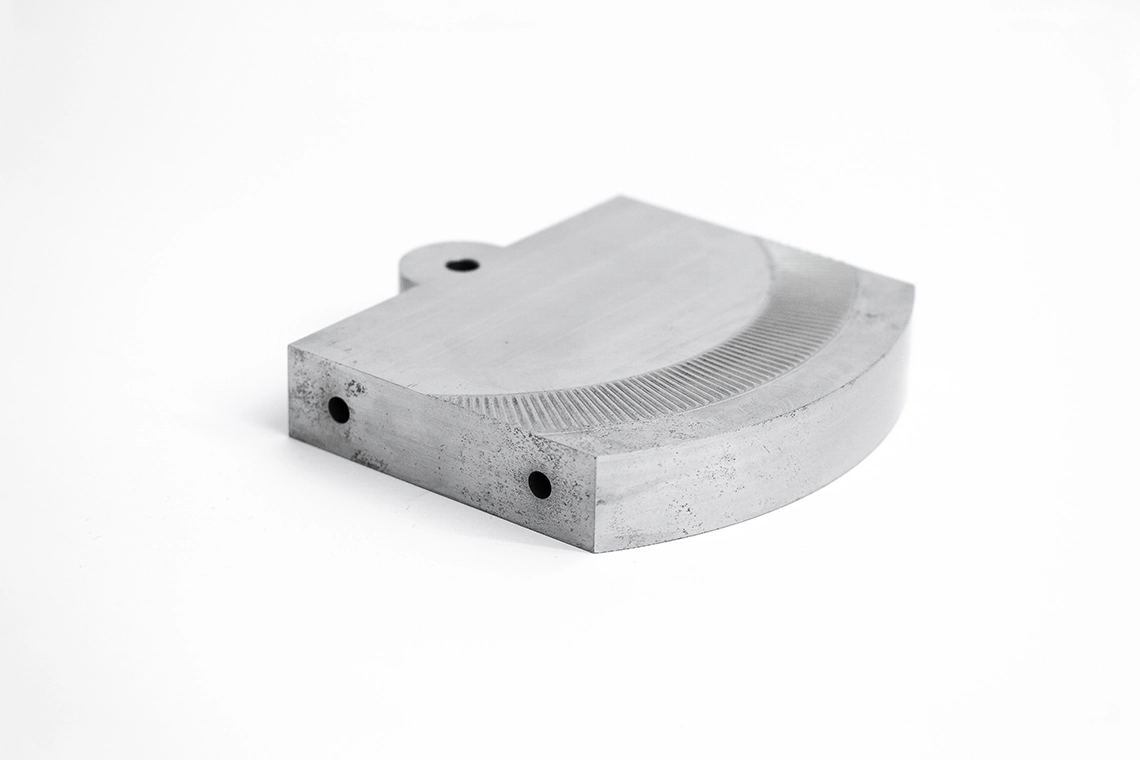
Mechanical Properties of Tool Steel
Understanding tool steel properties helps you match materials to applications for optimal performance and tool life.
- Hardness range: Tool steel hardness varies dramatically between grades. Softer grades like P20 operate around 28-32 HRC for easy machining, while fully hardened cold work steels can exceed 60 HRC for maximum wear resistance.
- Toughness vs. hardness: There's always a trade-off between hardness and toughness. Applications involving impact loads need tougher grades that resist cracking, even if it means slightly less wear resistance.
- Thermal properties: Hot work steels like H13 maintain strength at temperatures up to around 540°C (1000°F), while cold work steels generally begin softening above 200-250°C. This thermal stability determines whether a steel will work for hot forming operations or room temperature applications.
- Machinability considerations: Pre-hardened steels like P20 machine easily but will constrain your final hardness. Annealed steels machine well initially but you’ll have to heat treat them after rough machining, making final operations more challenging.
Advantages of Using Tool Steel
What makes tool steel worth choosing over regular grades? Their combination of strength, stability, and adaptability keeps tools performing at their best, even under extreme conditions.
- Exceptional hardness: Higher carbon levels form carbides that keep tools sharp and dimensionally stable through thousands of operations.
- Temperature stability: Hot-work steels hold their strength when glowing red, while cold-work steels stay hard and sharp at room temperature.
- Wear resistance: Carbide particles give tool steels the ability to withstand abrasion and repeated contact, extending tool life and ensuring consistent part quality in precision manufacturing.
- Dimensional reliability: Resistant to deformation under heavy loads, tool steels maintain tight tolerances throughout long production runs in CNC machining applications.
- Toughness: Certain grades, like S7, are designed to absorb shock and resist cracking under impact, which is important for stamping dies and other high-stress tools.
- Polishability and surface finish: Steels like H13 can be polished to mirror finishes, making them a top choice for moulds used in optical or cosmetic parts.
- Heat-treat flexibility: Tool steels can be hardened, tempered, and adjusted to tailor performance for specific jobs across different manufacturing applications.
- Long service life and cost efficiency: Fewer replacements and less downtime mean lower long-term costs, which is a practical advantage that comes from all the properties above working together.
Common Applications of Tool Steel
Tool steels show up almost everywhere in manufacturing. They're the materials you turn to when regular steels just can't take the heat, the pressure, or the wear. Here are some of the most common places you'll find them:
- Injection moulding tools: Moulds go through high pressure, heat, and sometimes abrasive plastics. Tool steel makes them tough enough to run hundreds of thousands of cycles. Aluminium is quicker for prototypes and small runs, but steel is what you need for high-volume production. Protolabs factories produce aluminium tooling, while tool steels are produced through the Protolabs Network.
- Metal stamping dies: Stamping puts huge forces on cutting edges. Tool steel survives the repeated shearing that turns flat sheets into automotive panels, housings, and more.
- Cutting tools: From drills to saw blades, tool steels hold a sharp edge at high speeds, even when things heat up. These applications benefit from precision CNC machining for best performance.
- Forging and hot-work dies: These tools get hit hard and heated up fast. Hot-work tool steels are built to keep their strength through endless heating and cooling.
- Precision machining parts: Tool holders, guide bushings, and similar parts need dimensional stability and wear resistance, which tool steels can deliver.
Tool Steel Applications by Industry
|
Industry |
Tool steel (series) |
Uses |
|
Manufacturing & metalworking |
High-speed steel (HSS) |
Drills, taps, mills |
|
|
Cold-work (D-series) |
Blanking, stamping, punching dies |
|
|
Hot-work (H-series) |
Forging & extrusion dies |
|
High-speed steel (HSS) |
Machining engine & transmission parts |
|
|
|
Cold-work (D-series) |
Stamping body panels |
|
|
Hot-work (H-series) |
Forging dies for crankshafts & gears |
|
High-speed steel (HSS) |
Machining high‑strength alloys |
|
|
|
Cold-work (D-series) |
Precision stamping dies |
|
|
Hot-work (H-series) |
Dies for titanium & nickel alloys |
|
Plastics & packaging |
Cold-work (D-series) |
Cutting blades for films & foils |
|
|
Hot‑work (H-series) |
Injection & extrusion moulds |
|
|
Plastic mould (P-series) |
Injection moulds for plastics |
|
Shock‑resistant (S-series) |
Chisels, punches, hammers |
|
|
Energy & mining |
Hot‑work (H-series) |
Extrusion dies for pipes & rods |
|
|
Shock‑resistant (S-series) |
Mining drills, impact tools |
|
High-speed steel (HSS) |
Appliance tools |
|
|
|
Cold‑work (D-series) |
Fine stamping dies |
|
|
Plastic mould (P-series) |
Moulds for toys & housings |
|
Cold-work (D-series) |
Precision gears and wear components |
|
|
|
High-speed steel (HSS) |
Cutting tools and end-effectors |
Selecting the Right Tool Steel for Your Project
Match your specific performance requirements to the right grade for your application. These options are available through Protolabs Network.
- When you need impact resistance → choose S7: Tough enough for shock loads and sudden impacts. Avoid brittle grades like D2 here.
- When you need maximum wear resistance → choose D2: Withstands abrasion, ideal for cutting tools or dies processing glass-filled plastics.
- When you need high-temperature strength → choose H13: Performs above 400°C in hot work dies, forging, or high-temperature injection moulding.
- When you need easy machining → choose O1: Simple heat treatment and machinability. Best for prototypes and low-volume tooling.
- When you need balanced, all-round properties → choose A2: Combines good wear resistance with reasonable toughness for moderate-duty applications.
- When you need a high-gloss finish → choose H13: Polishes to mirror finishes and keeps them under stress. Perfect for optical or aesthetic parts.
Common Tool Steel Grades Comparison
|
Steel Grade |
Hardness Range (HRC) |
Key Strength |
Best For |
|
55-62 |
Air hardening |
General purpose tooling |
|
|
58-62 |
Wear resistance |
High-wear applications |
|
|
45-55 |
Heat resistance |
Hot work dies, injection moulds |
|
|
57-64 |
Easy heat treatment |
Cutting tools, gauges |
|
|
28-32 |
Pre-hardened convenience |
Injection moulds, moderate volumes |
|
|
54-58 |
Shock resistance |
Impact applications |
Choosing the right tool steel means finding the balance between performance and practical manufacturing needs. Our engineers can help explain how different steels behave in real-world use cases and guide you toward options that work well and keep costs under control. Get in touch with your account manager or [email protected] with any questions.
Frequently Asked Questions
What makes tool steel different from regular steel?
expand_less expand_moreTool steels contain more carbon (0.5–1.5%) and alloying elements like chromium and vanadium. This gives them hardness, wear resistance, and strength at high temperatures.
Can I machine tool steel after it's hardened?
expand_less expand_moreNot easily. Most tool steels are rough machined in their soft (annealed) state, then heat treated to achieve hardness, and finally finished with grinding or electrical discharge machining (EDM).
How do I choose between tool steel grades?
expand_less expand_moreMatch the steel to your need: hardness for cutting, balance for forming dies, toughness for impact.
What are equivalent materials to tool steel?
expand_less expand_moreSome high-carbon steels and stainless steels can be used in similar ways, but they usually lack the same balance of hardness, toughness, and wear resistance that tool steels provide.
What is tool steel made of (composition)?
expand_less expand_moreTool steels are mainly iron with 0.5–1.5% carbon plus alloying elements like chromium, vanadium, tungsten, and molybdenum. The exact mix depends on the grade and series.
Get a Quote
Ready to tool up for your next project? Upload your design for a quote and recommendations tailored to your specific requirements.


