

FAST Aerospace: An Airbreathing Propulsion Test Under Extreme Heat
FAST Aerospace is an aerospace startup based in Italy developing advanced propulsion technologies for future space access systems. Its long-term vision is HyperDart, a two-stage-to-orbit launch vehicle designed to support independent European access to space for small satellites.
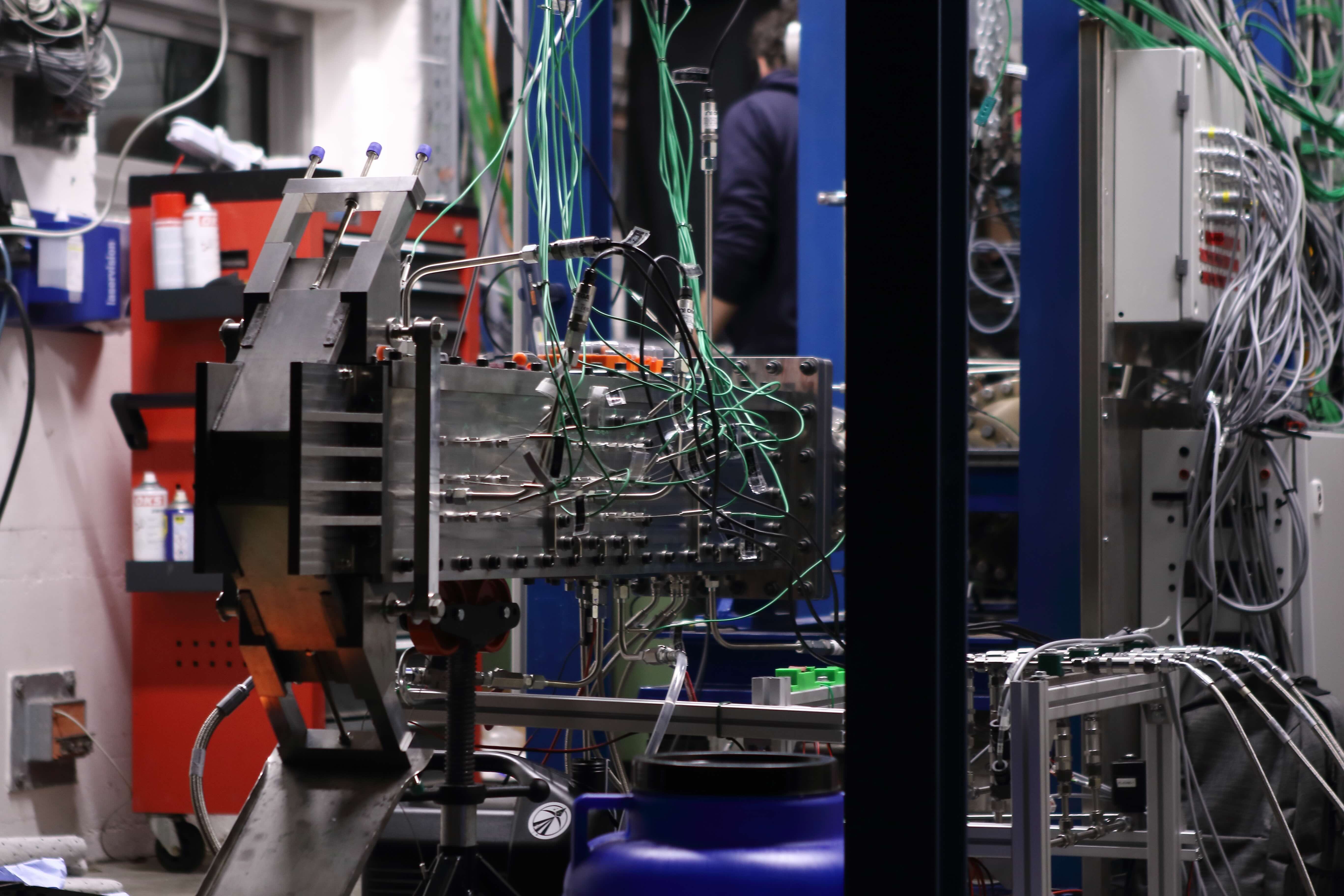
To advance its ramjet propulsion technology, FAST Aerospace developed an experimental liquid-fuel ramjet combustor capable of generating critical performance data. The project required complex, high-temperature components that were able to operate in extreme combustion environments while supporting rapid testing and validation.
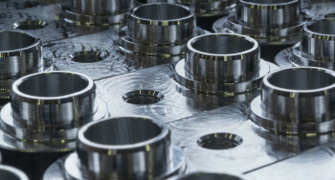
The project involved Luca Colombo, co-founder and Chief Operating Officer (COO), who oversaw supply chain activities for the programme, and Chief Technical Officer Mattia Gabriele Bertolini. Through their partnership with Protolabs, the team used metal additive manufacturing and CNC machining to produce critical engine hardware quickly and reliably.
Watch the video for a closer look at FAST Aerospace’s work with Protolabs.
Building the Foundation for Future Spaceflight
The experimental programme was designed to help FAST Aerospace better understand the physical processes inside liquid-fuel ramjet engines and generate data for future propulsion development.
“The project was to build an experimental combustor where we can do different tests and characterise different physical processes, acquire data and learn [...] how to build these types of engines,” explained Bertolini.
The programme culminated in successful ramjet firing tests, providing valuable performance data to support FAST Aerospace’s long-term vision for advanced hypersonic propulsion systems.
Manufacturing for Extreme Environments
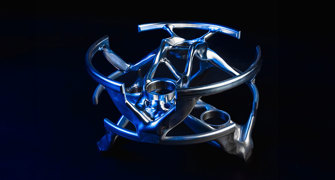
The flame holder represented one of the most technically demanding components within the combustor, combining extreme heat exposure with complex internal geometry.
“[The flame holder] operates in an environment of more than 2,000°C, so it should sustain very, very high temperature loads.” Bertolini explained.
The part also needed water-cooling channels to manage heat during operation. These internal flow paths needed to be designed around the requirements of additive manufacturing while still meeting the performance needs of the combustor.
“The Protolabs team was very helpful [in helping] us to design and build the cooling water flow path inside the piece in order to be 3D printable,” Bertolini said.
Accelerating Design Iteration
As an early-stage aerospace company, FAST Aerospace needed a manufacturing process that could keep pace with rapid engineering development. For Colombo, Protolabs’ speed, quotation process and material availability were a cornerstone of that decision.
“The responsiveness of a quick quotation, the production time, the costs and the material availability were essential,” explained Colombo, who led the supply chain activity for the project at FAST Aerospace. “The iteration design phases were almost days instead of months compared with traditional manufacturers,” he added.
The ability to upload CAD files, assess manufacturability and evaluate cost implications enabled the team to refine designs without having to wait through traditional quotation cycles.
“When we design a piece, we can do some modifications on the CAD files to reduce the price,” Bertolini explained. “We can have this iteration without having to wait for the feedback from an email quotation.”
“A process that we can do with Protolabs in one day would last maybe a month in a more traditional approach,” Bertolini added.
Engineering Support Beyond Manufacturing
The value of the partnership extended beyond production. As FAST Aerospace built its supplier network and developed its propulsion hardware, direct collaboration with Protolabs engineers helped the team to improve manufacturability while preserving technical requirements.
“We obtained a lot of help from your technicians,” Colombo explained. “They helped us understand the challenges and how to create components that were cheaper, but also compliant with our requirements.”
This support enabled FAST Aerospace to optimise components for production while maintaining the demanding performance standards required for aerospace propulsion hardware.
Supporting Rapid Testing and Validation
Short lead times proved particularly valuable during the experimental testing phase, where schedules were tight and critical hardware needed to reach the test centre quickly.
“We were able to design components days before the test, ship them directly to the test centre, receive them and put them on the test hardware,” Colombo said. “This would have been essentially impossible without this type of manufacturing.”
“We would also have been able to replace critical components within a day or two if needed, whereas other manufacturers could have taken up to a month to produce them,” he added.
The combination of rapid production, responsive engineering support and reliable delivery helped FAST Aerospace to maintain momentum throughout the testing and validation phase.
Unlocking Design Freedom Through Additive Manufacturing
For Bertolini, DMLS did more than just solve a manufacturing challenge; it made it possible for the engineering team to realise more complex designs, particularly around the flame holder’s internal cooling channels.
“Advanced manufacturing methods [very much] improve the design freedom,” Bertolini explained. “A propulsion engineer can think about the best way to remove heat from a part and draw it without too much limitation.”
Traditional machining would have limited the cooling channel design while increasing cost and complexity. By using additive manufacturing, FAST Aerospace was able to create a component closer to the propulsion optimum.
|
|

|
|

|
|


Key Results
- Manufactured a high-temperature ramjet flame holder using DMLS
- Produced complex internal cooling channels not feasible with traditional machining
- Accelerated design iterations from weeks to days
- Reduced lead times for critical test hardware
- Supported successful ramjet combustion testing
- Advanced future hypersonic propulsion development
By partnering with Protolabs, FAST Aerospace were able to rapidly develop, manufacture and test advanced ramjet engine components while overcoming the challenges of extreme-temperature aerospace applications. Combining additive manufacturing, CNC machining, engineering support and rapid turnaround times.


