
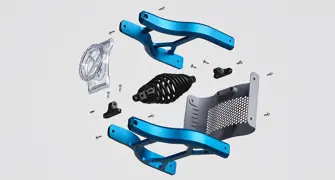

KTV Working Drone: Putting Drone Innovation to Work with Protolabs
|
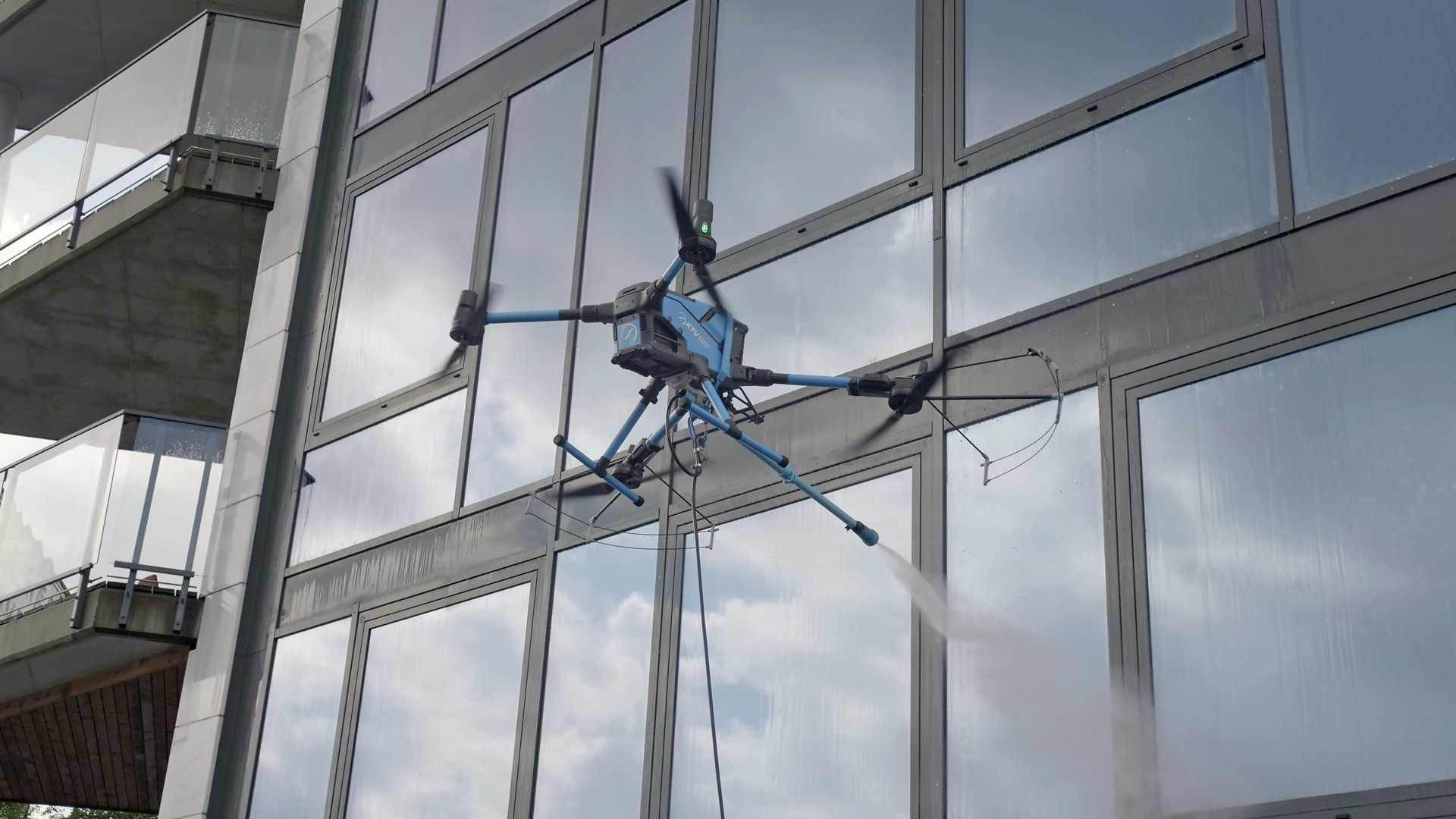
KTV Working Drone is a global drone technology and cleaning solutions provider headquartered in Norway, operating in 68 countries through an international franchise network. To support the development of its advanced drone systems, the company needed durable, high-precision components capable of performing reliably in demanding environments. Through their partnership with Protolabs, KTV Working Drone used Multi Jet Fusion (MJF) 3D printing to produce complex, print-in-place drone components with the consistency, durability, and scalability required for global deployment. |
From Prototype Concept to Scalable Production
Alexander Harding, Head of Development and Training at KTV Working Drone, oversees the company’s global technical development, operations, and training initiatives. Speaking about the collaboration with Protolabs, Harding explained that the company initially approached additive manufacturing as means to validate new propeller protection concepts and determine whether highly complex parts could be manufactured reliably at scale. “We started with a sample set about two years ago to really see if the design that we had made based on an idea we had for propeller protection would even be feasible using 3D-printed parts,” he said. Since then, KTV Working Drone has expanded production significantly, manufacturing hundreds of parts through Protolabs across multiple drone systems and applications.
Overcoming Heat Resistance and Material Challenges
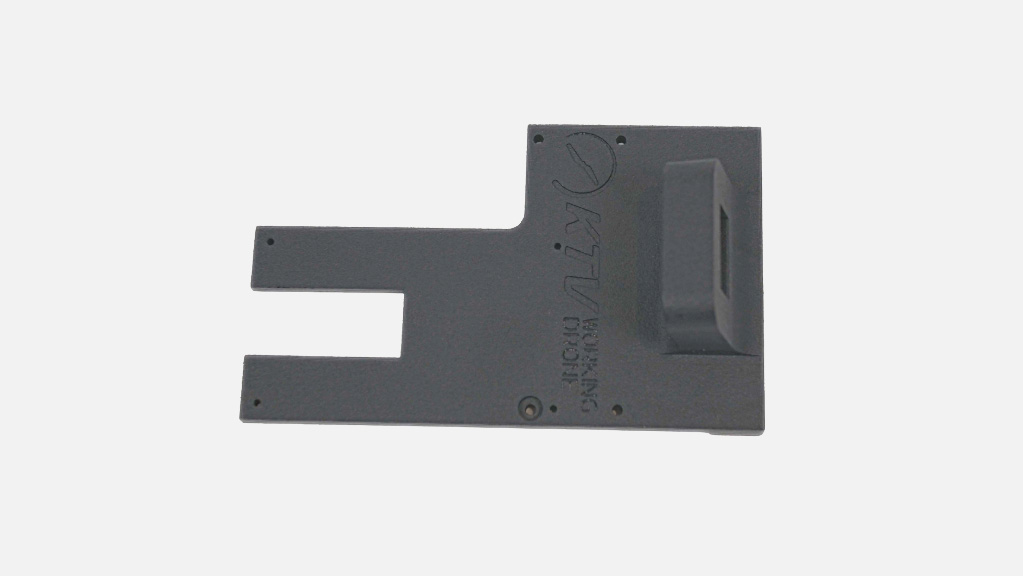
As the company refined its designs, material performance quickly became a critical consideration. According to Harding, early FDM prototypes failed to provide the durability required for real-world drone operations, particularly when exposed to sunlight and repeated thermal cycling. “The parts needed to be uniform and be of a high tolerance to natural elements – they needed to be able to withstand the sun as well as repeated heat cycling,” Harding explained. After testing alternative manufacturing approaches, KTV Working Drone transitioned to MJF technology to achieve the heat resistance, consistency, and dimensional stability required for operational deployment. “We had to go with the MJF printing technology in order to get the correct heat resistance,” he added.
Maintaining Quality While Meeting Global Demand
Beyond technical performance, KTV Working Drone also required a manufacturing partner capable of supporting urgent production schedules and fluctuating global demand. Harding noted that maintaining consistent quality across repeat orders was one of the company’s most important priorities after mixed experiences with previous suppliers. “When I place an order, and then a repeat order, the quality from the orders and the service that we’re expecting doesn’t change. That has been uniform over our orders,” he said. He also highlighted the efficiency of the Protolabs digital manufacturing platform and the ability to rapidly place and confirm urgent orders when franchise partners required immediate support.
Enabling Manufacturing Capabilities Beyond Traditional Methods
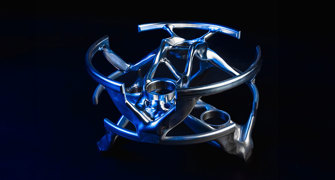
The partnership ultimately enabled KTV Working Drone to develop advanced print-in-place systems that could not have been achieved through traditional manufacturing methods. By combining MJF technology with the expertise and reliability of Protolabs, the company was able to produce complex moving assemblies with consistent quality and improved mechanical performance across hundreds of parts. Harding described the impact as transformational for the company’s latest propeller protection systems: “It would have been physically impossible to do this with traditional manufacturing methods.” The collaboration also delivered significant commercial advantages, with KTV Working Drone achieving approximately 75% reductions in purchase costs on certain products while improving scalability and operational efficiency worldwide.
|
|

|
|

|
|


