

Choosing the Right Metal for Automotive Parts: Brass vs. Steel vs. Stainless Steel
Compare brass, carbon steel, and stainless steel to determine the right fit for your automotive application.
Brass, carbon steel, and stainless steel are all widely used in automotive manufacturing, but they solve different problems. The right choice depends on your performance requirements, operating environment, corrosion exposure, machinability needs, and production goals. Understanding where each material performs best can help you avoid unnecessary cost, manufacturing challenges, or long-term durability issues.
Why Material Selection is Crucial in Automotive Manufacturing
Automotive components operate in demanding environments that expose materials to heat, vibration, chemicals, moisture, pressure, and mechanical stress. Selecting the wrong material can lead to premature wear, corrosion, manufacturing inefficiencies, or unnecessary production costs.
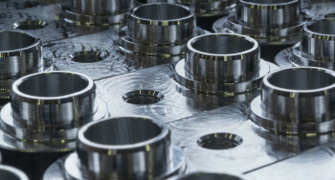
Material choice also influences manufacturability. Some metals machine easily but lack structural strength, while others offer excellent durability but increase machining complexity and lead times. For teams developing prototypes or low-volume production parts, manufacturing processes such as CNC machining allow for testing before committing to production tooling.

Comparing Brass, Steel, and Stainless Steel
While brass, carbon steel, and stainless steel are all widely used across automotive applications, their properties vary significantly.
| Material | Key Properties | Strength | Limitations | Common Automotive Applications |
|---|---|---|---|---|
| Brass | High machinability, good corrosion resistance, strong electrical conductivity | Fast machining speeds, low tool wear, good sealing performance, reliable for fluid systems | Lower tensile strength and wear resistance than steel | Fuel fittings, sensor housings, electrical connectors, valve components |
| Carbon Steel | High strength, durability, good fatigue resistance | Cost effective, strong mechanical performance, widely available | Susceptible to corrosion without coatings or plating | Brackets, shafts, gears, chassis components, structural hardware |
| Stainless Steel | Strong corrosion resistance, heat resistance, good mechanical strength | Performs well in harsh environments, long service life, strong chemical resistance | Higher material cost and more difficult machining | Exhaust systems, fasteners, fuel system parts, brake hardware |
Brass for Automotive Parts
Brass is a copper-zinc alloy known for excellent machinability, corrosion resistance, and electrical conductivity. While it is not typically used for high-load structural components, it performs well in fluid handling and electrical applications.
Advantages of Brass
One of brass’s biggest advantages is its machinability. Engineers can produce complex geometries, threaded features, and tight-tolerance components with relatively low tool wear and fast cycle times.
Brass also resists corrosion in moist environments, making it suitable for automotive systems exposed to fluids or road conditions.
Additional advantages include:
- Good thermal and electrical conductivity
- Low friction characteristics
- Attractive surface finish
- Reliable sealing performance for fittings and valves
Common Automotive Uses for Brass
Brass is commonly used for:
- Fuel line fittings
- Sensor housings
- Hydraulic connectors
- Valve components
- Battery terminals
- Electrical connectors
For rapid development of custom brass components, manufacturers often use precision CNC machining services to support fast iteration and low-volume production.
Limitations of Brass
Despite its advantages, brass has lower tensile strength compared to steel and stainless steel. It may also deform more easily under high mechanical loads or elevated temperatures. For structural or high-stress applications, stronger ferrous metals might be preferred.

Carbon Steel for Automotive Parts
Carbon steel remains one of the most widely used materials in automotive manufacturing because of its strength, durability, and relatively low cost. Different carbon steel grades offer varying balances of hardness, toughness, and machinability depending on carbon content and heat treatment requirements.
Advantages of Carbon Steel
Carbon steel provides excellent mechanical strength and wear resistance, making it suitable for structural and load-bearing components.
Compared to stainless steel, carbon steel is often more cost effective and easier to machine in many applications.
Benefits include:
- High tensile strength
- Good fatigue resistance
- Broad material availability
- Lower raw material cost
- Strong performance under mechanical stress
Common Automotive Uses for Carbon Steel
Automotive manufacturers frequently use carbon steel for:
- Mounting brackets
- Chassis components
- Shafts and axles
- Gears
- Suspension hardware
- Structural reinforcements
For production-grade metal components, processes such as sheet metal fabrication and CNC machining help support both prototype and end-use automotive parts.
Limitations of Carbon Steel
The primary drawback of carbon steel is corrosion susceptibility. Without coatings, plating, or protective finishes, carbon steel can rust when exposed to moisture, road salt, or chemicals. This makes surface treatment an important design consideration for automotive environments. Read more about corrosion resistance.
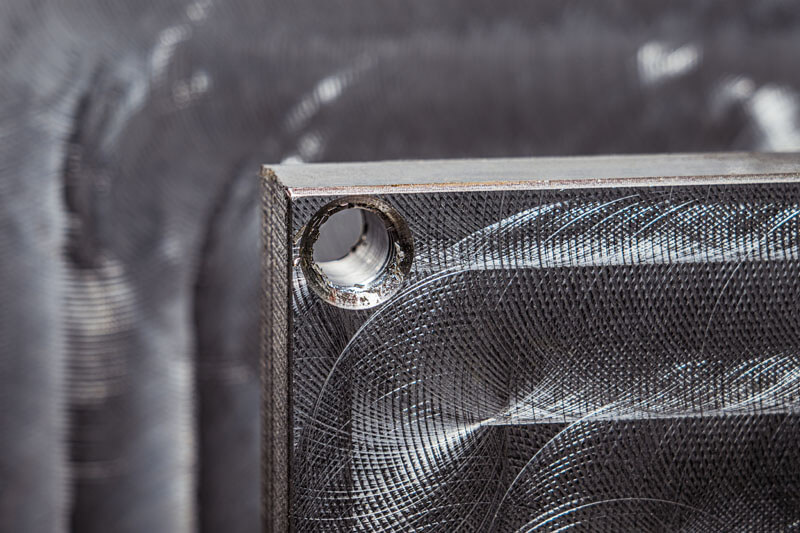
Stainless Steel for Automotive Parts
Stainless steel combines strength with strong corrosion resistance, making it a common choice for harsh automotive environments. The material contains chromium, which forms a protective oxide layer that helps resist rust and oxidation. Different stainless steel grades offer varying balances of corrosion resistance, machinability, and heat performance.
Advantages of Stainless Steel
Stainless steel performs well in applications exposed to moisture, chemicals, exhaust gases, and elevated temperatures.
Benefits include:
- Excellent corrosion resistance
- High temperature resistance
- Good mechanical strength
- Long service life
- Attractive surface appearance
For automotive applications requiring long-term durability in demanding conditions, stainless steel often provides better lifecycle performance than carbon steel.
Common Automotive Uses for Stainless Steel
Stainless steel is commonly used for:
- Exhaust systems
- Fuel system hardware
- Brake components
- Fasteners
- Heat shields
- Trim and exterior hardware
Engineers developing custom stainless steel components often rely on metal CNC machining for fast-turn prototyping and production support.
Limitations of Stainless Steel
Compared to brass and carbon steel, stainless steel can be more difficult and costly to machine. Some grades generate higher tool wear and slower machining speeds, increasing production time and manufacturing cost. Stainless steel also typically carries a higher raw material cost than standard carbon steel grades.

Design Considerations When Selecting Automotive Metals
Material selection should align with the component’s operating environment, mechanical demands, manufacturing process, and, of course, the project’s budget.
Corrosion Resistance
Corrosion resistance becomes especially important for automotive parts exposed to road salt, moisture, chemicals, or outdoor conditions. Brass offers good corrosion resistance for fittings and fluid systems, while carbon steel typically requires coatings or surface treatments to prevent rust. Stainless steel provides the strongest long-term corrosion resistance, making it well suited for harsh automotive environments and high-exposure applications.
Strength and Load Requirements
Structural or load-bearing components generally require stronger materials such as carbon steel or stainless steel. Brass is better suited for lower-load applications where machinability and conductivity are more important than structural strength.
Machinability and Production Speed
Brass machines exceptionally well and supports fast production with reduced tool wear. Carbon steel offers a balance between machinability and strength, while stainless steel often requires slower machining speeds and more aggressive tooling strategies. Protolabs’ design for manufacturability (DFM) resources can help identify potential production challenges early in development.
Cost and Production Volume
Raw material cost, machining time, tooling wear, and finishing requirements all influence total production cost. Carbon steel often provides the lowest overall material cost, while stainless steel may justify higher upfront costs through improved durability and corrosion resistance over the product lifecycle.
What It All Comes Down to: The Best Metal for Automotive Parts
The best material choice depends on the part’s mechanical loads, operating environment, corrosion exposure, thermal conditions, and manufacturing requirements. Brass is often specified for fluid handling and electrical components where machinability, conductivity, and corrosion resistance are priorities. Carbon steel remains a common choice for structural automotive parts that require strength and cost efficiency, while stainless steel is better suited for applications exposed to moisture, chemicals, or sustained heat.
Considering the trade-offs between these materials helps improve performance, manufacturability, and reliability across both prototypes and production parts. For more information, refer to our comparison guide to metals for manufacturing.
FAQ
Is stainless steel better than carbon steel for automotive parts?
expand_less expand_moreStainless steel is generally better for applications exposed to moisture, chemicals, or high temperatures because of its corrosion resistance. Carbon steel is often more cost effective for structural components where protective coatings can be applied.
Why is brass used in automotive applications?
expand_less expand_moreBrass is commonly used for fittings, valves, electrical connectors, and fluid system components because it machines easily, resists corrosion, and provides good conductivity.
Which automotive parts are commonly made from stainless steel?
expand_less expand_moreCommon stainless steel automotive parts include exhaust systems, fasteners, brake hardware, fuel system components, and heat shields.
Which metal is easiest to machine?
expand_less expand_moreBrass is typically the easiest of the three metals to machine because it produces low tool wear, supports high machining speeds, and maintains good dimensional accuracy.
What metal is best for corrosion resistance in automotive environments?
expand_less expand_moreStainless steel generally offers the strongest corrosion resistance, especially in environments exposed to road salt, moisture, and chemicals. Brass also provides good corrosion resistance in many fluid-handling applications.
How does material selection affect automotive manufacturing costs?
expand_less expand_moreMaterial selection affects raw material cost, machining speed, tooling wear, finishing requirements, and long-term durability. Engineers must balance performance requirements with manufacturing efficiency and lifecycle cost.
Get a Quote
Manufacture custom automotive parts using high-performance metals like brass and stainless steel. Upload your CAD for an instant quote.


