
3D Printing vs. CNC Machining vs. Injection Moulding: Which Process Fits Your Volume?
Learn how quantity, cost, and design stability affect the most suitable manufacturing choice
Watch the video below for a quick breakdown, then use the guide below to decide which one is the best fit for your project.
Transcript
expand_less expand_more3D Printing vs. CNC vs. Injection moulding (10, 100, 1,000 Parts)
If you’re deciding between 3D printing, CNC machining, and injection moulding, the right answer usually is not about the technology itself. It’s about quantity, requirements, and risk.
Here’s the short version engineers and buyers can use:
- At 10 parts, you’re buying speed and flexibility.
- At 100 parts, you’re buying repeatability and cost control.
- At 1,000 parts, you’re buying unit economics and consistency, often with tooling.
In the next few minutes, I’ll walk through a practical decision framework for 10, 100, and 1,000 parts, along with the trade-offs that change the quote most: tolerances, surface finish, materials, and lead time.
Before we talk about processes, start with these four questions:
Quantity now and quantity later: are you buying 10 once, or 10 now and 1,000 next quarter?
Function: is this a cosmetic cover, a structural bracket, a fluid seal, or a snap-fit?
Critical specs: do you need tight tolerances, threads, sealing surfaces, or cosmetic faces?
Risk tolerance: are you comfortable iterating the design, or do you need production-ready stability?
If you remember one line from this video, make it this:
- 3D printing is best for design flexibility.
- CNC is better than 3D printing for precision and real material performance.
- Injection moulding is best for repeatable unit cost at scale.
For 10 parts, you’re usually optimizing for lead time and learning.
Option A: 3D Printing (often best at 10)
Choose 3D printing when:
- You’re still iterating geometry.
- You need complex shapes without extra cost.
- You can accept process-specific surface texture and tolerance ranges.
Plain-English takeaway: at 10 units, 3D printing often wins because there’s no tooling and minimal setup.
Option B: CNC (best when tolerances or real material matter)
Choose CNC at 10 when:
- You need tight fits, flatness, true threads, or sealing surfaces.
- You need actual production material properties, whether in metals or engineering plastics.
- You need a production-like surface finish from the start.
At 100 parts, teams hit the crossroads. You’re no longer just prototyping, but you may not be ready to commit to full production tooling. This is where the decision shifts toward repeatability, total cost, and finish expectations.
Option A: 3D Printing at 100 (works if requirements are forgiving)
3D printing at 100 can make sense if:
- The part is non-cosmetic, or you already have a finishing plan.
- Tolerances are moderate.
- You want to avoid tooling while demand is still uncertain.
Option B: CNC at 100 (great for precision)
CNC at 100 shines when:
- You need high accuracy across the batch.
- You need consistent surface finish and tight functional specs.
- You want production-like parts for pilot builds.
Option C: Injection moulding at 100 (less common, but possible if the design is stable)
moulding at 100 can make sense when:
- The design is stable and likely to be reordered.
- Cosmetics matter and you want a molded appearance.
- Unit cost needs to come down, and you can amortize tooling across future demand.
Key point for engineers and buyers:
- At 100 parts, the best process is the one that matches how stable your design is.
- If the design might change, avoid expensive commitments.
- If the design is stable and you expect repeat orders, tooling starts to pay off.
At 1,000 parts, the conversation usually becomes about unit cost, consistency, and throughput.
Injection moulding often becomes the default at 1,000 parts and above. Not always, but often, because it can deliver:
- Low unit cost once the tool exists
- Excellent batch-to-batch repeatability
- Strong cosmetic standards with the right tooling and finish spec
When CNC still wins at 1,000
CNC can still be the right choice at 1,000 if:
- The part is metal and highly functional.
- The geometry is simple and cycle time is low.
- You want to avoid tooling because the program is short-lived or uncertain.
When 3D Printing still wins at 1,000
3D printing can still win at 1,000 when:
- Design complexity is too high for injection moulding or CNC machining.
- You’re producing many variants or mass customization.
- You can meet finish and tolerance requirements with post-processing.
- At 1,000 parts, injection moulding often wins on cost and consistency, CNC wins for many industrial metal parts, and 3D printing wins on complexity and flexibility.
No matter which process you choose, these four inputs change price and lead time the most:
Tolerances
Tight tolerances increase cost in every process through more machine time, more inspection, and more scrap risk.
Engineer tip: only tighten tolerances on the surfaces that truly matter.
Surface finish and cosmetics
If you need customer-facing cosmetics, call out what matters: texture, gloss, color, and acceptable defects.
This is where finishing requirements and process choice intersect.
Material requirements
“Plastic” is not a material spec. Temperature, UV exposure, chemical exposure, mechanical loads, and strength requirements determine whether a 3D-printed resin, machined plastic, or molded resin is appropriate.
Change risk
If your CAD is likely to change, optimize for agility now.
If your design is stable and demand is real, optimize for production economics.
If you’re deciding between these processes, here’s the practical play:
- For 10 parts, prioritize speed and learning, often with 3D printing or CNC.
- For 100 parts, prioritize repeatability and design stability.
- For 1,000 parts, prioritize unit economics and consistency, often with injection moulding.
Start with Volume
Need a quick answer? Start here:
- 1–10 parts: 3D printing
- 10–200 parts: CNC machining
- 200+ parts: Injection moulding
It’s not a strict rule, but it’s a solid starting point. From here, factor in the material, tolerances, and design complexity.
3D Printing: Fast, Flexible and Low Volume
3D printing builds parts layer by layer, making it an ideal choice for speed and design autonomy.
Best for:
- Early prototypes and rapid iteration
- Complex geometries and internal features
- Low-volume production
Why use it:
- No tooling required
- Fast turnaround (often days)
- Easy to update designs between builds
Trade-offs:
- Limited material properties compared to production methods
- Surface finish may require post-processing
- Not ideal for tight tolerances or higher volumes
Use it when your design is still evolving or you need parts quickly.
CNC Machining: Precision and Real Materials
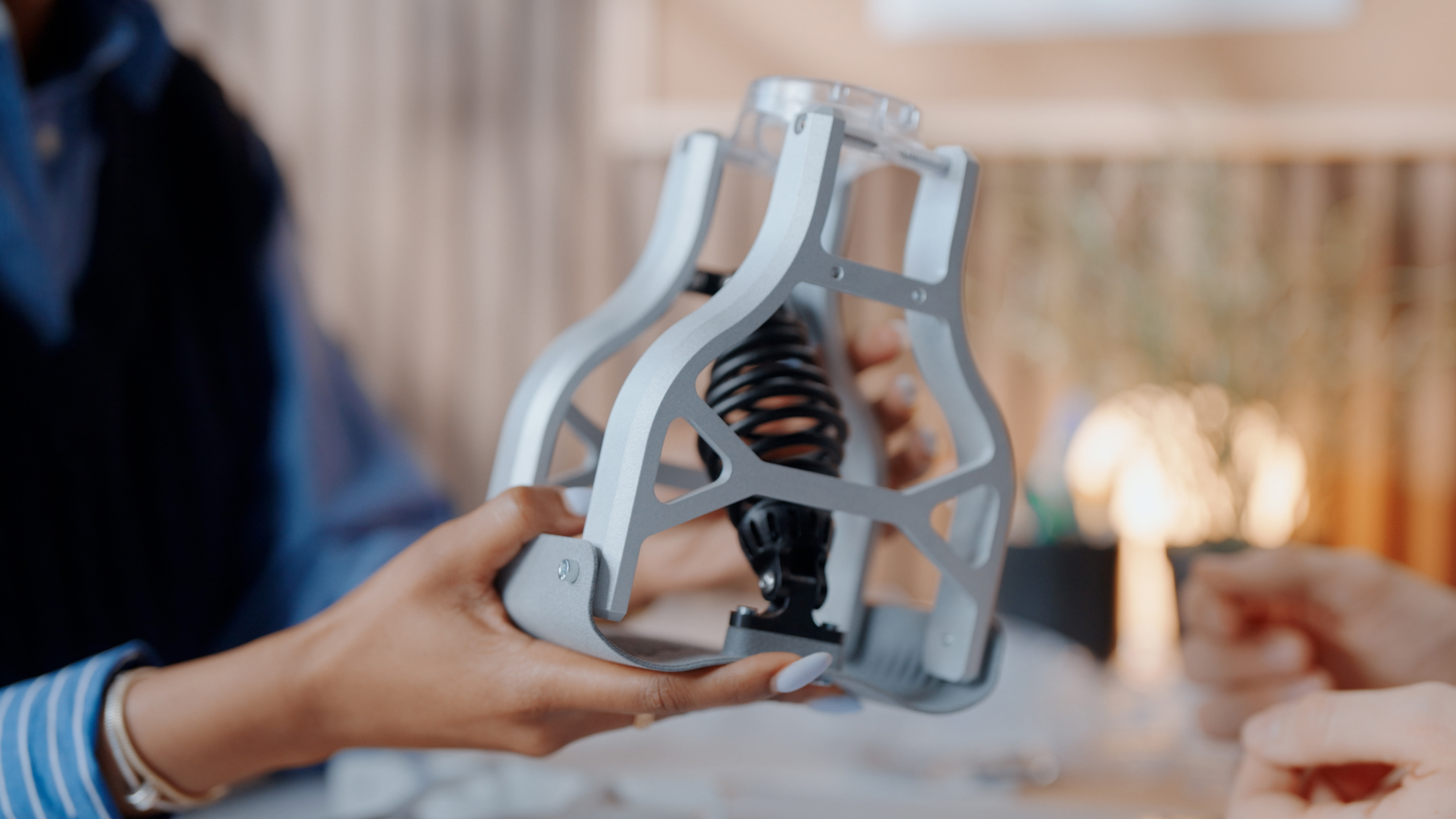
CNC machining cuts parts from solid blocks of material - producing strong and accurate components.
Best for:
- Functional prototypes
- End-use parts in low-to-mid volumes
- Tight tolerances and critical fits
Why use it:
- High accuracy
- Wide range of plastics and metals
- Production-grade material properties
Trade-offs:
- More material waste than additive processes
- Geometry limited by tool access
- Costs increase with complexity
Choose CNC machining when performance and precision matters.
Injection Moulding: Scale and Cost Efficiency
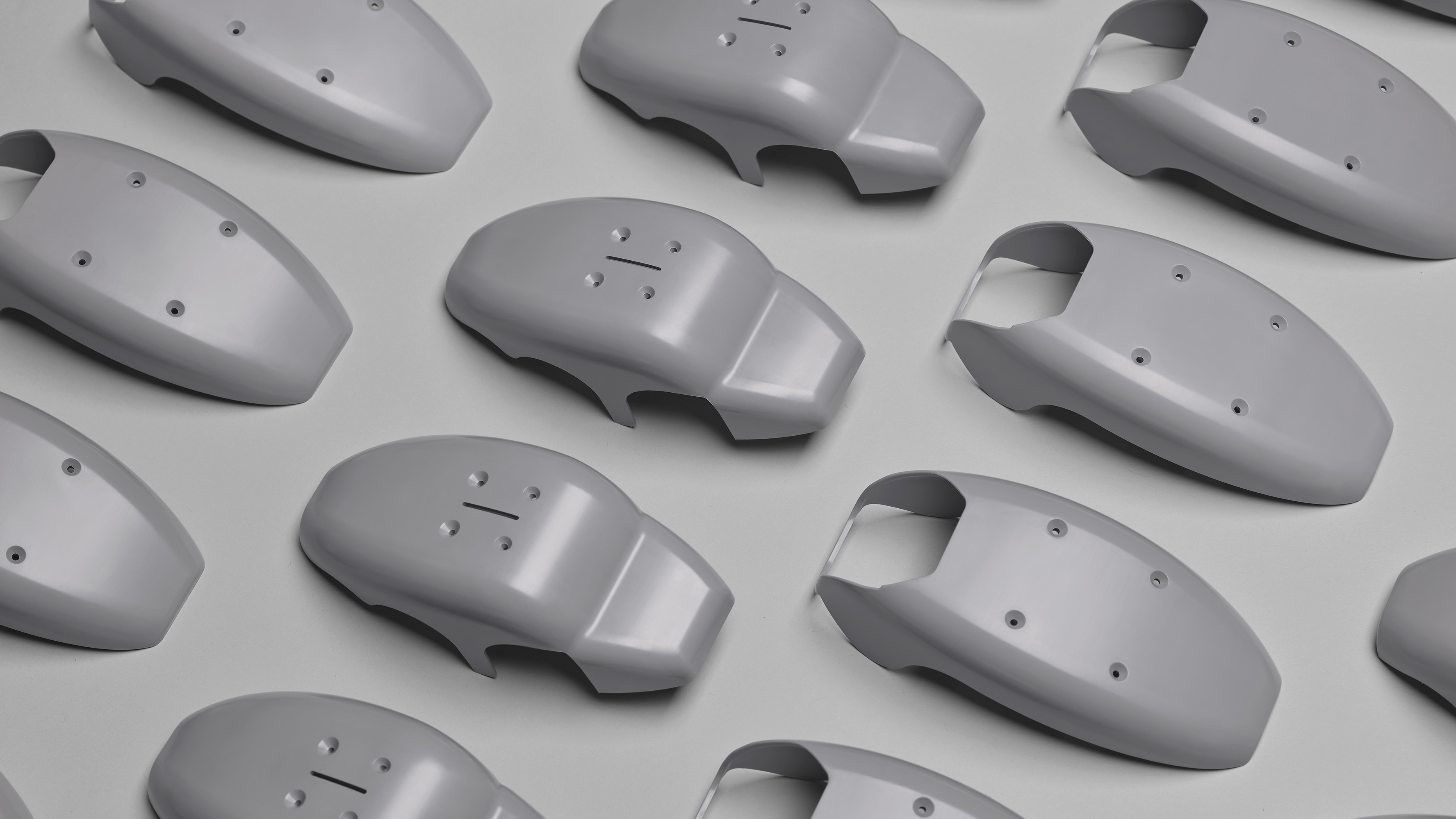
Injection moulding is built for repeatability which is ideal once your design is finalised.
Best for:
- Production runs (hundreds to millions of parts)
- Consistent quality and surface finish
- End-use plastic components
Why use it:
- Lowest cost per part at scale
- Excellent repeatability
- Wide range of production plastics
Trade-offs:
- Upfront tooling investment
- Longer lead time to first parts
- Design changes become costly after tooling
Use it when you’re ready to scale production.
Final Takeaway
Pick the process that fits your current stage and be ready to switch as you scale.
FAQs
What’s best for 10 parts: 3D printing or CNC machining?
expand_less expand_moreTypically, 3D printing is used for speed and iteration, while CNC machining is better for tight tolerances, threads, sealing surfaces, and production-grade material performance.
When does injection moulding make the most sense?
expand_less expand_moreWhen design is stable and you expect reorders, tooling can be amortised across future volume.
What matters more than process choice?
expand_less expand_moreTolerances, cosmetics, material requirements, and how likely the CAD is to change.
Is 3D printing suitable for 1,000 parts?
expand_less expand_moreYes, especially for high complexity, lots of variants, or when tooling is too risky, as long as finish/tolerance needs can be met.
Is CNC machining best for 1,000 parts?
expand_less expand_moreIt can be, especially for metal parts, simpler geometries, or short-lived programmes where investing in injection moulding tooling doesn’t pay off.
|