

Overmoulding Service
Get custom plastic parts moulded with two materials or metal inserts
Certifications ISO 9001:2015 | CTQ Inspections
ISO 13485 certification available through Protolabs Network

Overmoulding at Protolabs
Our overmoulding process produces custom prototypes and on-demand production parts in as fast as 15 days. We use aluminum moulds that offer cost-efficient tooling, producing parts from a range of thermoplastic and liquid silicone rubber materials.
Overmoulding Applications
|
Overmoulding is a versatile process used across multiple stages of product development and production. It’s particularly valuable when flexibility, speed, and functional validation are priorities. Overmoulding is frequently used for: |
| Application | Description |
|---|---|
| Low-volume production parts | Ideal for short runs or customised components without the cost of full-scale tooling. |
| Bridge tooling | A fast, cost-effective solution that bridges the gap between prototype and full production. |
| Pilot runs | Perfect for verifying design, material performance, and assembly before large-scale manufacturing. |
| Functional prototyping and testing | Enables designers to evaluate part performance, ergonomics, and durability with production-grade materials. |
Overmoulding Design Guidelines
Our basic guidelines for overmoulding includes important design consideration to help improve part manufacturability, enhance cosmetic appearance, and reduce overall production time.
| Metric | ||
| Maximum Part Size | 390mm x 980mm x 280mm | |
| Volume | 966,837 mm³ | |
| Depth | 72mm from parting line | |
| Up to 280mm | ||
| Projected Mould Area | 112,903 sq. mm (plastic) | |
| 30,958 sq. mm (silicone rubber) |
Additional Notes
- Height may be limited if using a silicone as the overmould material, and deeper parts are limited to a smaller outline.
- Minimum part volume is 40 mm².
- With substrate moulds, we can maintain a machining tolerance of ± 0.08mm with an included resin tolerance that can be greater but no less than 0.02 mm).
- With thermoplastic overmoulds, tolerances remain the same as substrate moulds, however, if the overmould is LSR, then tolerances shift to 0.6mm.
Overmoulding Material Bonding
|
Chemical bonding between overmoulded materials is possible, but material compatibility should be considered in order to achieve desired bond strength. Incorporation of an adequate mechanical bond is strongly recommended if bonding is critical to your application. An undercut is a good example of a mechanical bond. |
| Substrate Material | ||||||
|---|---|---|---|---|---|---|
| Overmould Material | ABS POLYLAC PA-717C | ABS/PC BAYBLEND T65 XF | PC MAKROLON 2458 | PBT CELANEX 2002-2 | PP MOPLEN RP348R | NYLON 66 ZYTEL 70G30HSLR |
| TPU Pearlthane 11T85 | C | C | C | C | M | M |
| TPV Sarlink 3170 | M | M | M | M | C | M |
| TPE Thermolast K TC6 MLZ | C | C | C | M | M | M |
| LSR Elastosil 3003/30 AB/B | - | - | M | M | - | M |
| TPC Hytrel 4068FG | C | C | C | C | M | M |
M = mechanical bond (recommended)
C = chemical bond
What is Overmoulding?
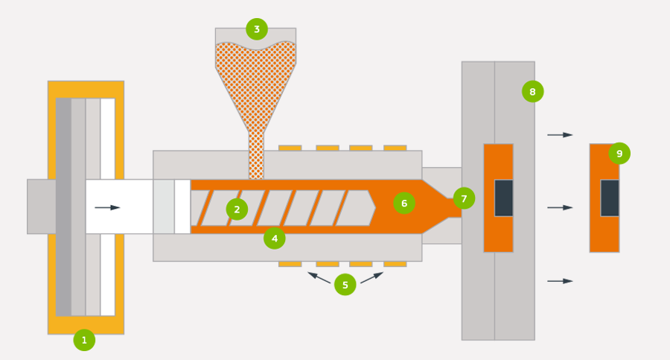
With overmoulding, the production of the substrate parts is a standard injection moulding process involving an aluminum mould with no heating or cooling lines running through it. Cycle times are a bit longer, which allows our moulders to monitor fill pressure, cosmetic concerns, and the basic quality of the parts. When the total run of substrate parts are moulded, overmould tooling is then assembled to the press. The substrate parts are placed by hand into mould where each part is overmoulded with either a thermoplastic or liquid silicone rubber material.
Overmoulding Resources


FAQs
What is overmoulding?
expand_less expand_moreOvermoulding is a manufacturing process where one material (usually a soft elastomer or thermoplastic) is molded over another substrate or component. This creates a single, unified part with enhanced functionality, such as improved grip, sealing, or aesthetics.
What are the benefits of overmoulding?
expand_less expand_moreOvermoulding improves product durability, comfort, and performance. It allows for ergonomic designs, better chemical or impact resistance, and can reduce assembly time by combining multiple parts into one.
What materials can be used for overmoulding?
expand_less expand_moreCommon base materials include ABS, nylon, and polycarbonate, while overmould materials often include TPE, TPU, or silicone. The key is ensuring good material compatibility and adhesion between layers.
What is low-pressure overmoulding?
expand_less expand_moreLow-pressure overmoulding uses specialized polyamide materials and a lower injection pressure process to encapsulate delicate electronic components without causing damage. It’s ideal for protecting PCBs, sensors, and connectors from moisture, vibration, and strain.
How is low-pressure overmoulding different from traditional injection overmoulding?
expand_less expand_moreTraditional overmoulding uses higher temperatures and pressures, suited for mechanical parts. In contrast, low-pressure overmoulding operates at much lower pressures (typically 300–500 psi) to safely encapsulate fragile components while still providing robust environmental protection.
Can you overmould screws or metal inserts?
expand_less expand_moreYes. Overmoulding screws or metal inserts is a common practice to improve mechanical strength, create secure threaded connections, or integrate mounting features directly into plastic parts. Proper insert design and placement ensure strong bonding and precision alignment.
What industries use overmoulding?
expand_less expand_moreOvermoulding is widely used in consumer electronics, automotive, medical devices, and industrial tools — anywhere that comfort, protection, or enhanced function are important.
Why choose overmoulding
expand_less expand_moreWhile overmoulding requires more complex design, processing, and materials choice than single-shot injection moulding, it offers significant benefits:
- It allows materials to be combined to provide characteristics that no single resin can deliver.
- It can eliminate assembly steps, saving both time and money.
- It can meld materials in a way that assembly processes cannot match.