
What Is Knurling?
Knurling adds more than texture. Here's what engineers need to know about this grip-enhancing surface feature.

Need to get a better grasp on part design? Whether for grip, torque, or a textured aesthetic, knurling can give you an edge (literally). Engineers working across industries rely on it for everything from knobs and handles to fasteners and precision instruments. This simple technique can make a part both look and perform better, and this guide will help you use it effectively.
What Is Knurling?
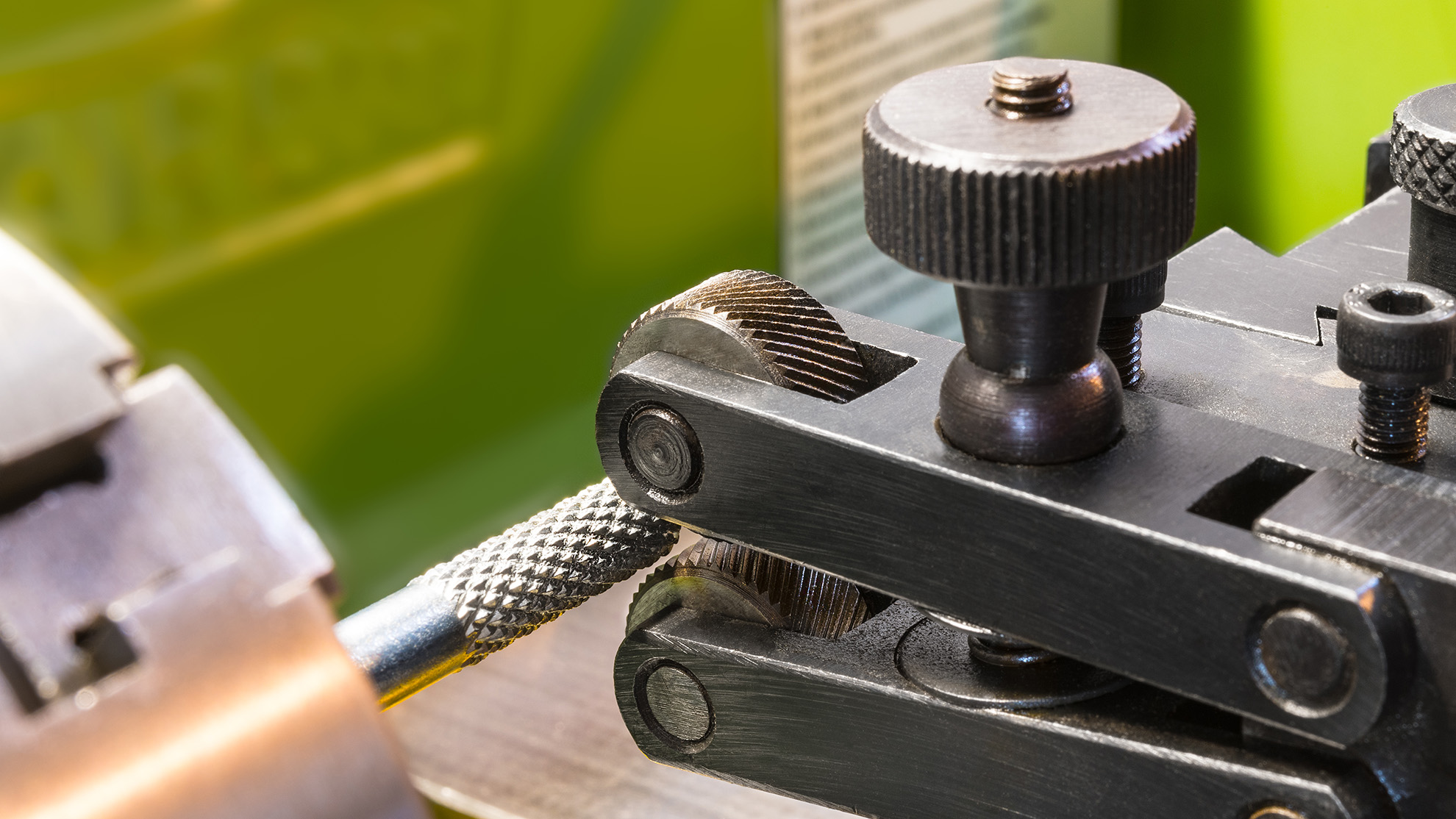
Knurling is a machining process that produces a patterned texture on the surface of a (typically cylindrical) part by pressing or cutting a hardened tool into the material. It is most commonly applied using CNC turning.
It is usually used to prevent slipping and improve torque, but some engineers choose to add it just for the look. Think of the crisscrossed grip on a barbell, the ridged surface of a tool handle, or the patterned knob on a stereo—those are all knurled features.
Knurling is not typically used on mating or precision-fit surfaces, like the contact points of a bolt and nut or a pipe fitting, because the raised pattern can interfere with the tight tolerances required. That’s why you’ll often find it on user-facing components where grip and control matter more than a perfect fit. When you see a knurled dial or tool handle, that texture helps users interact with the product more effectively.
Have a part you’d like knurled? This service is available by request through Protolabs Network. Contact your account manager or [email protected] to get started.
How Knurling Works
Knurling works by pressing a patterned tool against a spinning part to create a textured surface. This is called a forming process, because it shifts material instead of removing it. It’s most often done on a lathe using a hardened roller that embosses the pattern as it moves along the part.
In some cases, especially with harder materials, a cut knurling method is used. This actually removes material to form the pattern. This is used when you need a very crisp texture or are working with thin-walled or brittle components.
A few key factors affect how the knurling turns out:
- Tool pressure: More pressure means a deeper pattern
- Feed rate: Controls the spacing and alignment of the texture
- Material hardness: Softer metals knurl easily, but if it is too soft, you can lose detail
- Tool shape and pitch: Determines how the pattern looks and feels
Forming knurling will slightly increase the diameter of your part, so keep that in mind, particularly if the knurled area needs to fit with another component.
Types of Knurling Patterns
Each knurling pattern offers different grip characteristics and aesthetic style. The right choice depends on how you want it to look and what you need it to do.
|
Pattern Type |
Description |
Best For |
Notes |
|
Straight |
Parallel lines along the axis |
Sliding grip, linear motion |
Often used on control rods or handles that move axially |
|
Diagonal |
Angled lines in one direction |
Decorative or light grip |
Easier to machine and often chosen for visual effect |
|
Diamond |
Crossed diagonal lines |
Strong grip, torque-heavy use |
Standard for manual knobs and high-friction needs |
Diamond knurling is the most common because it offers grip in multiple directions. Straight knurls are more likely to be used on parts designed to slide in and out without rotation. Diagonal knurls are mainly aesthetic and less pronounced.
Knurling Methods: Manual vs. Machine
The method used depends largely on production volume, precision requirements, and available equipment.
Manual knurling
This method is typically done on a manual lathe, using a handheld or lathe-mounted knurling tool. It requires operator skill to maintain consistent pressure and feed.
- Ideal for prototypes or small batches
- Slower and more labour-intensive
- Prone to slight variation in pattern depth and spacing
Machine knurling
This technique is often done on CNC lathes or turning centres, uses automated tool paths and pressure control to achieve consistent, repeatable results.
- Suitable for high-volume production
- Capable of tight tolerances and consistent surface finish
- Integrated easily into multi-step machining operations
Material Considerations
Not every material is suited to knurling. Since the process involves material deformation (or cutting, in some cases), machinability plays a key role. Metals are most commonly used for knurling because they deform predictably and hold the pattern well. Even though many consumer grips we see today are made from rubber or plastic, those typically involve moulded textures, not machined knurls.
Best materials for knurling
- Aluminium: Easy to form with good pattern definition
- Brass: Very ductile and provides crisp knurling
- Mild steel: Strong enough for function, soft enough to deform cleanly
Challenging materials for knurling
- Stainless steel: Harder grades may require cut knurling and specialised tools
- Plastics: Can be knurled, but the pattern may deform over time or during handling
- Hard alloys: Risk tool wear or part cracking if not handled properly
Knurling is generally not a good fit for extremely brittle or thin-walled materials unless special cut methods and proper tooling are used.
Surface Finish Considerations
Knurled surfaces are intentionally rough, which makes them excellent for grip, but also more complex when it comes to finding the right surface finish.
Can knurled parts be anodised or painted?
Yes, but coatings may build up unevenly due to the peaks and valleys of the pattern. Anodising works well on aluminium knurled parts, but you may lose some of the finer details.
Can they be cleaned or polished?
Yes, though aggressive polishing may blunt the knurl. Light tumbling or bead blasting can clean debris without removing the pattern.
What finishes can be applied?
- Anodising: Preserves texture while adding corrosion resistance and colour
- Bead blasting: Cleans or subtly smooths sharp edges
- Plating: Adds hardness or cosmetic appeal
- Passivation: Improves corrosion resistance on stainless without affecting texture
- Chromate conversion: Provides corrosion protection for aluminium without adding thickness
Ultimately, you are looking for a finish that conforms to the geometry rather than filling it in.
Benefits of Knurling
Knurling may seem like a minor detail, but engineers know that small details can make a huge difference and knurling can have a major impact on how a part performs in the real world. When done right, it can improve the way a user interacts with a product, particularly when parts need to be turned, twisted, or held securely.
Knurling delivers several advantages spanning look, feel and function.
- Improved grip and torque transfer
- Tactile feedback and user safety
- Visual differentiation or branding cues
- Easy manual handling of small parts
It’s a simple addition that can transform a part from usable to intuitive.
Designing for Knurling
When adding knurled features, a few design rules can help get you better results.
|
Design Factor |
Recommendation |
Reason |
|
Shaft diameter |
≥6 mm |
Smaller diameters may deform under tool pressure |
|
Shoulder clearance |
Keep knurl ≥1 mm from edge |
Prevents tool crash or incomplete pattern |
|
Undersizing |
Slightly reduce OD |
Compensates for displaced material and final fit |
|
Pattern type |
Match to function |
Choose based on grip need and direction of force |
|
Pitch and depth |
Follow tooling specs |
Ensures sharp, clean knurling with full contact |
Also think about the orientation of the knurled surface. It should be easy for the operator to access and should not interfere with threads, seal areas, or other precision features.
If you’re outsourcing production, include detailed drawing notes specifying knurl type, pitch, and location. CAD models don’t always need to show the pattern geometry. Clear annotation is usually enough.
Cost of Knurling
In most cases, knurling adds minimal cost, but it’s worth checking whether your part design introduces complexity that could drive the price up.
Cost drivers include:
- Custom or non-standard knurling tools
- Secondary operations like polishing or cleaning
- Small batch sizes with dedicated setups
- Material hardness requiring cut knurling or specialised tooling
The more integrated the knurling is into the machining process, the more cost-effective it tends to be. Automated lathe operations can add knurling with little added cycle time.
Where Is Knurling Used?
Knurling comes into play wherever grip, control, or feel is critical to how a part performs. If a user needs to hold, twist, or turn something with confidence, knurling gets the job done, so it appears across a wide variety of industries.
- Medical and dental: Knurled handles on forceps, scalpels, and surgical tools provide better control and precision.
- Automotive: Common on adjustment knobs, brake components, or screw heads that are operated by hand.
- Aerospace: High-performance applications where operators need traction without adding much weight.
- Consumer products: Used in high-end electronics, razors, and even premium packaging for tactile appeal, giving the user a satisfying grip.
- Industrial machinery: Levers, clamping screws, and interface points use knurling to make daily use more intuitive and secure.
- Tool handles: Screwdrivers, pliers, and other handheld tools often feature knurling for better grip.
- Fitness equipment: Barbell grips, bicycle handles, and gear knobs where hands need to stay put, even under force.
Knurling is especially valuable in safety-critical or hands-on environments, like manufacturing floors, operating theatres, or vehicle interiors, where a slippery surface could have serious consequences and grip can’t be compromised.
FAQ
Can you CNC a knurl?
expand_less expand_moreYes, most CNC lathes can perform knurling using the right tool attachments. You just have to make sure the machine and tool are suited to forming or cutting the pattern.
Can plastics be knurled?
expand_less expand_moreSometimes. Softer plastics can take a knurl, but the detail may not be very sharp. Tool pressure needs to be adjusted, and it’s worth testing if precision matters.
Is knurling the same as serration?
expand_less expand_moreNo, they are different. Serration cuts sharp notches into the surface, while knurling presses a pattern in. Serrations are usually more aggressive and spiky.
Do I need to model the knurl in CAD?
expand_less expand_moreNot usually. Just note the pattern, pitch, and depth on your drawing to keep your CAD file lightweight and easy to update.
Is knurling just for metal parts?
expand_less expand_moreKnurling is usually used for metal parts but not exclusively. Some plastics and composites can be knurled too, as long as you dial in the process.
Knurl Your Part
Curious about knurling your parts? This service is available by request through Protolabs Network. Contact your account manager or [email protected] to get a free quote.


