

Talk with Our Team
Hello! We just need a few bits of information, and then a manufacturing expert will reach out to you directly to see how we can partner on a future production project.
Thank you! We've received your request and a member of our team will reach out shortly.

3D Printing Service in the UK
Manufacture industrial-grade 3D-printed prototypes and production parts. Our expertise helps you achieve complex geometries, unparalleled repeatability, and compliance with the highest industry standards. We will ship your parts within the UK in as fast as 1 day
Certifications + Compliance
ISO 9001:2015 | ISO 14001:2015 | JOSCAR





Our 3D printing Capabilities in the UK
| We have a high-capacity factory with more than 180 machines and a network of over 90 3D printing shops. Known for our ability to deliver top-notch parts quickly and at competitive prices, we handle everything from rapid prototyping to producing functional, end-use parts. |

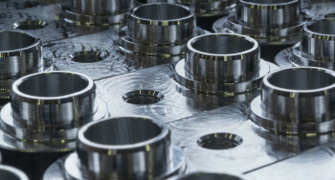
Metal 3D Printing in the UKLead Time: 10 work days |
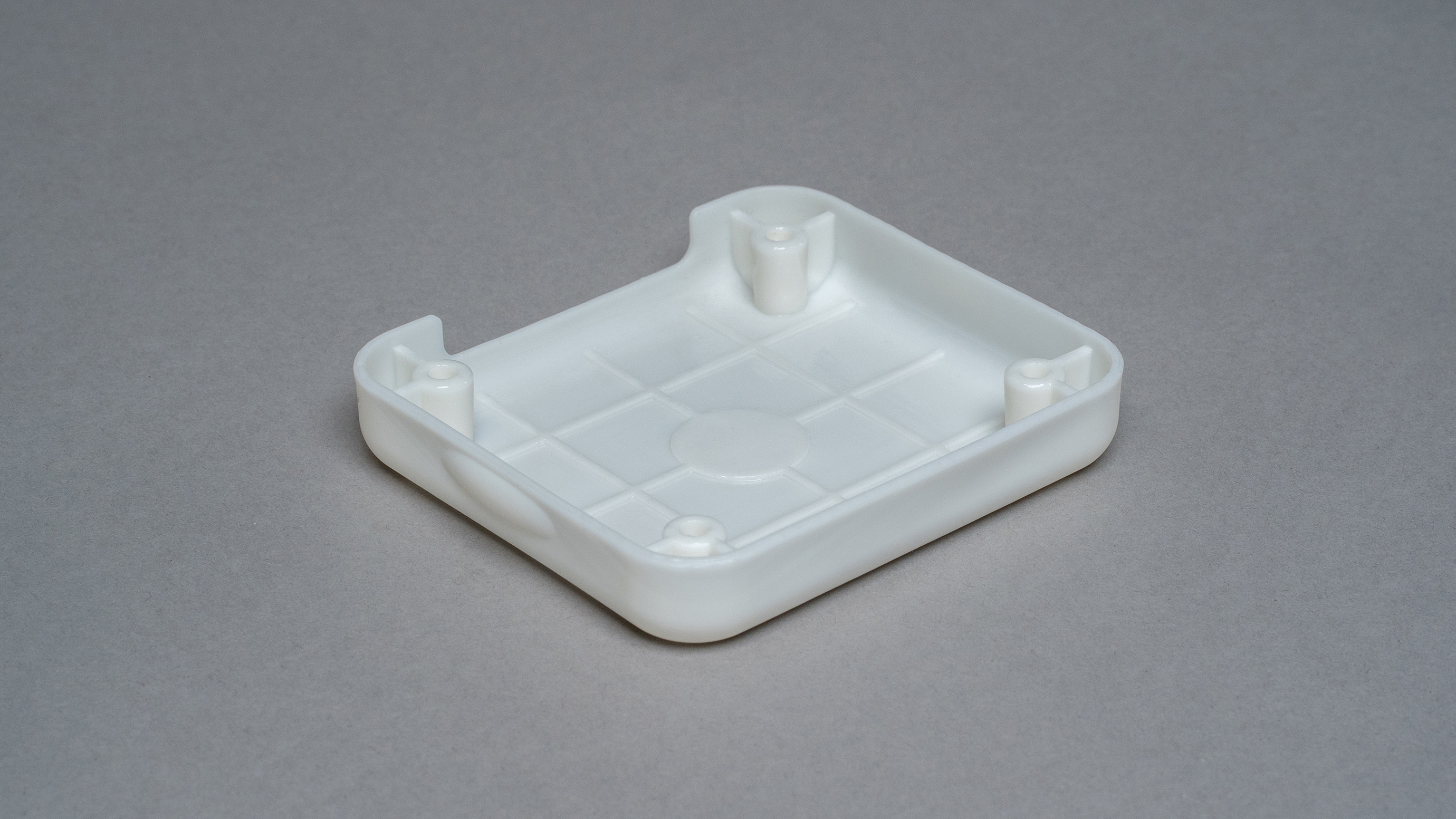
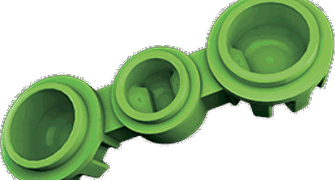
Stereolithography (SLA) in the UKLead Time: 3 work days |
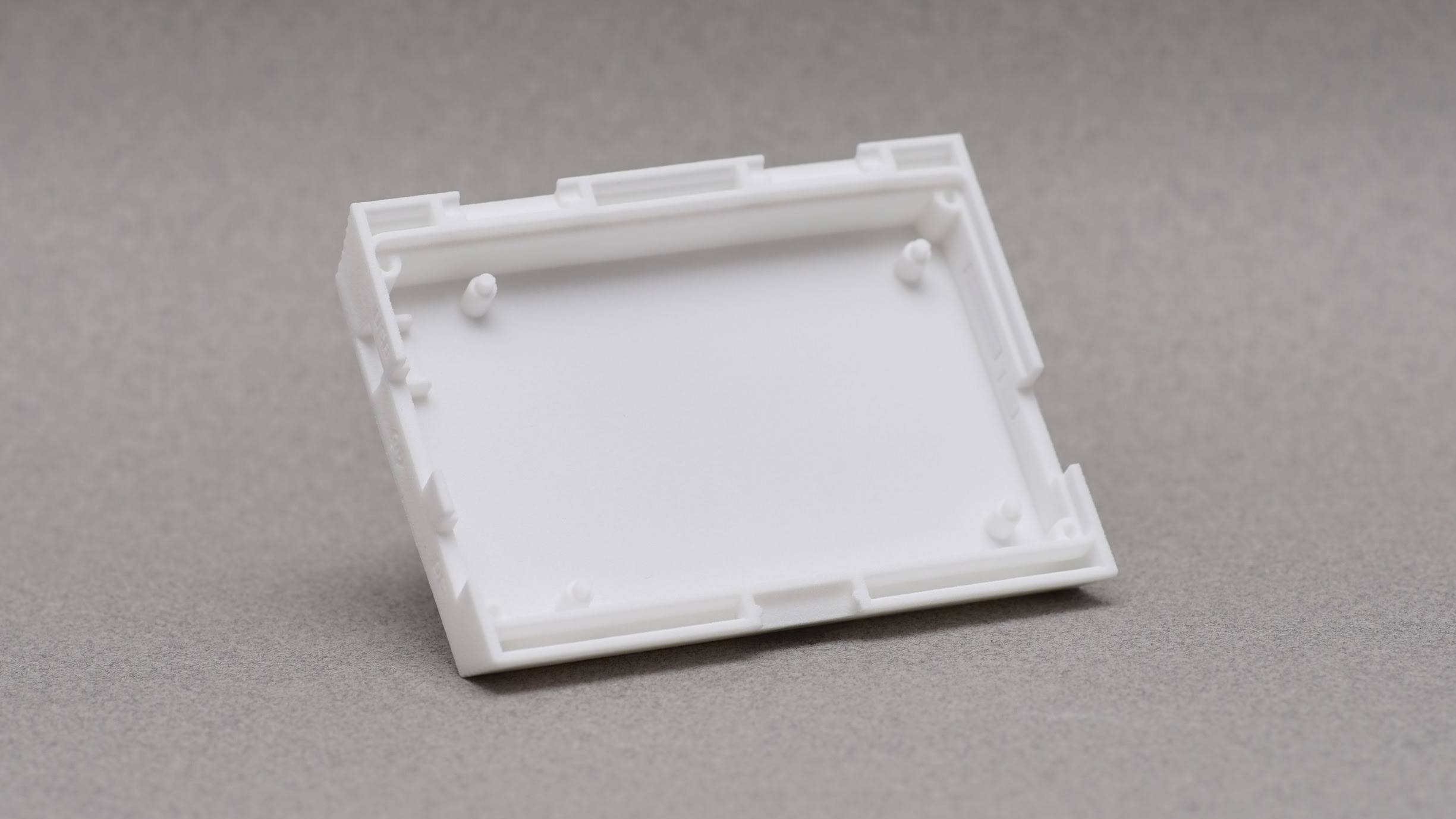
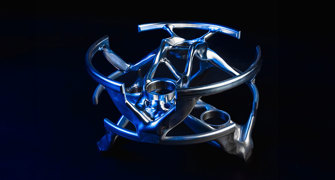
Selective Laser Sintering (SLS) in the UKLead Time: 3 work days |
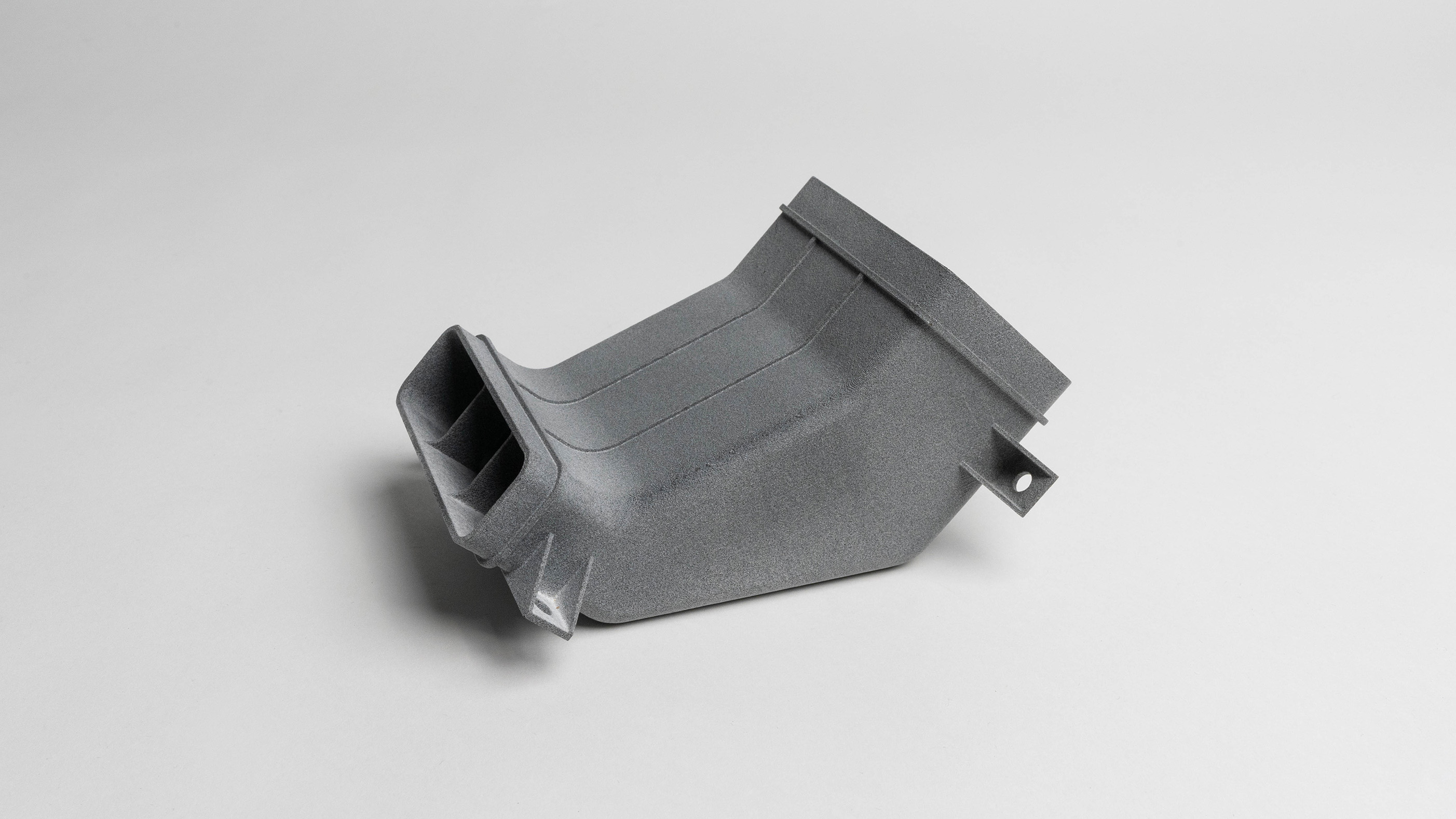
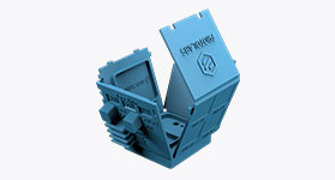
Multi Jet Fusion (MJF) in the UKLead Time: 3 work days |
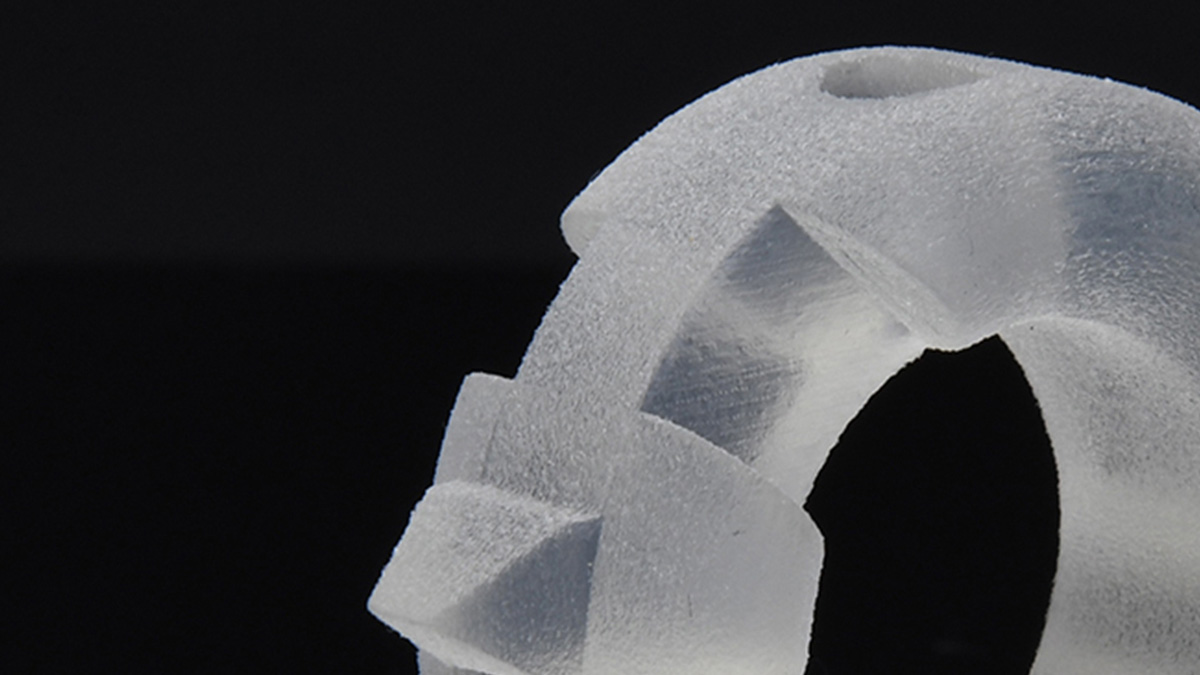
PolyJet & 3D Printed Silicone in the UKLead Time: 3 work days |
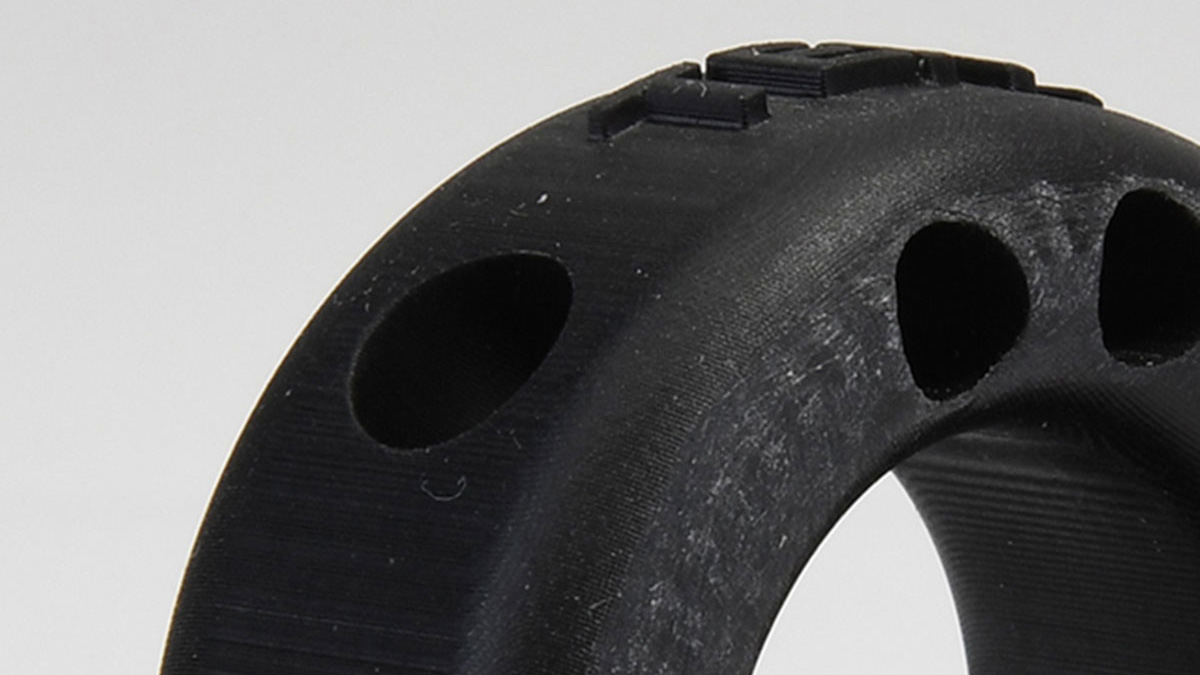
Carbon DLS in the UKLead Time: 3 work days |
Post-Processing for 3D Printing


Materials Available for 3D Printing
| Metal |
|---|
| Aluminum |
| Cobalt Chrome |
| Inconel |
| Stainless Steel |
| Titanium |
| Maraging Steel |
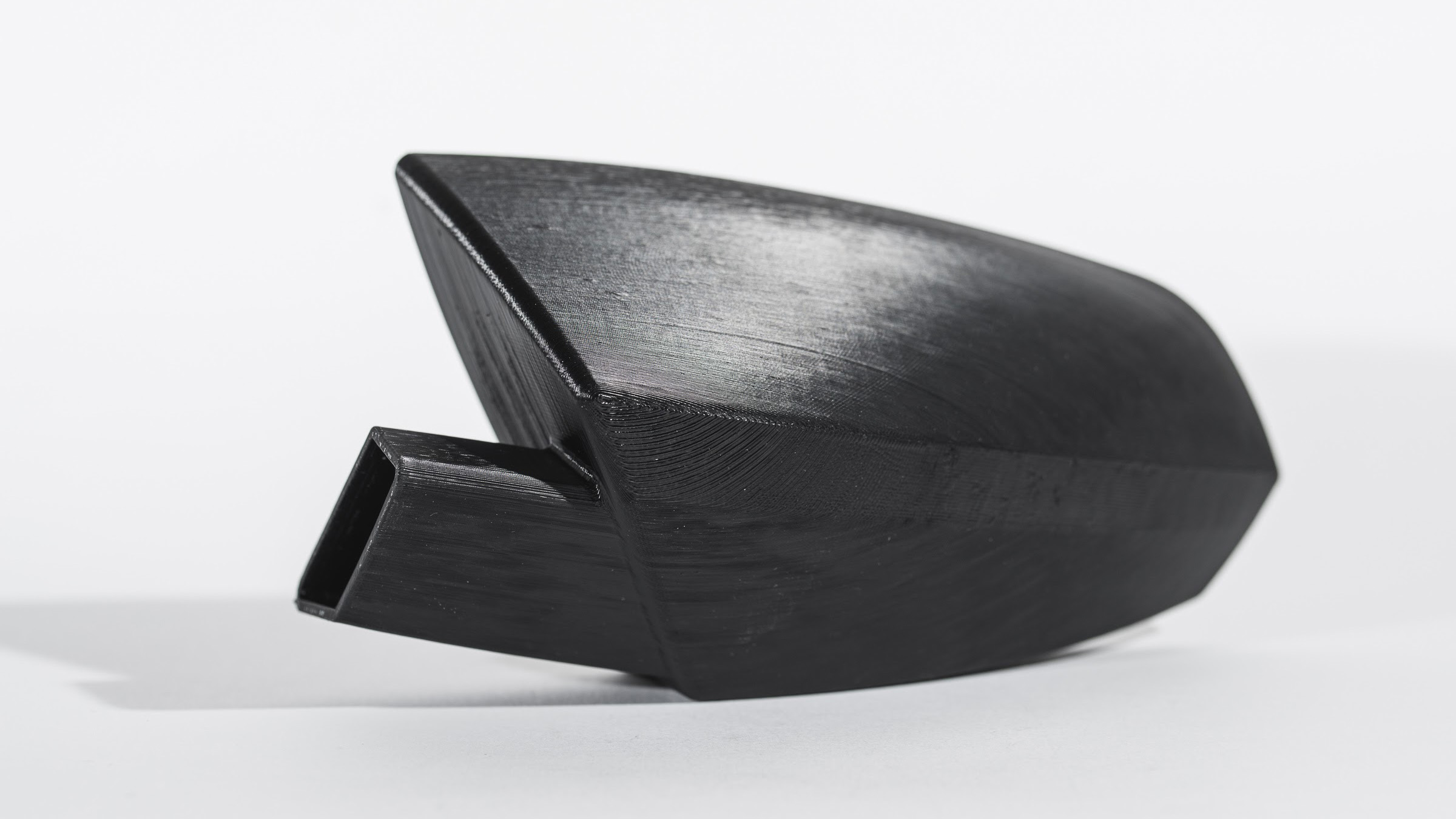
| Plastic |
|---|
| ABS |
| PA (Nylon) |
| Polycarbonate |
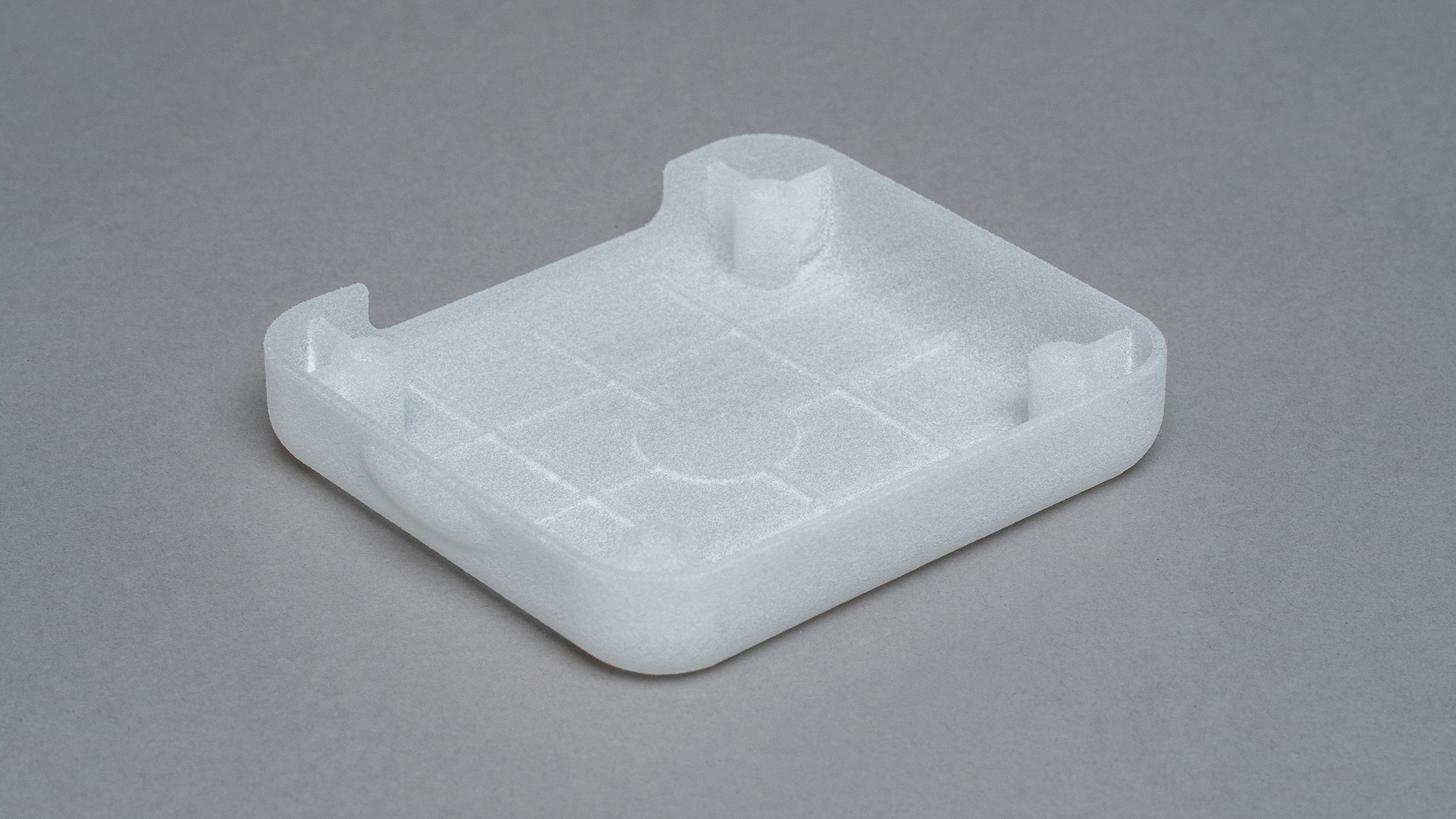
| Elastomers |
|---|
| Digital Photopolymer |
| TPU |
| 3D Printed Silicone |
Benefit from Protolabs 3D Printing Services in the UK

Industrial Quality
Our industry-leading technology produces the quality 3D-printed parts for high-performance applications. With rigorous quality control processes, we guarantee that every part meets your precise specifications. Rely on us for identical parts across all production runs, ensuring the precision and uniformity needed for demanding applications in industries such as aerospace and medical.

Scale & Production
Validate a concept quickly or get full regulatory compliance for production-level volumes of 3D-printed parts––our solutions are customisable. Benefit from full flexibility, combined with our commitment to quality and speed. Scale from prototyping to production with one reliable supplier that is equipped to support every phase of your project.

Trusted Expertise
When you 3D print with Protolabs, you work with knowledgeable engineering and manufacturing experts who specialise in the latest 3D printing technologies. They can help you achieve complex geometries, advise on design or materials, lower your costs, provide documentation, and ensure every finished part performs optimally.

Advanced Capabilities
Our post-processes and secondary services get your 3D-printed parts ready for industrial use. We offer industry-leading tolerances for applications demanding high repeatability, and a variety of options to enhance the mechanical functionality and aesthetics of your parts, such as heat treating, secondary machining, painting, dyeing and vapour smoothing.
Get an Instant 3D Printing Quote
Upload a 3D CAD file to get an instant quote on your 3D printing design. In our quoting platform, you can see real-time cost implications based on your choice of 3D printing material and resolution level.
If you have any questions regarding your quote or design, you can then work with our applications engineering team and they will help guide you through the process.
Get Instant Quote3D Printing FAQs
What is 3D Printing?
expand_less expand_more3D printing is a term used to describe a number of additive manufacturing technologies that produce parts one layer at a time from a 3D digital model. Some 3D printing machines will extrude a filament to create a parts, while others use lasers to sinter or cure raw materials like metal or plastic powders and liquid resins. There are a variety of 3D printing technologies that differ in terms of materials, surface finish quality, cost, and quantity to name a few.
What are the advantages of 3D Printing?
expand_less expand_moreBuilding parts layer-by-layer brings about many benefits that open up design possibilities that were previously unachievable through traditional processes like injection moulding, machining, or casting.
- Complex, organic geometries with limited impact on part cost
- Consolidation of multi-component assembly into a single part
- No upfront tooling costs
- Fast production for parts within 24 hours
- Internal features for advanced heat transfer and flow applications
What are the limitations/ disadvantages of 3D Printing?
expand_less expand_more- Build Size Restrictions
- Slow and costly for mass Production
- Texture, material and colour limitations
- Minimum wall thickness for optimal printability
What is 3D printing used for? Common 3D printing applications?
expand_less expand_moreAdditive manufacturing can be leveraged for both rapid prototyping and production in aerospace, medical, automotive, and other large industry sectors. Examples of typical parts, include:
- Form and fit prototypes
- Housings and enclosures
- Medical devices
- Snap fits
- Jigs and fixtures
- Heat exchangers and heat sinks
- Engine components
- Fuel injectors
- Surgical instrumentation
- Prostheses and Orthoses
How much does 3D printing cost?
expand_less expand_more3D printing cost per part is dependent on a multitude of factors, including design, material, process, and post print operations. Typically, the post print operations account for most of the part cost, especially if manual labor is involved. In general, the laser powder bed sintering processes like SLS and MJF are the most optimal economic choices for end use parts if cost is a key factor.
How do I choose a 3D printing technology?
expand_less expand_moreWhen selecting a 3D printing technology, first determine critical design requirements like strength, temperature resistance, water resistance, aesthetics, or durability. This will often help you determine if a metal or plastic 3D printing is needed for your application. Check out this 3D printing material selection guide for further assistance on technology options to align with your design requirements.
Is part orientation important in 3D Printing?
expand_less expand_morePart orientation is crucial in 3D printing, especially if using 3D printing for rapid prototyping. Not only can part orientation affect the quality of your printed parts, but it can also affect how fast your part can be produced.
At Protolabs, we recommend you let us orient your parts to produce the best quality part efficiently.
What are the 7 different types of additive manufacturing?
expand_less expand_moreVAT Polymerisation/ Photopolymerisation – Photopolymer resin is placed in a VAT from which a part is constructed layer-by-layer using ultraviolet light to cure or harden the resin. A platform moves the part down after each new layer is produced until the final product is revealed. At Protolabs, we offer stereolithography (SLA), which uses the VAT polymerisation method.
Other services include Carbon DLS – digital light synthesis, DLP – direct light processing, CLIP – continuous liquid interface production, and DPP – daylight polymer printing.
Powder Bed Fusion/ PBF – Powder resin/metal is placed into a tray/bed, melted, and fused with a laser or electron beam. At Protolabs, we offer two types of powder bed fusion services at Protolabs selective laser sintering (SLS) and direct metal laser sintering (DMLS).
Other services include EBM – Electron Beam Melting.
Material Jetting – material is dispensed from a printhead, not too dissimilar to that on a normal 2D printer. Material is dispensed in droplets of photosensitive material solidified under an ultraviolet light, built up layer-by-layer. At Protolabs, we offer PolyJet & 3D Printed Silicone (60-65%), utilising the material jetting printing method.
Other services include DOD – Drop on Demand and NPJ – NanoParticle Jetting.
Binder Jetting – Not too dissimilar to powder bed fusion methods, such as selective laser sintering. Powder materials are spread in a bed. Then, rather than a laser that melts and fuses parts, a printhead deposits a binding agent onto layers of powder, binding the layers together to form a part. Binder jetting is sometimes known as “inkjet”. At Protolabs, we offer Multi Jet Fusion, a binder jetting method of 3D printing.
Material Extrusion – A material, generally a thermoplastic polymer, is forced through a heated nozzle, which is then deposited onto a build platform in a continuous, selective stream to build up the part layer by layer.
Services that use the material extrusion method include CDD – Composite fibre fabrication, FFF – fused filament fabrication and FDM – fused deposition modelling (the latter is a service offered by our partner network, HUBS.)
Sheet Lamination – Thin sheets of material, such as paper, plastic or foil, are bonded layer-by-layer to form a single part that is cut. Material is generally supplied by a feed of rollers and is laminated by either ultrasonic welding, adhesive or heat and pressure. This method combines additive and subtractive manufacturing, in that the material is layered up to make an object and subtractive, the part is then cut away from this layered material.
Services that use the sheet lamination method include LOM – laminated object manufacturing, UC – ultrasonic consolidation, SDL – Selective deposition lamination and CBAM – composite-based additive manufacturing.
Directed Energy Deposition – Parts are created directly as Material is melted by a laser, electron beam or plasma arc as it is deposited. Material is added layer-by-layer and solidifies. This offering is often used for repairing material features on existing parts but can be used for creating also.
Services that make use of the directed energy deposition method include LENS – laser engineering mesh formation, DLF – direct light production, DMD – direct metal deposition, LC - 3D laser coating, Aerosol jet, EBAM – electron beam additive manufacturing, LDW – laser deposition welding and hybrid manufacturing.
How large of a part can you 3D print?
expand_less expand_moreThe maximum size of the part depends on the bounding box in the 3D printing machine being used.
Please see maximum part sizes for each process above.
Why type of file format is needed for 3D printing?
expand_less expand_moreThough all file types are ultimately converted to STL (.stl) before printing, the recommended file type to upload is STEP (.stp/.step). SOLIDWORKS (.sldprt), and IGES (.igs/.iges) files. Check out further guidance on how to design .stil files for 3D printing. Learn more about .stl files for 3D printing.
What is an STL file?
expand_less expand_moreSTL files are considered the preferred and standard file type for 3D printing. STL files describe the part’s surface by breaking it into triangles and listing the location of each point of every triangle, including which side of the triangle faces outwards. Compared to other CAD file formats, STL files have relatively little information, describing only the surface geometry of a three-dimensional shape, not factoring in other attributes such as colour, texture etc.
So, what does STL stand for? STL has several backronyms, such as Standard Triangle Language and Standard Tessellation Language, but was originally taken from the word and process stereolithography.
To learn more about STL files and how to design for them, read our tip here.
Is 3D printing mainly used for prototyping?
expand_less expand_moreWhile additive manufacturing is excellent
for prototyping because it is a very cost
effective way of producing many different
designs during the development phase,
it is also increasingly used to make final
parts. Indeed, there are many advantages
of using 3D printing for production, but
more on that later.
Is 3D printing suitable for larger volumes?
expand_less expand_moreIncreased automation and faster production speeds mean that if you need anything up to a few hundred parts, then 3D printing could be the answer you are looking for.
Can 3D Printing be used for mass production?
expand_less expand_more3D printing is increasingly used to produce end-use parts. However, it is generally not the preferred manufacturing method for mass production. Whilst the speed and flexibility make it perfect for prototyping, when produced parts at mass, lead times and costs can struggle to match that of more traditional methods. Regarding mass production, manufacturers tend to favour injection moulding, which is faster and cheaper when producing at scale. However, don’t rule out 3D printing from the mass production stage in the future. 3D printing is especially good for customisable products and variable quantities.
What are supports in 3D Printing?
expand_less expand_moreThe support is an added part that supports any overhanging material, keeps it in the correct position, and helps avoid deformation. This support structure generally needs to be removed after, which means the part must go through post-processing.
Is 3D printing just plastic?
expand_less expand_moreNo, 3D printing materials span a wide range, including plastics, resins, metal powders for metal 3D printing, and advanced composites like Carbon DLS. This diverse material selection makes 3D printing ideal for producing everything from precise aerospace and industrial machinery parts to customized consumer products with enhanced strength and durability.
Additional Resources

3D Printing Resources - Our Library for 3DP Enthusiasts

3DP Materials

3D Printing Technologies for Prototyping and Production

Protolabs Q&A: 3D Printing


