
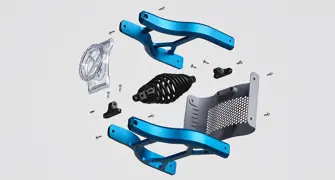

As an engineer or product designer, you already know that you can choose from hundreds of commercial-grade thermoplastics that are suitable for both prototype and production parts. Yet within that giant universe of plastics, we often see designers and engineers we work with turn to materials that are preferred or more commonly used than others.
Two common choices are ABS (acrylonitrile butadiene styrene), a terpolymer, and polypropylene (PP), a single chain polymer. These plastics are used frequently for good reason.
ABS is one of the most affordable thermoplastics and offers strong mechanical performance, including durability, rigidity, and a high heat deflection capability. It machines and fabricates easily, so machinability is a key advantage.
PP is also affordable, often at a lower price point than ABS. It is durable, tough, flexible, low in weight compared with many plastics, and resists moisture absorption. With a density below 1 g/ml, PP floats on water. Its properties are similar to polyethylene, but it is slightly harder and more heat resistant, and it offers better heat resistance than ABS.
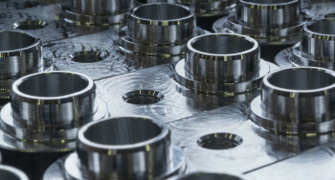
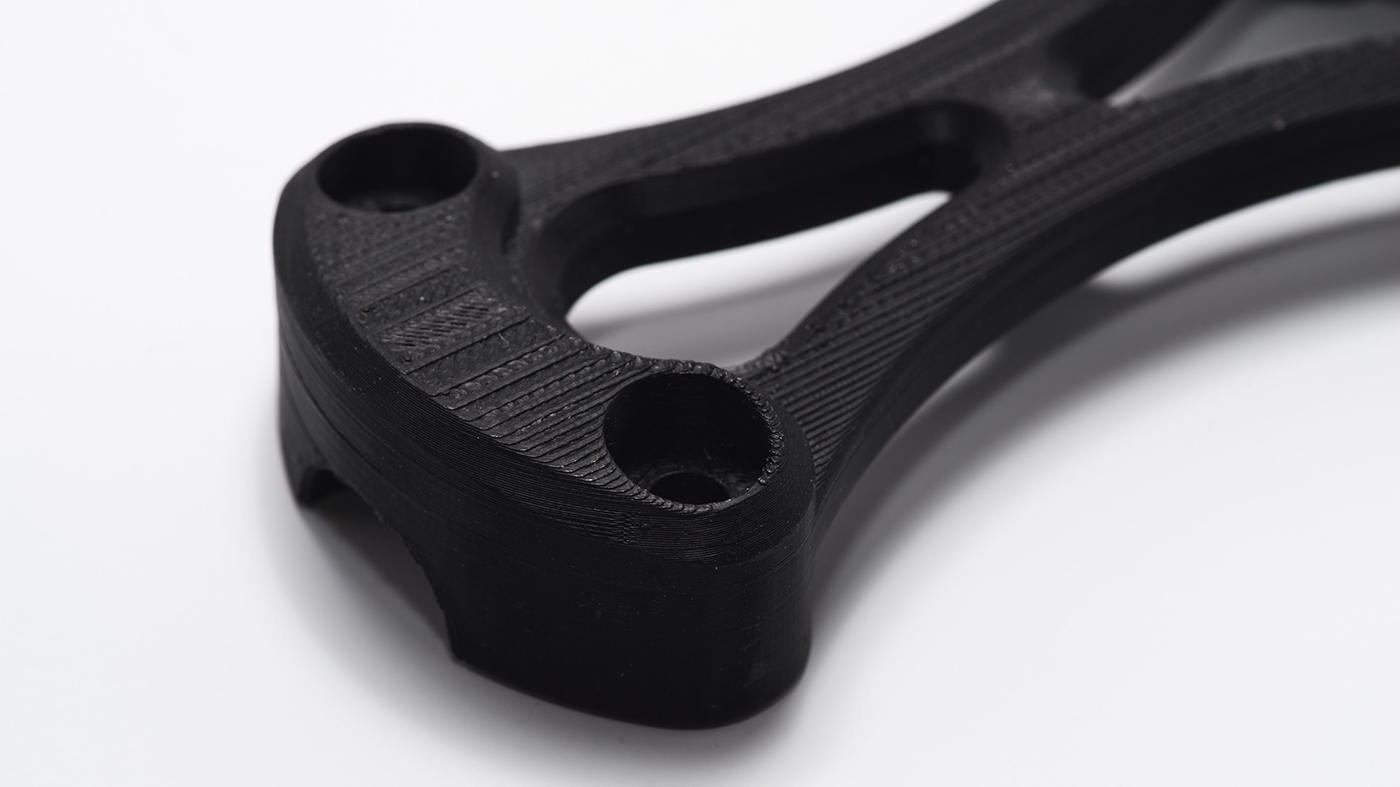
Both ABS and PP are compatible with CNC machining, injection moulding, and industrial-grade 3D printing. Below is an overview of benefits and applications, followed by a table that compares typical properties of these plastics across machining, moulding, and 3D printing, specifically stereolithography.
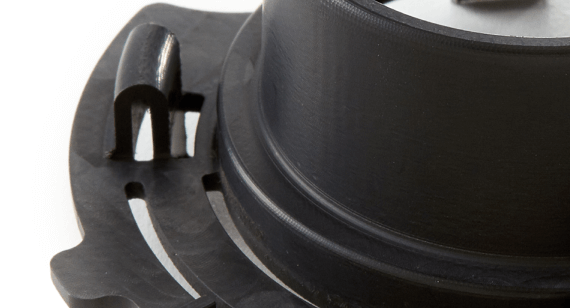
Benefits and Applications of ABS
ABS is a versatile choice across our manufacturing services. For machining, it is fast and straightforward to process, with impact resistance, strength, and stiffness over a wide temperature range. For 3D printing, it offers heat and creep resistance with minimal oozing and stringing. For injection moulding, it is a popular option when an inexpensive, strong, and stiff plastic is required. Additional benefits of ABS include:
- A low-cost plastic.
- Mostly unaffected by temperature, humidity, and frequency.
- A solid electrical insulator and has exceptional dielectric properties
- Resistant to most fluids, and unaffected by water, alkalis, alcohols, inorganic salts, hydrocarbon solvents, and many acids
- High tensile strength and impact resistance, so it holds up well to external impact
- Favoured for aesthetic qualities thanks to its natural opaque and ivory tones, and can be coloured into vibrant parts with gloss levels from matte to high gloss
Note: At Protolabs, 3D printing references ABS-like materials that closely mimic ABS but are chemically different. Protolabs prints ABS-like materials using stereolithography, and Protolabs Network can source ABS 3D printing through industrial fused deposition modelling.
ABS suits a wide range of uses, including:
- Aerospace applications
- Appliances
- Automotive applications
- Construction and industrial applications
- Electronics (consumer and commercial)
- Household goods
- Housings
- Lawn and garden equipment
- Lenses
- Lighting
- Medical/Health Care (surgical instruments, IV-system components, medical devices, test kits, etc.)
- Pharmaceuticals
- Toys
For a detailed overview of ABS and ABS-like materials, see our Materials Comparison Guide, which includes data sheets on each available grade used at Protolabs.

Benefits and Applications of Polypropylene (PP)
The benefits of PP span moulding, machining, and 3D printing. For parts produced with any of these methods, PP is:
- An inexpensive plastic, in fact cheaper than ABS
- Durable and tough
- Low in weight compared to other plastics
- Capable of floating on water, given it has a density of less than 1 g/ml
- Flexible, with high flexural strength
- Capable of handling varied temperatures, with a high melting point and cold temperature impact resistance
- Resistant to moisture absorption
- Chemically resistant, with better chemical resistance than ABS because PP is semi-crystalline while ABS is amorphous
- A strong electrical insulator
PP suits a wide range of applications, including:
|
|
The Materials Comparison Guide mentioned earlier includes full specifications for PP.
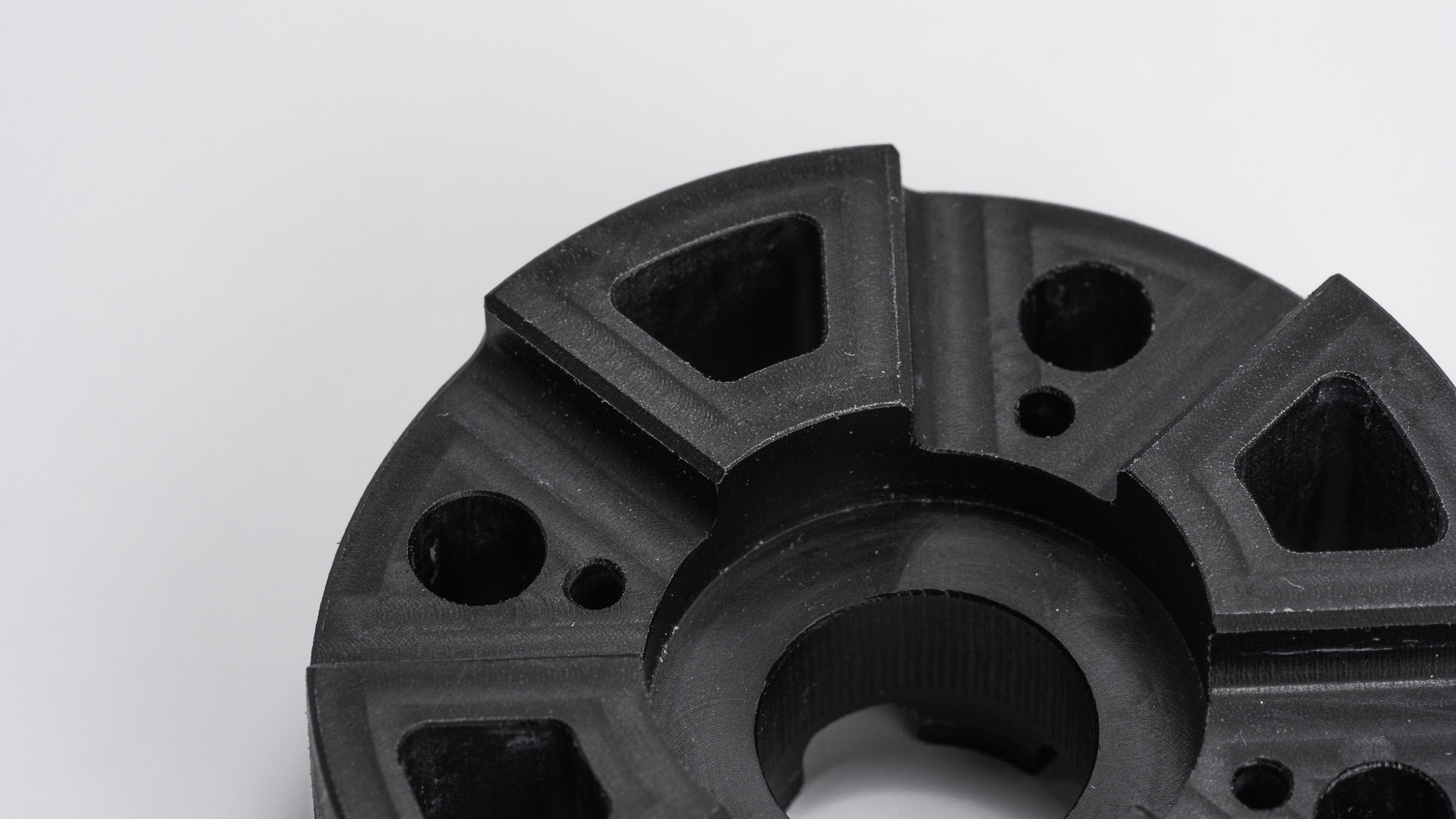
Deciding Between ABS and PP
These two thermoplastics share many similar properties, specifications, and costs, but there are key differences. With higher tensile strength, ABS is stronger and harder. ABS typically shows less shrinkage than PP during moulding due to PP’s semi crystalline nature, so tolerances can be slightly tighter with ABS. ABS is also less prone to warping than PP. PP offers better heat resistance and is generally less expensive than ABS.
It is important to review the factors that affect your part design, such as required strength, heat resistance, and flexibility, before machining, moulding, or 3D printing. Material selection will often depend on the manufacturing method.
You may also wish to compare the application lists above with your project requirements.
Quick Comparison Table
Below is a comparison of ABS and PP material properties across injection moulding, CNC machining, and 3D printing (stereolithography).
|
|
ABS Moulded |
ABS Machined |
3DP SL |
|
Heat Deflection |
80-90° C |
100° C |
46-54° C |
|
Tensile Strength |
37-46 MPa |
37 MPa |
55 MPa |
|
Elongation at Break |
15-40% |
7% (at yield) |
3-9 % |
|
|
PP Moulded |
PP Machined |
3DP SL (ABS-like) |
SLS (PA-12 FLEX) |
|
Heat Deflection |
80-85° C |
100° C |
47-62° C |
80-90° C |
|
Tensile Strength |
23-30 MPa |
32 MPa |
32-65 MPa |
44-54 |
|
Elongation at Break |
50% |
8% (at yield) |
4-14% |
13-21% |
Note about this table: Properties depend on the actual material grade, part thickness, and geometry. Values shown are indicative; refer to the relevant material data sheet for precise information.
For questions, contact our applications engineers at [email protected] or +44 (0) 1952 683047. A free quote with design analysis is available for your latest design.


