
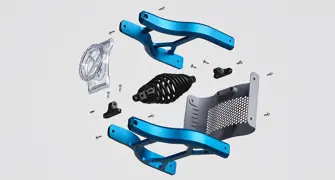
Anodising vs. Powder Coating
One transforms metal through chemistry, the other through static electricity, but which surface finish is right for your project?

Choosing a surface finish can be just as important as picking the right material or machining method. Both anodising and powder coating protect metal parts and make them look great, but they do it in very different ways.
Anodising bonds with the aluminium surface, forming a thin oxide layer that keeps a metallic look and precise dimensions. It is ideal for high-precision parts where accuracy is key and for large production runs of aluminium components that need consistent quality and performance.
Powder coating can be used on a variety of metals, and creates a thicker layer that fully covers the surface. This adds bold colour options and strong impact resistance. It’s best suited for small to medium batches that need extra durability and visual appeal.
This guide walks you through how each process works, how they perform, and where they’re best used, so you know which to pick for your next project.
How Anodising Works
Anodising is an electrochemical process that strengthens the natural oxide layer on aluminium. Parts are placed in an electrolyte bath, where an electric current builds a corrosion-resistant layer that becomes part of the metal. The result is a thin, even coating that maintains tight tolerances, takes dye well, and preserves a metallic finish. Type II anodising provides a medium-thickness layer ideal for cosmetic or general-purpose use, offering good corrosion resistance and vibrant colouring. Type III anodising (hardcoat) forms a much thicker, denser layer for exceptional wear and corrosion resistance, though with more limited colouring and a greater effect on dimensions.
Want to see it in action? Watch our What is Anodising? insight video and read the article A Tough Part – Anodised Aluminium to learn more about the benefits and how to choose the right coating thickness for your parts.
- Layer type: Oxide layer grown from the surface
- Typical thickness: Type II: for clear: minimum average thickness 10μm, minimum local thickness 8μm; black and colour: minimum average thickness 15μm, minimum local thickness 12μm
Type III: 35–50 µm (depending on specification and application) - Appearance: Metallic and translucent; can be dyed and sealed
- Precision impact: Minimal build-up, which is great for tight fits

How Powder Coating Works
Powder coating, available through Protolabs Network, works by spraying an electrostatically charged powder onto grounded metal. When heated, the powder melts into a smooth, tough film that bonds tightly and resists impact. It’s popular for its strong protection, vibrant colour options, and finishes, including matte, glossy, and textured.
- Layer type: Thermoset or thermoplastic film that’s applied and cured
- Typical thickness: 50–150 µm, depending on powder and part shape
- Appearance: RAL colours and textures with great coverage
- Precision impact: Slightly thicker layer that can affect tight fits, so be sure to mask threads, holes, or precise mating areas to keep dimensions accurate.
Types and Finishes
Anodising Types
- Type I (chromic acid): A thin, flexible layer that protects thin-walled or precision parts. It is a good pick when you need to maintain conductivity and tight tolerances. Available from Protolabs as a custom request.
- Type II (sulphuric acid): The most common type, offering reliable protection and a wide range of colours for an eye-catching and consistent finish across batches. Colour results can vary slightly depending on the aluminium alloy.
- Type III (hard anodising): Creates the thickest, toughest coating for extreme wear and harsh environments. Colours are more muted in this process and can vary with alloy choice. While more expensive and less suited to decorative parts, Type III delivers maximum durability, and masking threads or tight-fit holes is recommended due to the increased coating thickness.
You can fine-tune the look before anodising with different surface pre-treatments. Polishing brings out a reflective shine, while bead blasting creates a smooth, matte finish.
Powder Coat Textures
- Matte and satin: Subtle, low-glare finishes that hide small imperfections.
- Gloss: Shiny and reflective, which works well for branded parts or indoor hardware.
- Wrinkle/structured: Textured and tough, helping mask scratches and wear.
- Metallic/pearlescent: Adds visual flair and strong weather resistance.
Keep in mind that texture and colour choices affect coating thickness and flow, so be sure to specify any masking needs early in your design brief.
For more details and ordering options, check out our anodising page or explore our broader secondary services on offer.
Performance Comparison: Anodising vs. Powder Coating
Both finishes perform well, but their strengths differ in where and how they protect metal parts.
Anodising grows a barrier within the aluminium itself, so it won’t flake or peel. It tolerates higher heat and maintains precise fits because it adds only microns of material.
Powder coating forms a thicker external shell that resists chips, weather, and UV exposure, keeping colour intact outdoors.
The table below summarises these performance differences.
| Performance Factor | Anodising | Powder Coating |
|---|---|---|
| Process | Electrochemical oxidation that builds protection into the surface | Electrostatic powder spray followed by heat curing |
| Typical thickness | 5–25 µm | 50–150 µm |
| Corrosion resistance | Becomes part of the metal, so it won’t peel or fail if scratched. Type II offers medium resistance, type III offers a higher level | Offers moderate protection, but chips or scratches can expose the base metal to corrosion |
| Wear resistance | Forms one of the hardest metal surfaces, improving abrasion resistance—Type III hard anodising can be tougher than some steels | Softer and easier to scratch, though more impact-resistant thanks to its flexibility |
| UV stability | Naturally stable so it won’t fade or break down in sunlight | Can fade or chalk over time, but outdoor-rated powders last longer |
| Heat tolerance | Withstands high temperatures since the oxide layer is ceramic-like | Starts breaking down above 200°C, so it’s less suitable for hot environments |
| Thickness and tolerances | Adds very little build-up, so it’s great for tight fits or detailed parts | Thicker layer that may need extra clearance and can hide fine details |
| Colour | Less consistent across batches | Can be matched to RAL colours |
| Repairability | Hard to repair without re-anodising the whole part | Can be touched up or recoated, but colour matching isn’t always perfect |
For more detail on choosing finishes for tough environments, check out our guide to aerospace finishes and coatings.
Material Considerations
Each finishing process works best with certain materials and surface prep steps. Here’s how to set your parts up for success.
Anodising
- Best for aluminium: The oxide layer grows naturally on these alloys. Steel and stainless need different coatings.
- Surface prep: Clean, etch, and de-smut for a consistent colour. Polishing gives a shine, while bead blasting creates a matte look.
- Design tips: Avoid blind holes that trap electrolyte and note that weld zones may anodise with slight colour variation.
Powder Coating
- Compatible with aluminium, steel, and stainless: Ideal for complex shapes and sheet-metal parts that need full coverage.
- Surface prep: Degrease, abrade, or phosphate to help the coating stick. Reliable grounding ensures an even coat.
- Design tips: Mask threads, bearing seats, and tight interfaces to avoid build-up. Parts are hung on jigs or racks, which can leave small uncoated spots. Flag critical surfaces in drawings if marks aren’t acceptable.
Surface prep is key for both methods. Parts for anodising must be spotless and any oil or residue can ruin the finish. Even the CNC machining process can affect results, since tool marks or cutting direction can change how the surface anodises.

Common Applications
Each industry leans toward one finish or the other depending on what their parts need to do, like whether it’s handling heat, resisting corrosion, or looking great on display. Here’s a quick overview of where each finish shines.
Anodising
- Consumer electronics: Thin, metallic finishes that fit tight assemblies and brand colours.
- Aerospace and automotive trim: Lightweight corrosion resistance without compromising tolerances.
- Architectural hardware: Durable, colour-stable aluminium with a premium look.
- Medical devices: Biocompatibility and sterilisation resistance.
- Optical equipment: Non-reflective surface properties.
- Robotics: Hard-wearing surface and electrical insulation properties.
For deeper dives, see benefits of aluminium anodising for metal parts, the comparison anodising vs. electroplating, and aerospace finishes and coatings.
Powder Coating
- Industrial equipment and enclosures: Robust, chip-resistant coating for shop floors and sites.
- Outdoor products and furniture: Strong colour retention and weatherability.
- Automotive and marine hardware: Extra film build for impact and corrosion protection.
- Industrial machinery and appliances: Cost-effectiveness at scale with a wide colour range.
Explore more about how different industries use surface finishing to meet their specific requirements.
Anodising vs. Powder Coating Quick Check
- Need tight tolerances or a metallic finish on aluminium parts? → Choose anodising.
- Need maximum corrosion protection and colour variety? → Choose powder coating.
- Need both precision and durability in one design? → Use anodised aluminium for internal components and powder-coated steel for outer covers or frames.
Frequently Asked Questions
Can I anodise steel parts?
expand_less expand_moreNo. Anodising is primarily for aluminium and magnesium. Consider electroplating or powder coating for steels.
Will powder coating hide machining marks?
expand_less expand_moreMostly. Film build and texture help, but heavy tool marks will telegraph. Add a light bead blast first.
How do I protect threads and fits?
expand_less expand_moreMask critical features for powder coating and for type III anodising. For type II anodising, call out post‑op reaming or keep a small allowance.
Which finish is faster to turn around?
expand_less expand_moreLead times depend on queue and colour spec, but standard Type II anodising is often quicker than custom powder colours. Protolabs can ship fast, anodised CNC components from as fast as 5 days after CAD upload.
Can parts be anodised in a white colour?
expand_less expand_moreGenerally, no. The anodic layer is transparent and doesn’t take white dye well, so the result appears dull or grey rather than true white. Powder coating or painting is a more effective option for white parts.
Get Started
Ready to spec a finish? Upload your part design to receive an instant quote with finishing options tailored to your needs.


