

Formlabs Rigid 10K Resin 3D Printing Material
Formlabs Rigid 10K resin is a white, highly glass-filled SLA material with very high stiffness

What is Formlabs Rigid 10K Resin?
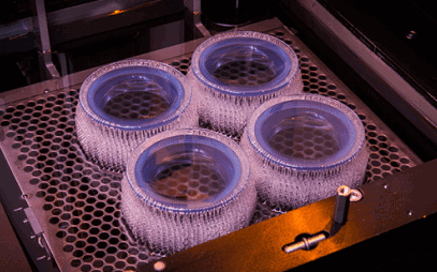
Formlabs Rigid 10K resin is a white, highly glass-filled SLA material with very high stiffness. It produces parts with a smooth, matte finish and offers resistance to heat and a range of chemicals. Its resistance to bending makes it suitable for rigid parts that must hold their shape under load.
Formlabs Rigid 10K Resin Overview
|
|

|
|

|
|

|
|

Formlabs Rigid 10K Resin Properties
| Property | Test Method | Metric Value | Imperial Value |
|---|---|---|---|
| Ultimate tensile strength | ASTM D638-14 | 65 MPa | 9,460 psi |
| Tensile modulus | ASTM D638-14 | 10 GPa | ≈1,450 ksi |
| Elongation at break | ASTM D638-14 | 1% | 1% |
| Flexural strength | ASTM D790-15 | 126 MPa | 18,200 psi |
| Flexural modulus | ASTM D790-15 | 9 GPa | ≈1,310 ksi |
| Notched Izod impact strength | ASTM D256-10 | 16 J/m | 0.3 ft·lbf/in |
| Unnotched Izod impact strength | ASTM D4812-11 | 47 J/m | 0.9 ft·lbf/in |
| HDT at 1.8 MPa (≈261 psi) | ASTM D648-16 | 82 °C | 180 °F |
| HDT at 0.45 MPa (≈65.3 psi) | ASTM D648-16 | 163 °C | 325 °F |
| HDT at 0.45 MPa after additional thermal cure | ASTM D648-16 | 218 °C | 424 °F |
| Data sheet | Download data sheet (PDF) | ||
Values are based on manufacturer testing and are approximate. Actual part properties may vary with geometry, machine settings, and processing conditions. This information is not binding and is not deemed to be certified. When performance is critical, consider independent laboratory testing of the material or finished part.