


Multi-Cavity and Family Injection Moulding
Maximise each shot with multiples of the same or different parts from a single mould
What is Family and Multi-Cavity Moulding?
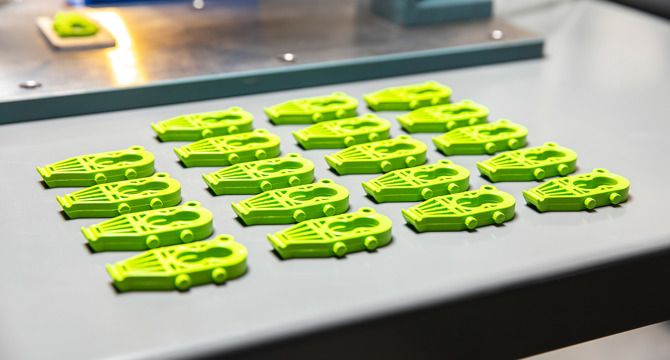
Family moulding and multi-cavity moulding are techniques used to produce multiple parts from a single mould. Rather than producing a single part with each cycle, multiple parts can be produced with a single shot. Multi-cavity moulding describes a tool with the same cavity designed to produce multiples of the same parts. While family moulding describes a tool with various cavity designs such as a left and right components that mate together.

Family and Multi-Cavity Moulding Capabilities
Our basic guidelines for multi-cavity and family injection moulding include important design considerations to help improve part mouldability, enhance cosmetic appearance, and reduce overall production time.
Tolerances: Typically, Protolabs can maintain a machining tolerance of +/- 0.08 mm with an included resin tolerance that can be greater than but no less than +/- 0.002 mm/mm.
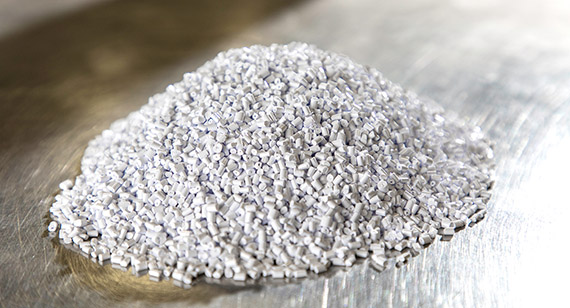
Injection Moulding Materials
|
|
|
Surface Finish Options
| Finish | Description |
| PM-F0 | non-cosmetic, finish to Protolabs' discretion |
| PM-F1 | low-cosmetic, most toolmarks removed |
| PM-F2 | non-cosmetic, EDM permissible |
| SPI-C1 | 600 grit stone |
| PM-T1 | SPI-C1 + light bead blast |
| PM-T2 | SPI-C1 + medium bead blast |
| SPI-B1 | 600 grit paper |
| SPI-A2 | grade #2 diamond buff |

How Does Multi-Cavity or Family Moulding Work?
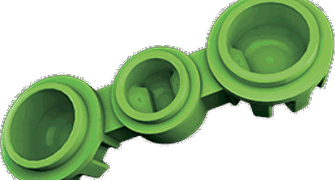
Multi-cavity moulds enable the production of multiple versions of the same part in a single shot. You can take this process to the next logical step when you include many different parts on the same mould, creating a family mould. If you have ever built a plastic model, you’ve probably worked with parts made in a family mould. The runners between each part are left intact, forcing you to break each part off the whole.
|
Automotive For high-volume fasteners, connectors, sub-assembly components, interior trim sets, and small standard parts |
|
Construction Commodity items like fittings, fasteners, connectors, and closures
|
|
Consumer Electronics Standardised components used across many units, housings, and internal components for specific devices |
|
Medical Devices Particularly for disposable items and casings for handheld diagnostic tools or kits |
|
Packaging Especially beverage, food, cosmetic, and pharmaceutical packaging |
|
Appliances Housings and components for smaller appliances
|
| Types of Parts | Function |
|---|---|
| Electronic device housings | Front/back casings, battery doors, button sets for a specific remote control, phone, or gadget |
| Buttons and keys | Keyboards, control panels, remote controls |
| Caps and closures | Bottle caps, jar lids, flip-tops, spray nozzle components (huge volumes needed) |
| Connectors | Electrical connectors, terminal housings, fibre optic connectors (standardised, high quantity) |
| Fasteners | Plastic clips, rivets, screw anchors, cable ties (commodity, high volume) |
| Medical disposables and casings | Syringe barrels/plungers, pipette tips, test tubes, vial caps, parts for IV sets, sample cups. Two halves of a glucose meter casing, parts for a specific diagnostic test kit (high volume, consistency crucial) |
| Small ears, bushings, washers | Standardised mechanical components |
| Small pipe fittings | Elbows, T-connectors, caps for plumbing/irrigation |