
Materials for Heat Sinks
Keeping components cool is one of the simplest—and most important—parts of good design.

Every device that generates heat needs a reliable way to remove it. Heat sinks do this by drawing heat away from components and releasing it into the surrounding air, helping keep electronics stable and performing as intended.
A heat sink is typically a metal component with a flat base and an array of thin fins. This block‑and‑fin structure increases surface area so heat can spread out and dissipate more effectively. Most heat sinks use aluminum or copper because these metals conduct heat well, and many systems pair heat sinks with fans or heat pipes for additional cooling.
The choice of material determines how well heat moves through the sink, how heavy the part is, and how easy it is to manufacture. That performance is usually measured using thermal resistance (°C/W), which describes how much the temperature rises for each watt of heat the sink has to remove. For example, a heat sink rated at 2°C/W will rise 20°C when dissipating 10 watts of heat.
This article explores the most common materials for heat sinks, their thermal properties, and how to choose the right one for your next design.
When Heat Sinks Are Important?
Almost every modern electronic system needs thermal management. As devices get smaller and more powerful, they generate more heat in tighter spaces—so reliable cooling becomes essential.
Heat sinks show up across many industries, each with its own thermal challenges:
- Consumer electronics: Laptops, smartphones, and LED lighting all pack components into compact housings. Without good cooling, processors throttle performance and batteries degrade faster. Aluminum heat sinks work well here because they offer a strong balance of conductivity, weight, and cost.
- Automotive: EV battery packs, inverters, and power electronics run at high currents and generate significant heat. If temperatures climb too high, efficiency drops and batteries can become unsafe. Aluminum and copper heat sinks—often made through CNC machining—help keep everything within a safe operating window.
- Industrial equipment: Motor drives, converters, and control systems often run continuously in tough environments. Overheating can cause shutdowns and unplanned downtime, so durable, reliable heat dissipation is critical.
- Medical and telecom: Imaging devices, MRI systems, and telecom hardware produce steady heat during long operating cycles. Stable thermal performance helps ensure accurate diagnostics and prevents network outages.
- Quantum technologies: Quantum computers, and photon-based systems must maintain extremely precise temperature conditions to function correctly. Highly conductive, precisely machined heat sinks are essential for maintaining system coherence and performance.
Because each industry has different demands and operating conditions, engineers need to weigh factors like conductivity, weight, corrosion resistance, and manufacturability when choosing a heat‑sink material.
Common Materials for Heat Sinks
Choosing the right material isn’t just about conductivity. It’s a balance of performance, cost, and practicality. Here’s how the main options compare.
| Material | Thermal Conductivity (W/m·K) | Density (g/cm³) | Description |
|---|---|---|---|
| Aluminum | 200–235 | 2.7 | Lightweight, easy to machine or extrude; ideal for cost‑effective cooling in most electronics. |
| Copper | 385–400 | 8.9 | Highest conductivity of common options; heavier and more expensive but excellent for high‑heat applications. |
| Metal‑matrix composites (MMCs) | 200–600 | 2.5–4.0 | Tunable blend of conductivity, stiffness, and low thermal expansion; suited to aerospace and high‑performance system |
Choosing the Right Material for Your Heat Sink
Here’s a simple guide to help you match your cooling needs with the right material:
- If you need the best all‑rounder: Choose aluminum. It’s affordable, lightweight, easy to manufacture, and suitable for most electronics.
- If you need maximum heat transfer: Choose copper. It’s the most conductive common material and ideal for high‑power or high‑density heat loads.
- If weight or space is your biggest constraint: Choose graphite. Its in‑plane conductivity and low density make it great for thin, compact assemblies.
- If you need tightly controlled thermal expansion or custom‑tuned properties: Choose MMCs. These shine in aerospace, precision optics, and high‑performance automotive systems.
This quick guide won’t replace detailed engineering analysis, but it helps narrow the field fast. If you’re comparing metals with corrosion in mind, our guide to corrosion‑resistant metals walks through how different materials behave in real‑world environments.
Manufacturing Considerations
The way a heat sink is made is just as important as the material itself. Each process affects cost, complexity, and cooling efficiency.
- Extrusion: Perfect for aluminum profiles with straight fins. It’s cost-effective for high volumes and allows for good design flexibility.
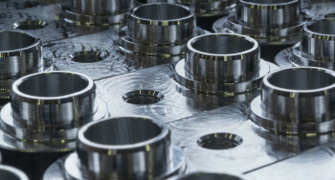
- CNC machining: Ideal for prototypes and custom parts where precision and surface quality are key.
- Die casting: Suited to high-volume production of intricate shapes, especially in aluminum and copper alloys.
- Stamping: Used for flat heat spreaders or thin fins. Best for sheet-metal fabrication, which is available through Protolabs Network.
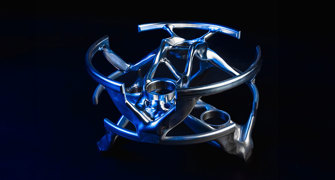
- 3D printing: Allows for complex geometries such as lattice fins or integrated fluid channels. For metals, direct metal laser sintering (DMLS) can create highly efficient, lightweight designs impossible to machine conventionally.
Thermal Interface Materials
A Thermal Interface Material is a thin, heat‑conductive material that fills tiny air gaps so heat can move smoothly from a component into its heat sink. TIMs, such as thermal pastes, pads, or phase‑change materials, improve contact between surfaces and reduce thermal resistance, and it often plays a larger role in overall cooling performance than the choice of heat‑sink material.
Surface Finishes and Coatings
A heat sink’s surface treatment can have a big impact on its long‑term performance. These surface finishes protect against corrosion, improve emissivity, provide electrical insulation, and help prevent galvanic corrosion, which is a reaction that occurs when different metals touch and moisture causes one to corrode faster. Each finish supports cooling and durability in a different way.
- Anodizing: Adds corrosion protection and boosts emissivity. It makes the biggest difference in natural convection systems with little airflow. In forced convection setups (with fans), the thermal improvement is smaller, but anodizing still adds protection and durability.
- Nickel or tin plating: Prevents oxidation on copper or steel heat sinks, which keeps thermal performance stable over time and improves durability in humid or corrosive environments.
- Black coatings: Increase emissivity significantly, allowing the heat sink to shed heat as infrared radiation more efficiently, which is particularly helpful when airflow is limited.
- Insulating coatings: Add a protective, non-conductive layer so the heat sink can sit close to electronics without causing shorts. Works well for compact assemblies or high-voltage designs.

Design Considerations
Even the best material can underperform without the right design. A heat sink works by spreading heat out and giving it as much surface area as possible to escape, so getting the geometry right makes a big difference.
- Thermal performance vs. weight: Copper moves heat quickly but adds a lot of mass. Aluminum offers a solid balance for most designs.
- Fin spacing and orientation: Fins that are too close restrict airflow, while ones that are too far apart lose valuable surface area. Aim for a balance that matches your airflow conditions.
- CTE and material matching: Different materials expand at different rates when heated. Copper, aluminum, graphite, and MMCs each have distinct coefficients of thermal expansion (CTE). Mismatched CTEs can introduce stress at joints or interfaces, especially in high‑power or high‑temperature systems.
- Mounting and assembly: How you attach the heat sink—fasteners, clips, thermal pads, or adhesives—affects the thermal interface and overall performance.
- System integration: Plan early. Making material and enclosure decisions together helps avoid clearance issues and ensures good airflow.
Design is always a trade‑off. The most effective heat sink isn’t necessarily the one with the highest conductivity, but rather the one that fits your space, weight, airflow, and cost targets.
FAQs
What is the best material for lightweight heat sinks?
expand_less expand_moreAluminium remains the standard choice. It’s light, easy to manufacture, and provides good thermal conductivity for most applications.
When should I use copper?
expand_less expand_moreChoose copper when you need maximum heat transfer, such as in CPUs, laser systems, or EV power electronics. Hybrid designs often offer the best balance.
Does anodising affect performance?
expand_less expand_moreAnodising slightly reduces surface conductivity but increases emissivity and corrosion resistance, often improving overall thermal performance.
Can I 3D print heat sinks?
expand_less expand_moreYes. Metal additive manufacturing can produce lightweight, high-surface-area structures that outperform traditional fins.
How do coatings help with corrosion?
expand_less expand_moreCoatings like anodising, nickel plating, or polymer films form a barrier between the metal and the environment, extending component life.

