
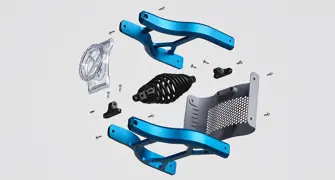
Aluminum vs. Steel Tooling
Compare these two ways to make injection-molded parts

Making a commitment to specific molds for parts is an important decision, but as we reveal here, and in this video, it’s not a hugely difficult one. That said, your decision will affect pricing of your mold and parts, how long it takes to get those parts, and what materials you can use.
Right up front, know that steel tooling is the way to go if you need quantities of 1 million or more, with aluminum your best bet for lower quantities. Here are some additional details to help you make the decision.
Low-Volume Production with Aluminum Tooling
Aluminum molds cost much less than steel tooling (tens of thousands of dollars less). They take less time to machine and are usable for 10,000 cycles or more (depending on material type and geometry). Because aluminum makes sense for lower volumes, it’s a great choice for bridge production, too.
Aluminum—as a softer metal—is more easily machined than steel. That means that when that block of metal is milled, it will take days instead of months to create what will become your tooling. You’ll save significantly on machining costs. So, if you are iterating your part, fine adjustments can be made more rapidly.
On a side note, if you go with aluminum, we charge no maintenance fees, and you get lifetime replacement if the mold is damaged. Also, if you move from prototyping quantities to on-demand production, you will receive the value of your aluminum mold as a discount on your production quantity order.
Production with Steel Tooling
Conventional steel tooling paved the way for how injection molding was once done. In those days, companies expected to wait months for their first parts, making fast iteration an impossibility. In today’s accelerated product development cycles, long lead times for some parts can be prohibitive to innovation goals.
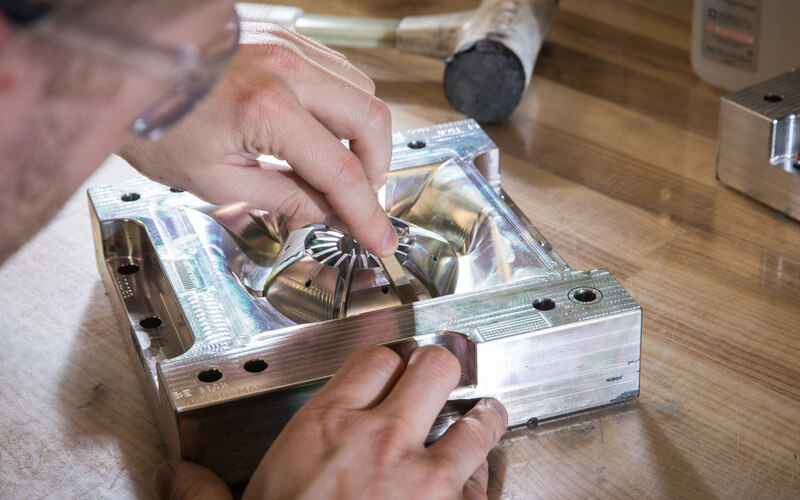
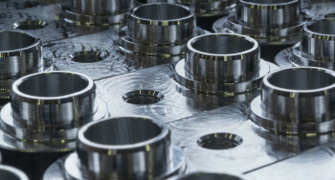
So, why consider steel tooling? Well, if timing isn’t a showstopper, it certainly lasts much longer than aluminum at higher quantities, plus you will get a lower price per part based on volume. Also, it’s the way to go if you know that you are going to need millions of copies of your parts or have chosen high temperature materials such as PEEK or Ultem. As for finishing, you’ll have more options with steel tooling.
Aluminum vs. Steel Tooling: Quick Glance
| Aluminum | Steel | |
|---|---|---|
| Lead Time to Receive Parts | Days | Months |
| Longevity | 10,000+ | Millions |
| Materials | More than 100 | More than 100, including abrasive resins |
| Properties | Aluminum wicks away heat more quickly, eliminating cooling lines and their attendant cost | Stronger to maintain quality with abrasive resins, high volumes, high temperature materials, complex geometries |
| Quality | Production | Production |
| Types of Tooling Available | Single or multi-cavity (1, 2, 4, and 8) | Multi-cavity tooling greater than eight cavities |
| Upfront Tooling Investment | $1,500 minimum (depending on capacity) | $50,000 or more |
Design Must-Haves
Both aluminum and steel molds have something in common—both require certain design elements to ensure clean ejection from the mold. Always remember to:
- Include draft to prevent scraping and warping during ejection
- Design wall thickness of at least 0.040 in. (1.02mm) to 0.140 in. (3.56mm)
- Add radii to all corners to improve ejection outcomes
Our digital quoting software will flag many design for manufacturing (DFM) issues in your molds so you can adjust your CAD model to meet the necessary standards.


