

What is MRO Manufacturing?
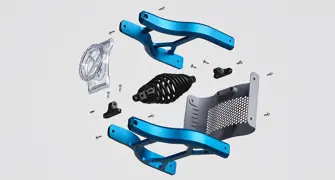
MRO manufacturing refers to the production of replacement parts, tooling, fixtures, and components needed to maintain, repair, and operate industrial equipment. Unlike high-volume production, MRO manufacturing prioritizes speed, availability, and reliability over scale.
For engineers and operations teams, MRO parts are critical for preventing unplanned downtime, extending the life of capital equipment, maintaining safety and compliance, and reducing reliance on legacy or capacity-constrained supply chains.
Why MRO Manufacturing is Becoming More Critical
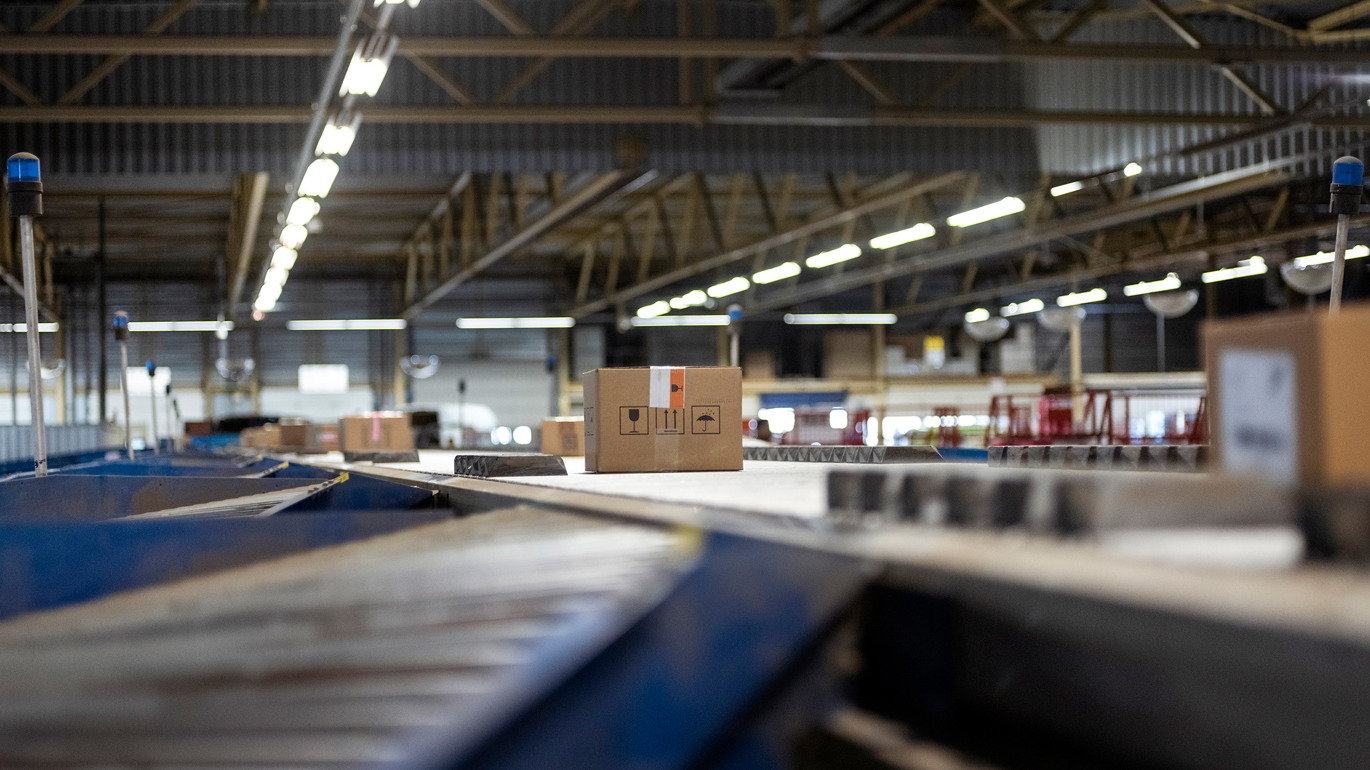
Across industrial sectors, manufacturers are facing longer lead times, supplier consolidation, and legacy equipment that is still essential to operations. As a result, MRO manufacturing is shifting from a reactive function to a strategic capability.
Key drivers include:
- Aging equipment with limited OEM support
- Supply chain disruption and long replacement lead times
- Increased pressure to maximize uptime and asset utilization
- Greater focus on resilience and operational flexibility
This shift aligns closely with Industry 4.0 and emerging Industry 5.0 priorities, where adaptability, responsiveness, and human-centered operations matter as much as efficiency.
Common MRO Manufacturing Challenges
Engineers and maintenance teams often face the same constraints when sourcing MRO parts:
- Obsolete or discontinued components
- Long lead times for low-volume replacement parts
- Limited documentation or incomplete CAD data
- High costs for one-off or short-run production
- Inconsistent quality from ad hoc suppliers
These challenges make traditional manufacturing models poorly suited to MRO needs.
How Protolabs Supports MRO Manufacturing
Protolabs provides on-demand, digitally driven manufacturing that supports MRO workflows without the delays of traditional sourcing.
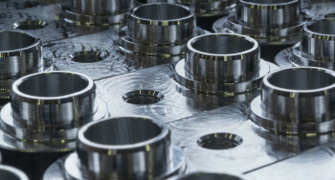
Quick-turn CNC Machining for MRO Parts
CNC machining enables the production of durable, production-grade replacement parts with tight tolerances.
Common MRO applications include:
- Shafts, housings, brackets, and mounts
- Wear components and mechanical interfaces
- Fixtures and tooling used in maintenance operations
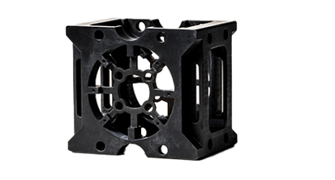
Injection Molding for Replacement and Service Parts
For plastic components used in equipment housings, enclosures, or fluid handling, injection molding supports repeatable, low- to mid-volume MRO production.
Use cases include:
- Replacement plastic components
- Updated versions of legacy parts
- Service parts for installed equipment bases
Digital Manufacturing for Speed and Flexibility
Protolabs’ digital manufacturing platform reduces friction between design and production, allowing engineers to move quickly from CAD to parts.
Benefits for MRO manufacturing:
- Rapid DFM feedback
- Short lead times for critical components
- Easy iteration when designs must be adapted
- Reduced dependency on single-source suppliers
Supporting Industry 4.0 and Industry 5.0 MRO Strategies
Modern MRO strategies increasingly rely on connected equipment, predictive maintenance, and data-driven decision-making.
Protolabs supports these approaches by enabling:
- Fast replacement of parts identified through IoT-based monitoring
- Flexible production to respond to predictive maintenance insights
- Human-centered workflows where engineers and technicians remain in control
This combination supports Industry 4.0 automation while aligning with Industry 5.0 goals around resilience, sustainability, and human–machine collaboration
MRO Manufacturing Across Key Industries
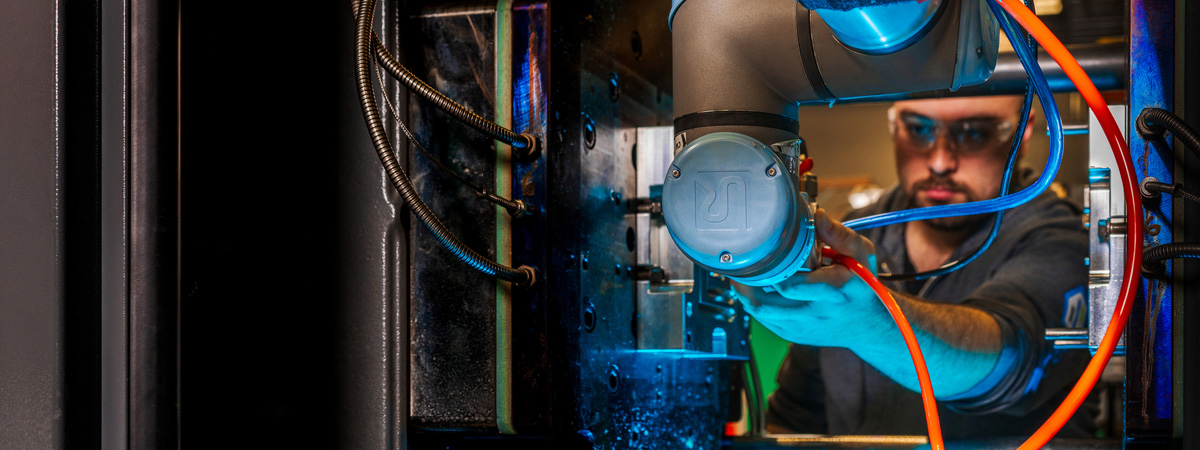
MRO manufacturing plays a critical role in industries where equipment must be supported long after initial production ends.
Industrial Equipment
Legacy machinery, long equipment lifecycles, and uptime requirements make fast MRO manufacturing essential. On-demand production makes it easier to support installed equipment without carrying excess inventory or retooling internal lines.
Aerospace
Long service lives and evolving requirements mean parts must be produced well beyond initial production runs. Low-volume manufacturing supports sustaining engineering and service needs when original suppliers or tooling are no longer available.
Automotive
Frequent line changes, pilot builds, and evolving platforms create ongoing maintenance and repair needs. Protolabs helps automotive teams respond quickly with production-grade replacement and service parts.
Medical
Regulated environments and complex equipment increase the importance of reliable MRO support. Flexible manufacturing supports ongoing maintenance without disrupting validated production processes.
When to Use On-Demand MRO Manufacturing
On-demand MRO manufacturing is most effective when traditional supply chains cannot meet operational demands. For engineering teams focused on uptime and cost control, it provides a practical way to source or improve critical components.
It is particularly useful when OEM parts are unavailable, backordered, or discontinued, allowing teams to reproduce or redesign components to keep legacy equipment running.
It also makes sense when downtime costs exceed the cost of producing a replacement part, as rapid manufacturing can significantly reduce operational disruption. In line-down scenarios, the financial impact can escalate quickly. Unplanned downtime often costs far more than the replacement part itself, particularly in high-throughput or highly automated environments where lost production affects revenue, delivery schedules, and customer commitments. Those effects can extend beyond the shop floor, influencing the broader supply chain and overall profitability.
On-demand MRO proves its value when inventory storage is impractical. Instead of tying up capital and space in low-use spare parts, companies can produce components as needed.
Finally, by allowing for design improvements over time, MRO manufacturing gives engineers the opportunity to enhance reliability, optimize materials, and address known failure points rather than simply replacing a part as-is.
MRO Manufacturing That Keeps Operations Moving
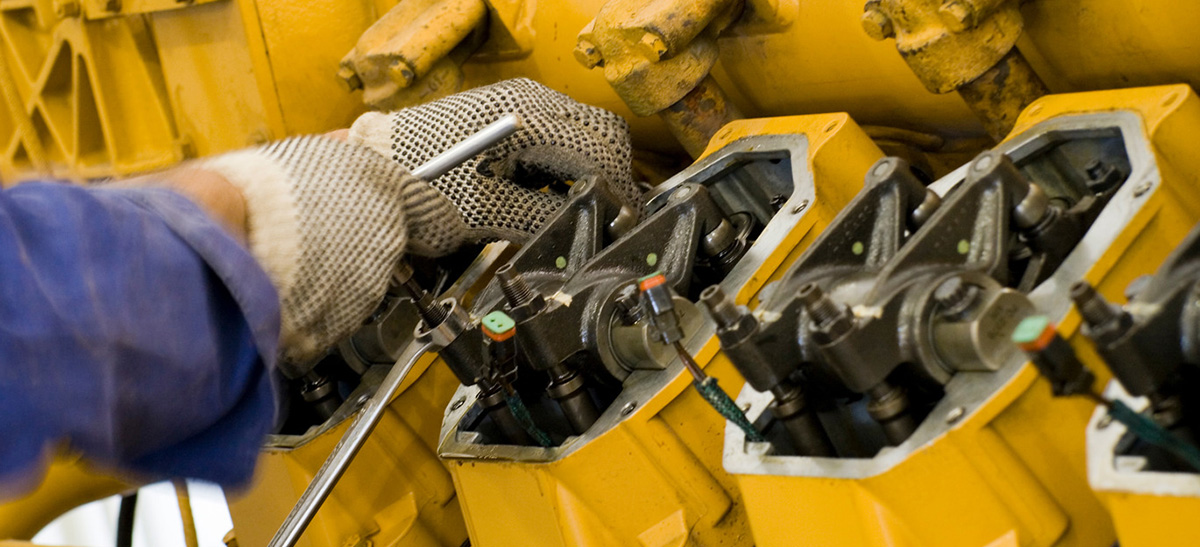
MRO manufacturing is no longer just about fixing what breaks. It plays a critical role in keeping production systems reliable, flexible, and resilient in an increasingly complex manufacturing environment.
By combining fast-turn manufacturing, digital workflows, and production-grade quality, Protolabs helps engineers and operations teams maintain uptime and adapt quickly when it matters most.


