

RoHS Certification at Protolabs
Addressing stringent environmental rules in your products

What is RoHS?
Increasingly, companies have become sensitive to environmental concerns related to their products, whether by choice or by governmental/judicial action. Across the country, communities are considering the effects of forever chemicals and other compounds that pose a hazard, sometimes long-term, to both the environment and everything living in it.

In 2003, the European Union (EU) developed a set of requirements to address use of harmful chemicals generated during the manufacture and disposal of electrical and electronic equipment (EEE). Restriction of Hazardous Substances (RoHS) aims to protect “human health and the environment, including environmentally sound recovery and disposal of waste EEE.”
What Do the Standards Cover?
The EU restricts the use of 10 substances to a particular threshold.
|
|
Due to ongoing regulatory changes, environmental compliance monitoring can be a bit of a moving target.
In the U.S., 10 states have adopted variations of RoHS, although many more states have few or no related regulations whatsoever. From the perspective of designers and engineers, given that we are living in a nationwide/global marketplace, some research and thoughtful consideration is important, especially during the early stages of the product life cycle. This can ensure that materials that make up products adhere to RoHS when they become e-waste, whether domestically or abroad. The bottom line: Short of designing two versions of a product—one more green than the other—it’s often simpler and cheaper to follow the most restrictive rules in the U.S., so pre-project planning is a vital step.
Acquiring a Declaration of RoHS Compliance from Protolabs
Generally, companies use our services to manufacture parts or small assemblies that are one element of a complete product. While we can advise on the RoHS status of individual parts we manufacture based on material and finishing choices, the rest of the product is the responsibility of the company selling it.
Data sheets can give you a preliminary indication of a material’s RoHS status, but due diligence suggests that it is always best to check with us if RoHS is a core concern. Please reach out to our customer service team at [email protected] to request more information on the materials we offer or the parts we’ve produced for you.
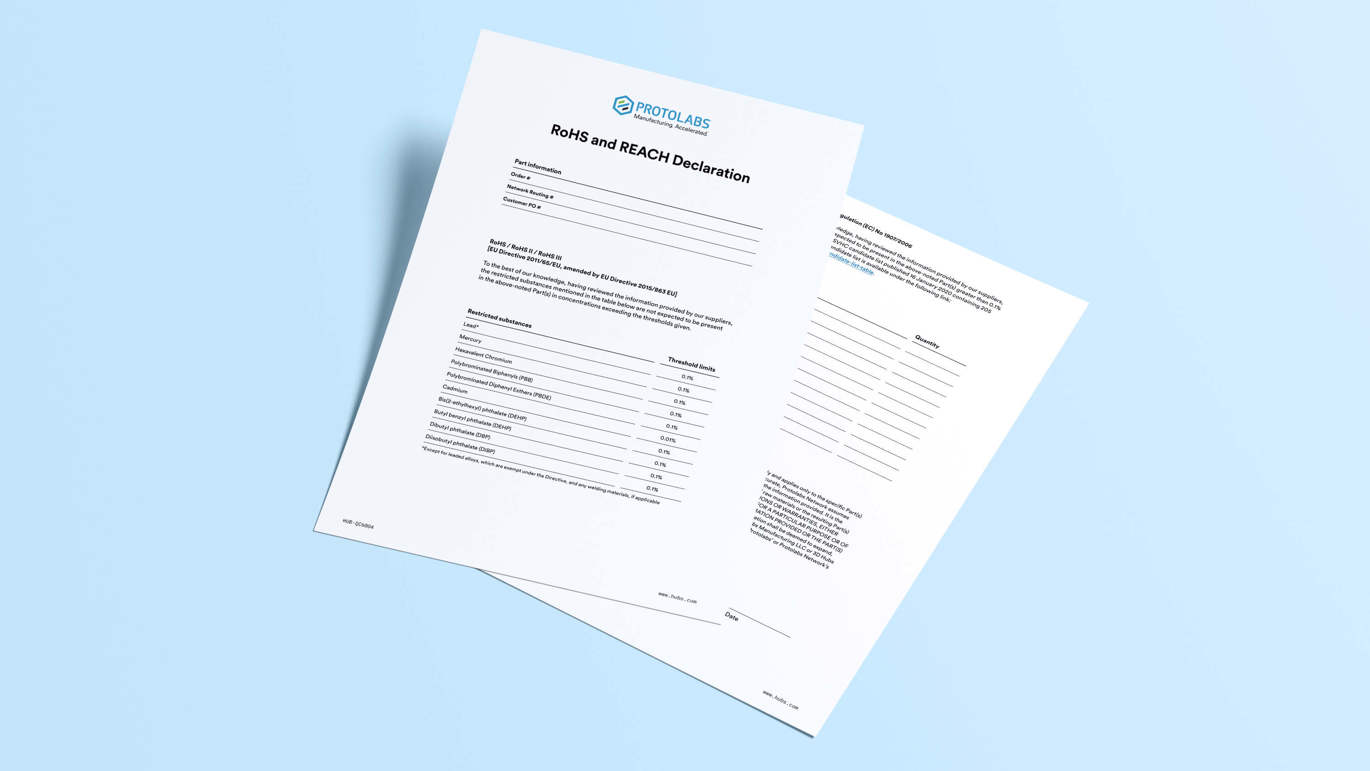
If you use our injection molding service but supply your own material, you must work with your own supplier to obtain the regulatory data you need.
Our website includes policies on subjects such as RoHS, REACH, and Conflict Minerals. These documents provide a basic understanding of how we address these regulations when manufacturing your parts.


