


Advantages of Electroless Nickel Plating
How autocatalytic nickel coatings improve corrosion resistance, wear performance and dimensional control in machined parts.

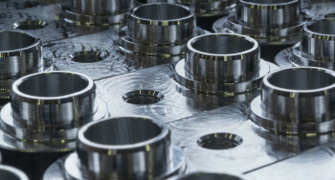
Electroless nickel plating is a controlled, autocatalytic surface treatment used to improve corrosion resistance, wear performance and dimensional consistency in precision components. Unlike electroplating, it does not rely on an external electrical current. This makes it ideal for complex geometries, internal features and tight-tolerance parts common in CNC machining and injection molding.
For engineers and product developers, electroless nickel is a finishing option that provides predictable thickness, uniform coverage and strong performance across demanding environments. This is why it is frequently specified in aerospace, medical, electronics and industrial applications where reliability is critical.
What is Electroless Nickel Plating?
Electroless nickel plating is a chemical deposition process that applies a nickel-phosphorus alloy to a metal substrate. The process uses a reducing agent in solution to deposit nickel uniformly across the part surface without electricity.
Because deposition occurs evenly on all exposed surfaces, electroless nickel is ideal for:
- Intricate internal passages
- Blind holes and threaded features
- Sharp edges and corners
- Complex machined geometries
This uniformity differentiates it from electroplating, where current density can vary and cause uneven buildup.
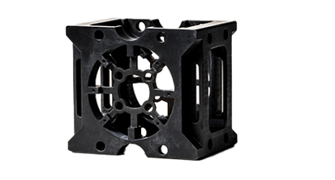
Electroless nickel is commonly applied to aluminum, steel, stainless steel and some copper alloys. It is frequently specified for parts produced through CNC machining where surface durability and corrosion resistance are required.
How the Process Works
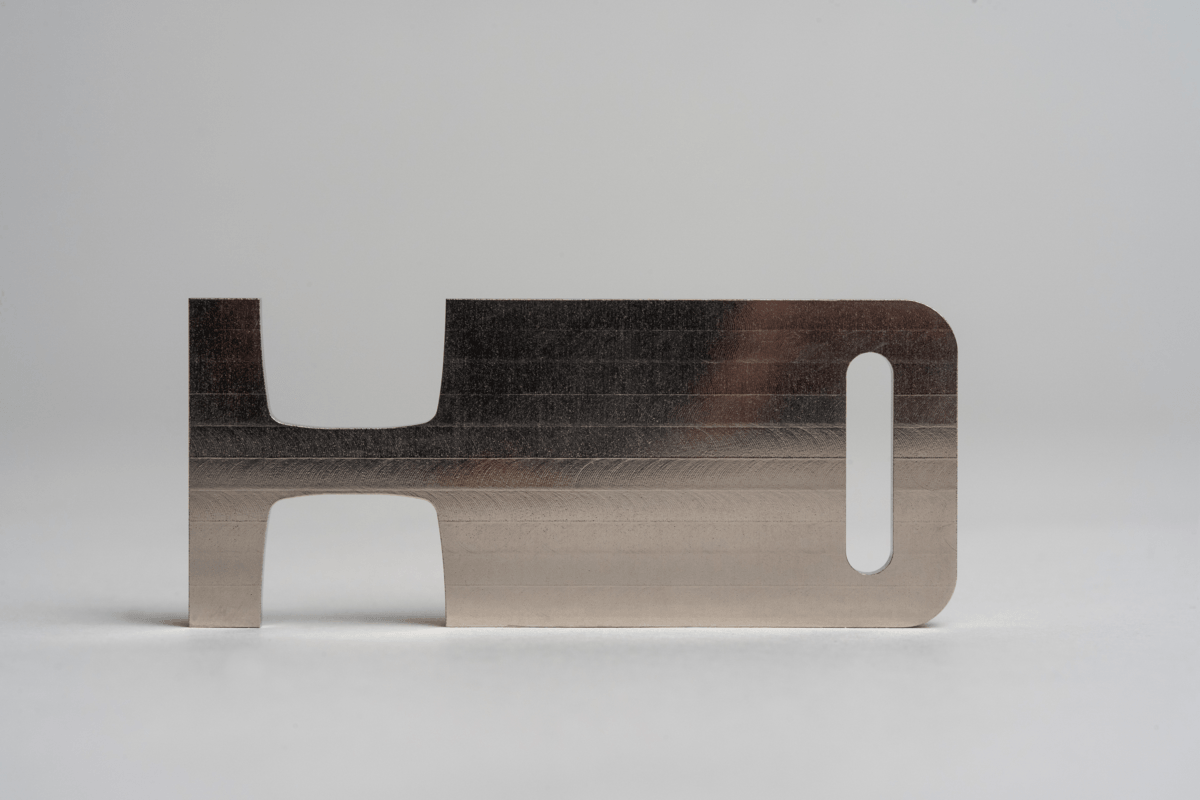
The electroless plating bath contains nickel ions and a chemical reducing agent, typically sodium hypophosphite. When a properly prepared metal part is immersed in the solution, a catalytic reaction begins at the surface, depositing a controlled nickel-phosphorus layer.
The process involves:
- Surface preparation and cleaning
- Activation of the substrate
- Chemical deposition of nickel-phosphorus alloy
- Post-treatment or heat treatment if specified
Heat treatment can increase hardness significantly by promoting precipitation hardening in higher phosphorus coatings.
Because the reaction is chemical rather than electrical, thickness is highly uniform across the part. This is especially valuable for precision components with tight dimensional requirements.
Key Properties of Electroless Nickel
The performance of electroless nickel depends largely on its phosphorus content. Coatings are generally categorized as low, medium, or high phosphorus.
Typical Property Comparison
Property |
Low Phosphorus |
Medium Phosphorus |
High Phosphorus |
| Hardness (as plated) | High | Moderate | Moderate |
| Corrosion Resistance | Moderate | Good | Excellent |
| Wear Resistance | Excellent | Good | Moderate |
| Magnetic | Yes | Slightly | No |
Core Advantages
Corrosion resistance
High-phosphorus electroless nickel performs well in chemically aggressive and high-humidity environments. It is commonly used as a barrier coating on aluminum and steel components.
Wear resistance
Low-phosphorus coatings offer high hardness and strong wear performance, making them suitable for sliding surfaces and mechanical interfaces.
Uniform Thickness
Even coverage reduces the risk of thin spots in recessed features, improving part reliability.
Dimensional predictability
Typical coating thickness ranges from 0.0001 in. to 0.001 in. Account for buildup during design, maintaining tight tolerances.
When to Specify Electroless Nickel
Electroless nickel plating is often selected when performance requirements exceed what anodizing, passivation or basic coatings can provide.
Common use cases include:
- Aluminum components requiring corrosion protection
- Precision machined housings in electronics
- Wear surfaces in mechanical assemblies
- Mold tooling components
- Medical devices exposed to sterilizations cycles
For example, aluminum parts produced through CNC machining often receive electroless nickel to improve durability and environmental resistance.
Design Considerations
Specifying electroless nickel requires attention to geometry, tolerances, and material compatibility.
Account for Thickness
Electroless nickel builds evenly across all surfaces, so account for coating thickness during design. Appropriate tolerance allowances should be added to critical dimensions, with particular attention to buildup on threaded features and other tight interfaces. Fit in mating assemblies should be evaluated to ensure proper function after plating. For precision applications, the specified coating thickness should be specified in the technical drawing.
Surface Finish Before Plating
The plated finish generally mirrors the underlying surface. If a smooth cosmetic finish is required, machining or polishing should be completed prior to plating.
Heat Treatment Effects
If increased hardness is required, post-plate heat treatment can significantly improve wear resistance. However, thermal exposure must be compatible with base material properties and part geometry.
Masking Requirements
Selective plating may require masking to prevent buildup on critical areas. Early collaboration with manufacturing teams can reduce rework and cost.
Electroless Nickel vs Other Finishes
Engineers frequently compare electroless nickel with anodizing, zinc plating and electroplated nickel.
Compared with anodizing:
- Electroless nickel provides superior wear resistance
- It can be applied to steel as well as aluminum
- It creates a metallic barrier coating rather than an oxide layer
Compared with electroplating:
- Electroless plating offers more uniform thickness
- It does not rely on electrical current
- It performs better on complex geometries
For applications requiring both corrosion protection and tight tolerance control, electroless nickel often provides a more predictable outcome.
Industrial Applications
Electroless nickel plating supports a wide range of engineering applications:
Aerospace
Structural brackets, housings, and precision components exposed to environmental stress.
Medical Devices
Surgical tools and housings requiring corrosion resistances and cleanability.
Electronics
EMI shielding components and connectors.
Industrial Equipment
Wear components, shafts, and fittings exposed to hard environments.
Many of these parts begin as machined prototypes or low-volume production runs. Rapid turnaround and consistent quality are critical. Learn more about production options in Protolabs manufacturing services.

Frequently Asked Questions
What materials can be electroless nickel plated?
expand_less expand_moreCommon substrates include aluminum, carbon steel, stainless steel, and certain copper alloys.
How thick is electroless nickel plating?
expand_less expand_moreTypical thickness ranges from 0.0001 to 0.001 inches depending on specification.
Is electroless nickel corrosion resistant?
expand_less expand_moreYes. High-phosphorous coatings provide excellent corrosion resistance, especially in chemically aggressive environments.
Does plating affect tolerances?
expand_less expand_moreYes. Because the coating builds uniformly, engineers must account for thickness in dimensional planning.
Electroless nickel plating provides corrosion resistance, wear performance and dimensional consistency for precision components. When properly specified, it enhances part reliability without compromising design intent.


