
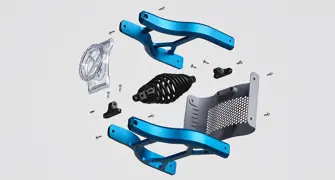
Soft vs. Hard Tooling: Injection Molding Comparison Guide

While part design and material selection often receive the most attention, choosing between soft tooling and hard tooling is equally important for manufacturing molded parts. Soft tooling typically refers to aluminum injection molds, while hard tooling refers to steel molds. Neither is inherently better. The right choice depends on your production volume, budget, timeline, and whether your design is likely to change. Understanding the trade-offs between aluminum and steel tooling helps you choose the most cost-effective manufacturing approach without compromising part quality.
What is Soft Tooling?
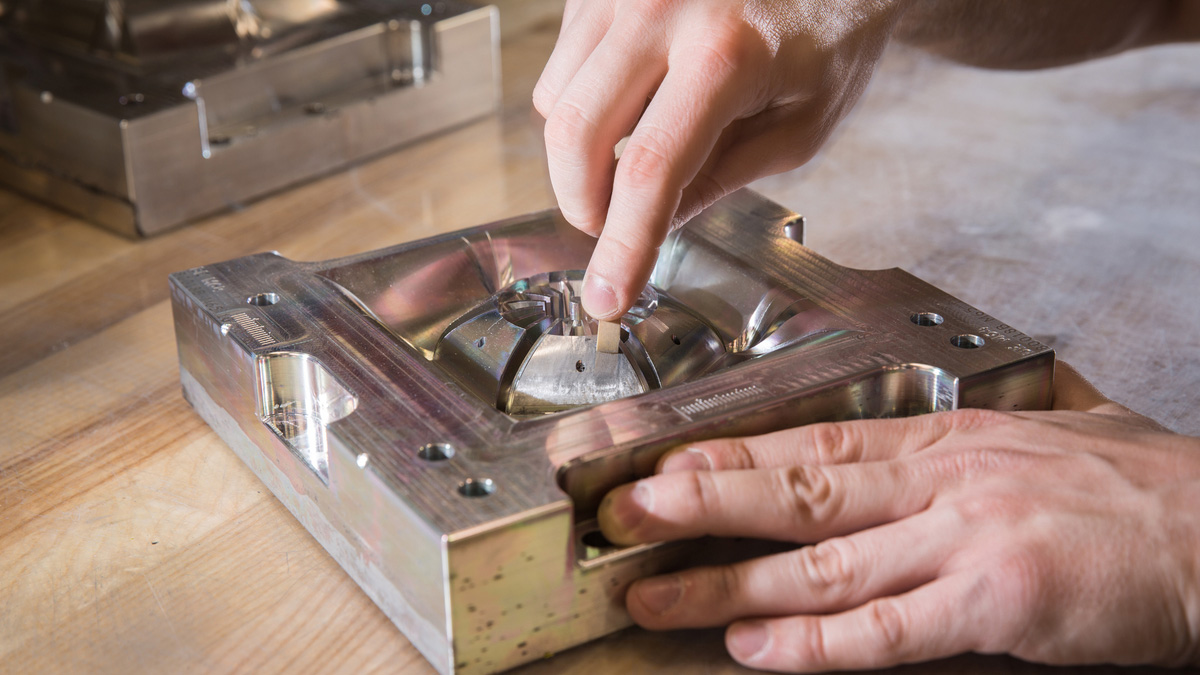
Soft tooling uses aluminum molds to produce injection molded plastic parts. Aluminum is easier and faster to machine than steel, making it well suited to prototypes, bridge tooling, and low- to medium-volume production.
Because aluminum molds can be manufactured more quickly, they offer shorter lead times and lower upfront tooling costs. This is a benefit for validating designs, testing product demand, or scaling to production sooner while minimizing investment.
Modern aluminum tooling is capable of producing high-quality production parts with excellent dimensional accuracy and consistent surface finishes. Although it does not match the lifespan of steel tooling, it is often the most economical choice for projects producing thousands, or even tens of thousands, of parts. Protolabs offers aluminum tooling in-house for time-sensitive projects. Learn more about our injection molding services.
What is Hard Tooling?
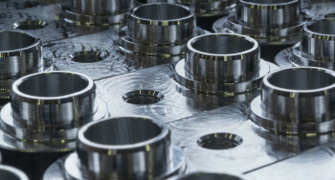
Hard tooling uses hardened steel molds designed for long production runs and demanding manufacturing environments. Steel is significantly more wear-resistant than aluminum, allowing molds to withstand hundreds of thousands or up to a million molding cycles with minimal degradation.
Steel tooling generally requires a greater upfront investment and longer manufacturing lead times because the material is more difficult to machine. However, those higher initial costs are often offset by a lower cost per part over high production volumes.
Steel molds are also preferred when molding abrasive or glass-filled materials, maintaining extremely tight tolerances over long production runs, or supporting complex tooling features such as multiple cavities or advanced cooling systems. Protolabs offers steel tooling for higher-volume production runs via our network of trusted suppliers.
Key Differences of Soft and Hard Injection Molding Tooling
A common scenario in product development is to begin with aluminum tooling to validate the design and launch production quickly, then transition to steel tooling once demand has been tested and the design is final. This avoids unnecessary tooling investment early on.
| Soft Tooling (aluminum) | Hard Tooling (Steel) | |
|---|---|---|
| Best for | Prototypes, bridge tooling, low- to medium- volume production | Medium- to high- volume production |
| Tool life | Thousands to tens of thousands of molding cycles, with some applications exceeding 100,000 parts | Hundreds of thousands to millions of molding cycles |
| Lead time | Faster | Longer, optimized for long-term production efficiency |
| Upfront tooling cost | Lower initial investment | Higher with lower cost per part as volumes increase |
| Abrasive materials | Limited | Excellent |
Choosing the Right Tooling Through the Product Life Cycle
An aluminum tool can accelerate prototyping, pilot production, and market validation, while a steel tool supports full-scale production once demand is established. This staged approach reduces risk, avoids unnecessary tooling investment, and keeps products moving toward launch. An on-demand manufacturing partner like Protolabs helps support the transition from rapid prototyping and full-scale production, all while working with a single manufacturing partner.
Early Development: Prioritize speed, flexibility, and lower tooling investment while the design is still evolving.
Product Launch: Use aluminum tooling to support bridge production, customer validation, or the first production runs before demand is fully established.
Production Growth: As demand becomes predictable, evaluate whether transitioning to steel tooling will reduce long-term manufacturing costs and support higher production volumes.
Mature Production: Steel tooling is often the best choice when the design is stable, production volumes are high, and maximizing tool life and manufacturing efficiency become the priority.
Choose Aluminum Tooling When:
- You're validating a new design
- You expect engineering changes
- Speed to market is a priority
- You're producing prototypes, pilot builds, or lower production volumes
- You want to minimize upfront investment
Choose Steel Tooling When:
- The design is ready for higher-volume production
- Demand is established
- You're molding abrasive materials
- Long tool life and the lowest long-term cost are priorities
Expert Advice for Your Project
Aluminum and steel tooling each have distinct advantages, and the right choice depends on your part quantities, timeline, budget, and how production-ready your design is. Aluminum tooling can help you launch quickly with lower upfront investment, while steel tooling provides the durability and efficiency needed for high-volume production over a longer duration. If you'd like to learn more about the options, our expert team can help you determine the best manufacturing approach for your application.

FAQ
Can aluminum tooling produce end-use parts?
expand_less expand_moreYes. Aluminum tooling is commonly used for high-quality end-use parts, provided the production volume and material are appropriate for the application.
When should I transition from aluminum to steel tooling?
expand_less expand_moreThe right time depends on your product's life cycle. Once the design is stable and production volumes become predictable, steel tooling may provide a better long-term return on investment through greater durability and lower production costs over extended runs.
Does part material affect the choice between aluminum and steel tooling?
expand_less expand_moreYes, some materials are harder on molds than others. Glass-filled and other abrasive plastics can wear aluminum tooling more quickly, particularly over longer production runs. If you're molding these materials at higher volumes, steel tooling is often the more durable choice. Find out more about materials for injection molding.
|
Start a Project Upload your CAD file for a free injection molding quote and receive design for manufacturability feedback to get your project moving sooner. |


