
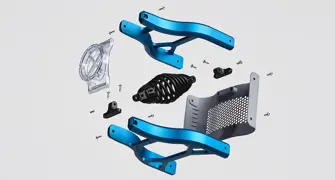
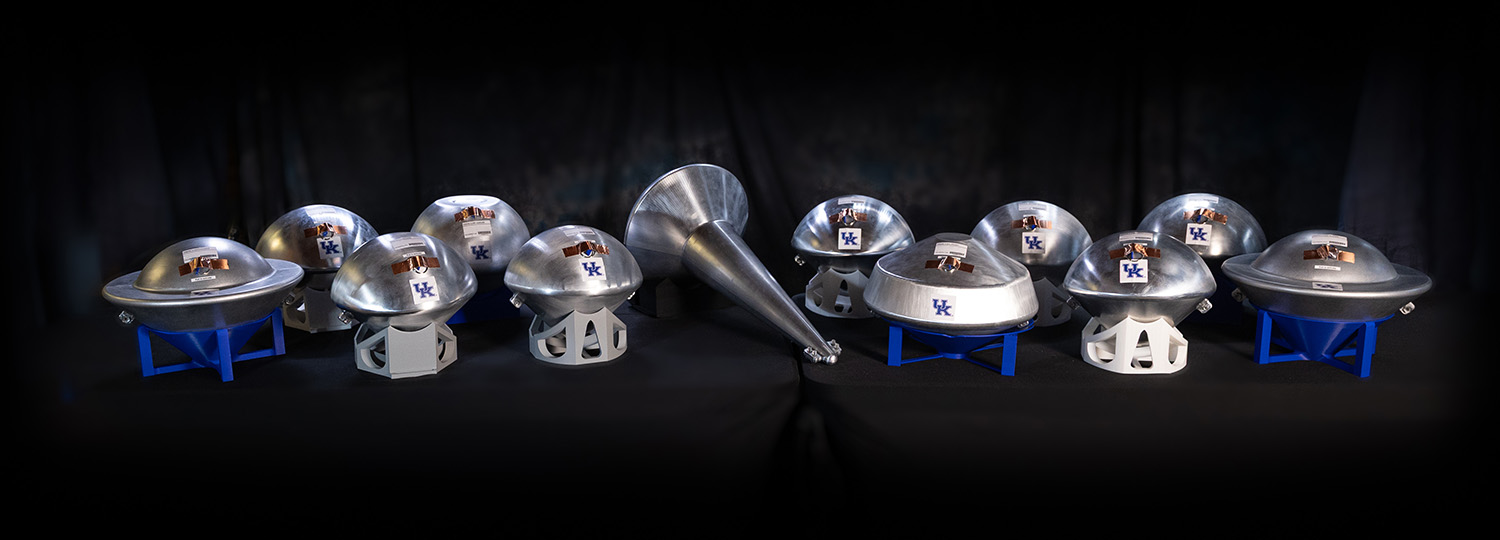
With reliable production support, KRUPS expanded mission capabilities, completed hardware integration, and prepared multiple capsules for launch and data collection.
Advanced Manufacturing Helps University of Kentucky Aerospace Team Prepare for Re-Entry Research
Rapid 3D printing and CNC machining from Protolabs accelerates development and launch of innovative capsules
Challenge
The KRUPS team needed multiple flight-ready capsule housings for a mission designed to collect real-world atmospheric re-entry data. In-house production proved slow and inconsistent, putting project timelines at risk.
Solution
Protolabs manufactured critical capsule housings and additional flight hardware, helping the team overcome production challenges while keeping the mission on schedule.
Outcome
“Directly comparing against what we were able to produce, the Protolabs housings looked much better in every way.”
Eric Adams, Master’s student, Mechanical and Aerospace Engineering at the University of Kentucky
Collecting Data for the Next Generation of Re-Entry Research
The Kentucky Re-entry and Universal Payload System (KRUPS) is a long-running research program at the University of Kentucky focused on making atmospheric re-entry research more accessible. Since 2013, student researchers have developed small re-entry capsules designed to gather real-world flight data, helping validate the computational models used to study re-entry flight and hypersonic environments. Data from the project is used by NASA in its ongoing evaluation of spacecraft thermal protection systems.
Over the years, the program has progressed through balloon launches, sounding rocket flights, and orbital missions. Along the way, the team has worked to improve its understanding of thermal protection systems, flight dynamics, and atmospheric re-entry behavior. Real flight data remains a critical part of that effort because simulation tools must ultimately be validated against actual flight conditions, including extreme temperatures and vibration.
For the team's latest mission, researchers planned to fly multiple instrumented capsules carrying new designs and scientific payloads. Each capsule would collect data that could help improve computational fluid dynamics (CFD) models and expand knowledge of atmospheric re-entry. Capsules would be delivered to the International Space Station (ISS) via a re-supply vehicle. Upon departure, the vehicle would re-enter Earth's atmosphere and disintegrate, releasing the capsule to make its own re-entry while collecting valuable flight data.
To support those goals, the team needed flight-ready capsule housings capable of carrying electronics and communications equipment. The housings also needed to allow telemetry signals to pass through the structure so data could be transmitted during flight.
As launch preparations continued, manufacturing the housings became a significant challenge. The team initially attempted to produce the capsule housings in-house. The parts took a long time to 3D print and were difficult to manufacture consistently. Initial attempts came out warped or failed to meet requirements. Each housing required roughly 40 hours of printing, and the project needed 12 capsules. After weeks of work, the team had produced only one successful housing.
With launch deadlines approaching, the team needed a more efficient way to produce reliable flight hardware while keeping the project on schedule.
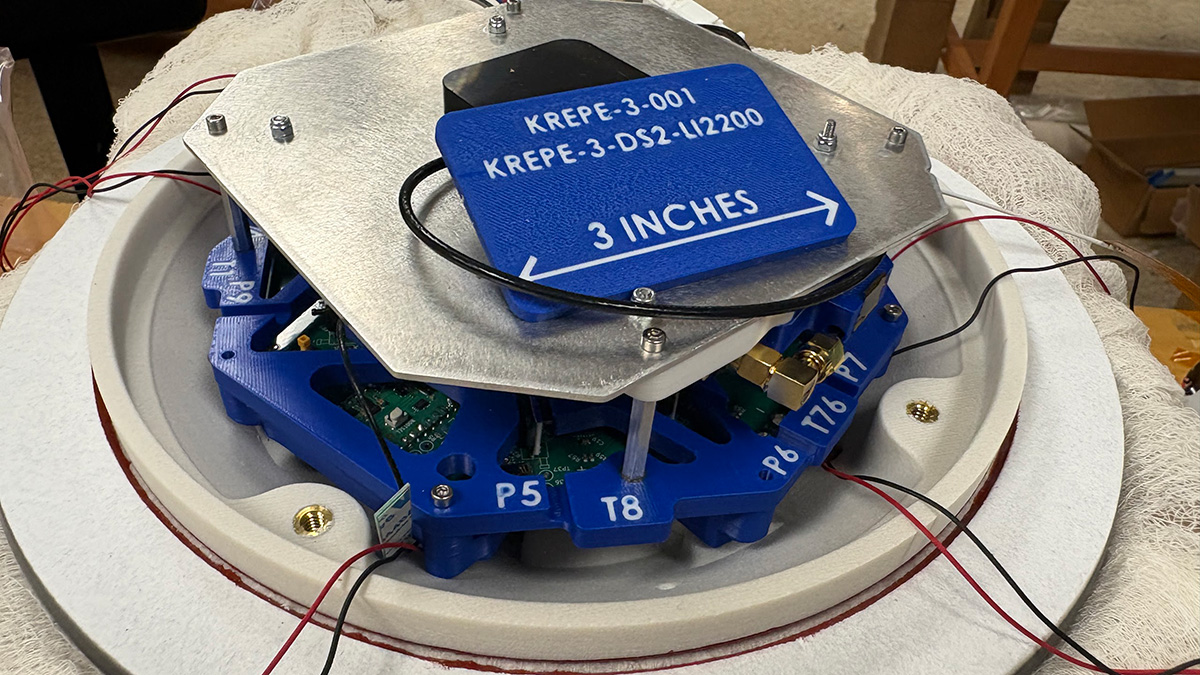
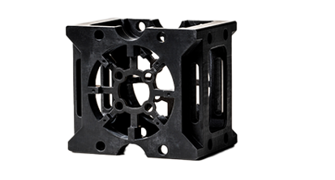
3D-printed housings protect electronics gathering data during the capsule's re-entry.
Partnering With Protolabs
To keep the program moving forward, the KRUPS team partnered with Protolabs to manufacture the capsule housings.
The housings were produced using DuraForm HST, a nylon 12 composite selected for its combination of strength, thermal performance, and radio-frequency transparency. The material had also been used on previous KRUPS missions, giving the team confidence in its performance.
Through Protolabs, the team gained access to 3D printing capabilities that would have been difficult to replicate in-house. Instead of spending valuable time troubleshooting prints, students could focus on preparing the mission and integrating flight hardware.
The completed housings arrived on time, allowing the team to maintain momentum as the launch deadline drew closer. Protolabs shipped components directly to support partners, who integrated heat shields and additional sensors before returning the completed assemblies to KRUPS for final integration and launch preparation.
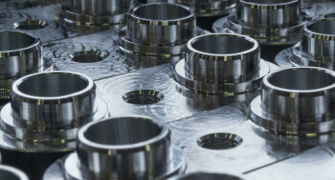
The capsule housings weren't the only parts that benefited from Protolabs’ manufacturing support. The project also required CNC machined aluminum shell components, but producing these massive parts presented hardships. The KRUPS team used the Protolabs' Network to machine the shells. An initial sheet metal fabrication attempt came out distorted due to residual stresses in the material, but Protolabs caught the issue early, helping prevent additional production delays. The design was adjusted, and the parts were successfully produced and delivered on time.
3D-Printed Capsule Housing
The capsule housing serves as the structural foundation of the KRUPS vehicle. Inside the housing, the team integrates instrumentation, batteries, and communications systems needed to collect and transmit flight data. The housing also interfaces with other critical spacecraft components, including the thermal protection system that shields the capsule during re-entry.
Producing the housings in-house had become a major bottleneck due to long print times and inconsistent results. By manufacturing the components through Protolabs, the team received production-quality parts in the quantities required for the mission.
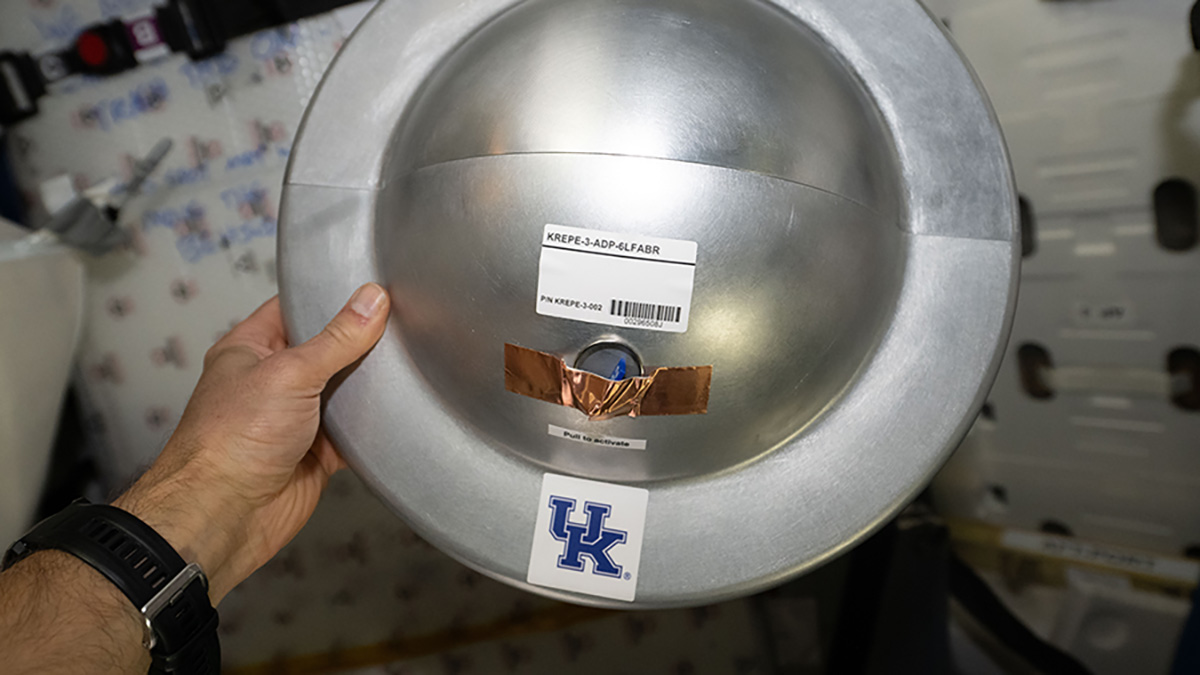
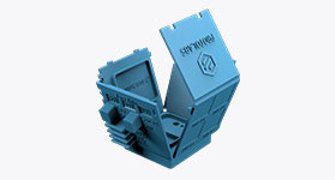
The latest iteration of the KRUPS capsule aboard the International Space Station before travelling back to Earth.
Focus Returns to the Mission
Protolabs' ability to deliver production-ready hardware allowed the team to move ahead with assembly and integration activities. It also supported the development of multiple capsule geometries, expanding the scope of the mission beyond a single established design.
Additional instrumentation could be incorporated into the capsules, creating more opportunities to gather meaningful flight data and evaluate different approaches to atmospheric re-entry research.
The completed hardware ultimately supported a mission that launched capsule payloads aboard a flight to the ISS.
For the KRUPS team, the partnership with Protolabs provided more than manufactured parts. It removed a critical production obstacle, giving researchers the ability to focus on the engineering and scientific objectives behind the mission. By combining advanced manufacturing capabilities with responsive support, Protolabs helped move the project closer to its goal of expanding access to real-world re-entry data and advancing aerospace research.