
Talk with Our Team
Hello! We just need a few bits of information then a manufacturing expert will reach out to you directly to see we how can partner on a future production project.
Thank you! We've received your request and a member of our team will reach out shortly.
Secondary Operations and Post-Processing Services
Choose from a wide selection of finishing capabilities to strengthen parts, improve cosmetic appearance, provide customization, and other benefits
Certifications & Compliance
ISO 9001:2015 | ISO 13485:2016 | AS9100D | ITAR
When designing parts, you may need to apply various finishing options after your parts are manufactured to improve mechanical properties, enhance surface finish, facilitate the assembly process, or further customize parts. Another benefit? You can streamline your supply chain— prototyping to production—through a single, digital manufacturing parts supplier. Here’s a look at what is available across molding, machining, sheet metal fabrication, and 3D printing.
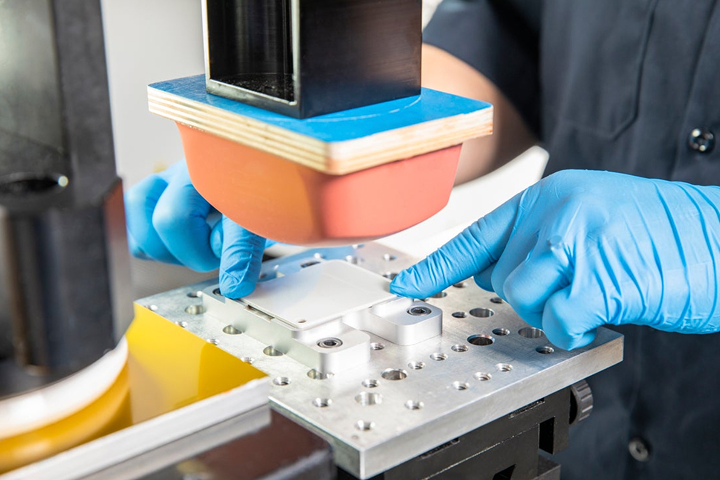
Injection Molding
Mold Texturing
expand_less expand_more| Apply industry standard textures to a mold. With mold texturing you can expect the equivalent of a Mold-Tech finish. | 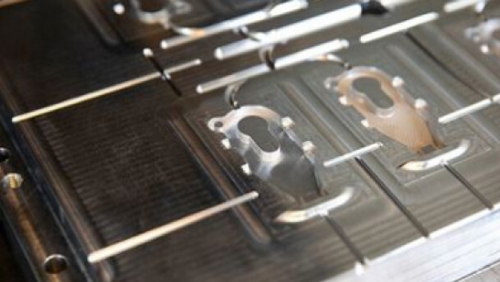 |
Threaded Inserts
expand_less expand_more| We stock and install an assortment of commonly used standard inserts in UNF and metric sizes. | 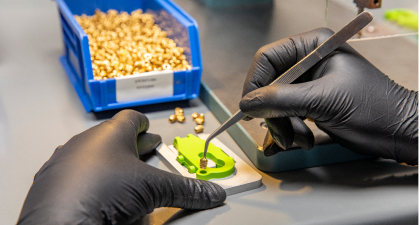 |
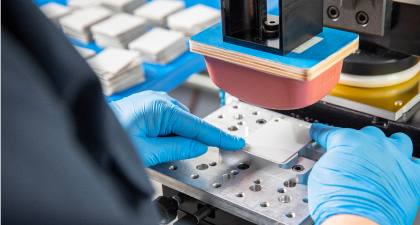
Pad Printing
expand_less expand_more| Transfer a two-dimensional image, like a company logo, onto a three-dimensional object. All images are reviewed for size, color, and complexity restrictions. |
 |
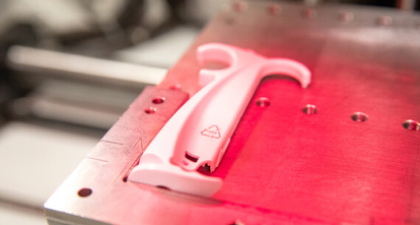
Laser Engraving
expand_less expand_more| Laser engraving can be applied to the mold or directly to final parts for information such as logos or part numbers. Laser engraving ensures crisp, consistent information on each part or serialization. |
 |
Basic Assembly
expand_less expand_moreBasic assembly includes fastening molded parts together that we’ve manufactured and/or
applying of labels to individually bagged parts.
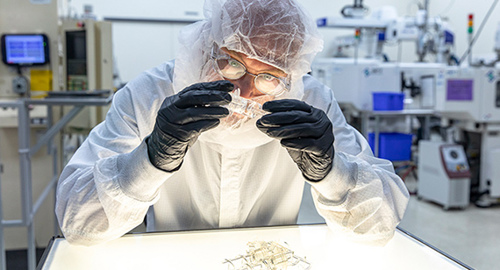
Part Cleaning
expand_less expand_more| Part cleaning is available through a trusted third party providing washing or deep cleaning of parts by various methods, including ultrasonic cleaning, vapor degreasing, and ISO Class 7 clean room and packaging. |
 |
Painting
expand_less expand_moreLead time: 7+ business days. Required inputs:
- CAD/part link with part quantity, material
- Area(s) to be painted
- Plugging/masking requirements
- Paint color/Pantone number and finish
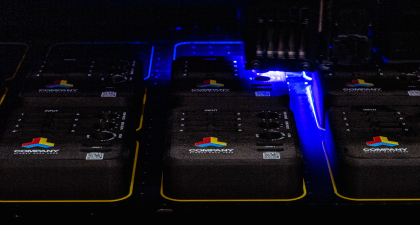
UV Part Printing
expand_less expand_more| Transfer a full color two-dimensional image, like a company logo, onto a three-dimensional object. All images are reviewed for size, color, and complexity restrictions. |
 |
|
Get more information at our post-processing for injection molding hub. |
CNC Machining & Sheet Metal Fabrication
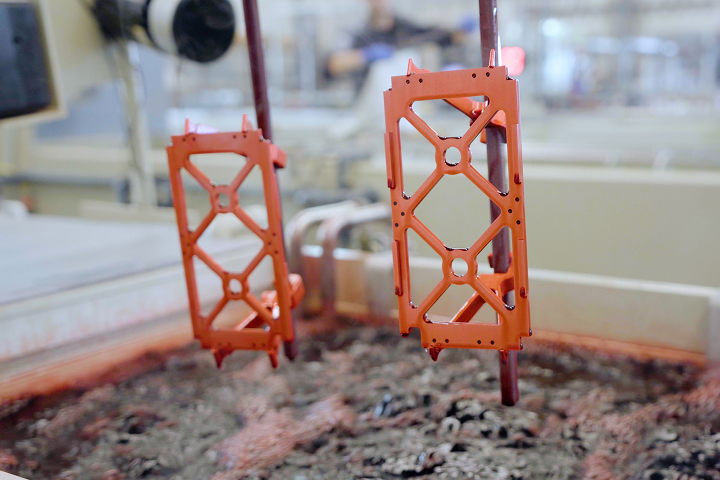
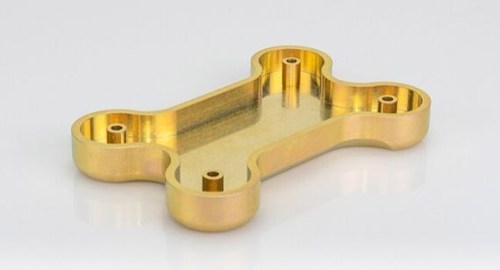
Plating
expand_less expand_more
|
 |
Powder Coating
expand_less expand_more| Add color powder coating to parts to improve cosmetics and durability. | 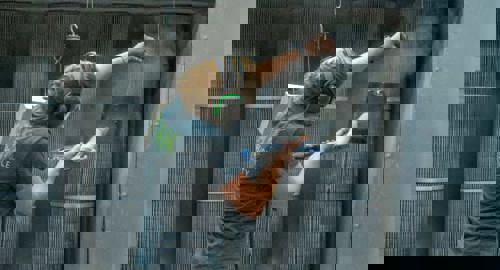 |
Wet Paint
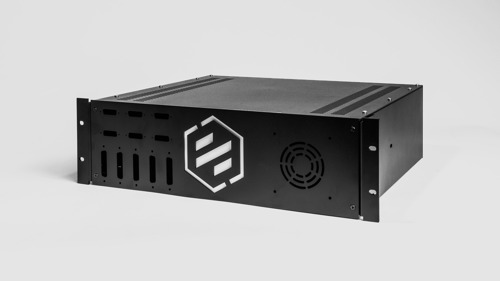
expand_less expand_more| A liquid coating is applied to your part to provide an aesthetically appealing finish. The process is offered in virtually any color and is commonly paired with a primer layer to improve paint adhesion and durability. |
 |
Bead Blasting (Machining Only)
expand_less expand_more| Light bead blast to provide uniform finish and light texture. | 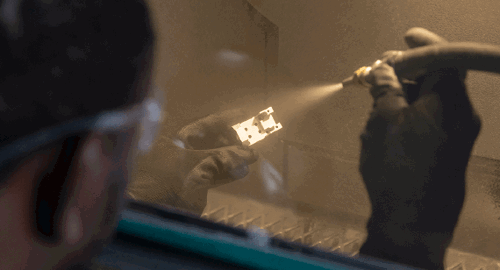 |
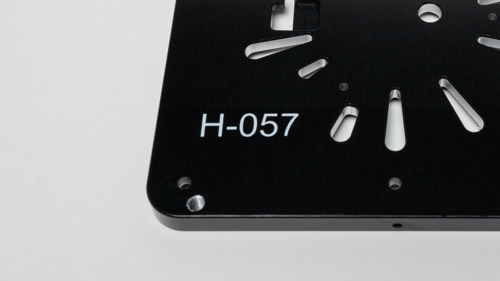
Part Marking
expand_less expand_more
|
 |
Press Fit Hardware Installation
expand_less expand_more| Incorporate off-the-shelf hardware components to facility assembly. | 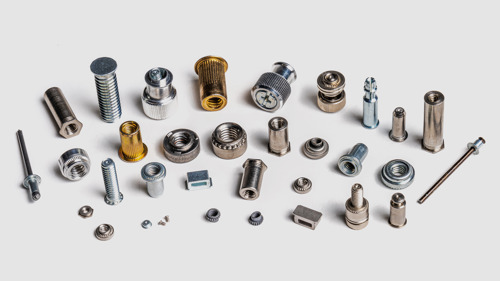 |
Part Assembly Welding and/or Hardware (Sheet Metal Fabrication Only)
expand_less expand_more| Typically, sheet metal parts attach to other parts as part of an assembly. Making that happen is the job of specialized hardware. Whether you want to extend the life of your part, make it aesthetically pleasing, or ensure structural integrity of your assembly, it’s all about the finishing. | 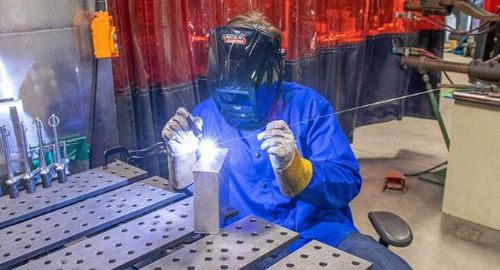 |
|
Get more information at our post-processing for CNC machining hub and sheet metal fabrication hub. |
3D Printing
Clear Coating
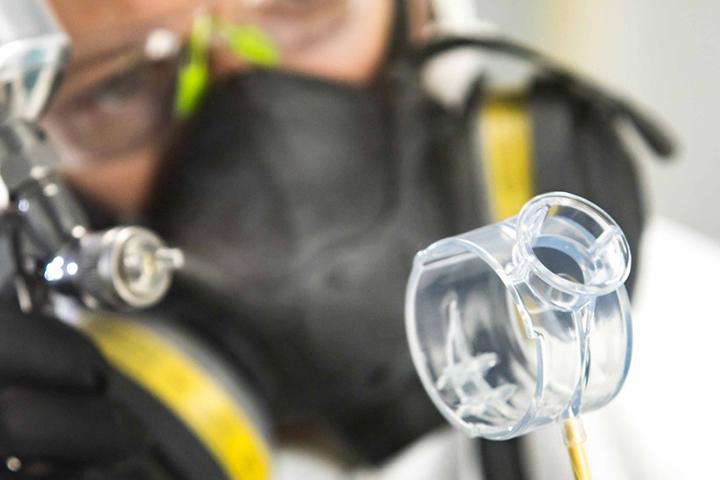
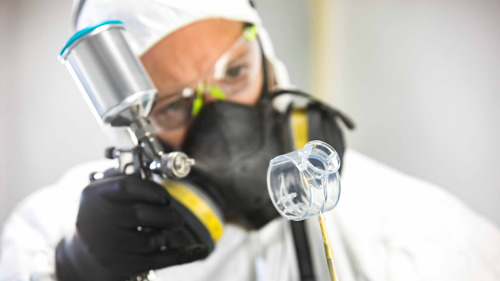
expand_less expand_more| Clear coating is available and commonly applied to parts to create a clear cosmetic finish. Painting is also possible on 3D-printed parts. Some sanding and polishing will be needed to make the surface smooth, after which the part can be masked off and painted with whatever colors you like—just send the Pantone numbers with your design upload, together with a CAD model indicating which color goes where. The parts are sprayed with an automotive-grade paint. Soft- touch painting is also available. |
 |
Plating
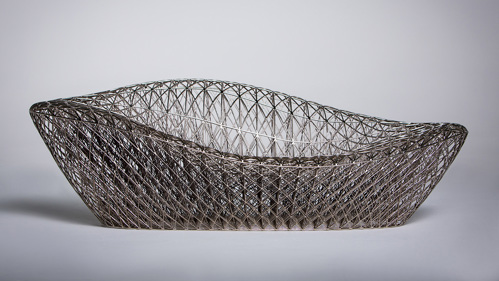
expand_less expand_more| Plating on 3D-printed parts increases strength and durability of plastic parts. Electroless nickel plating is a great way to mimic a cast aluminum or magnesium part for light-weighting purposes. |
 |
Dyeing
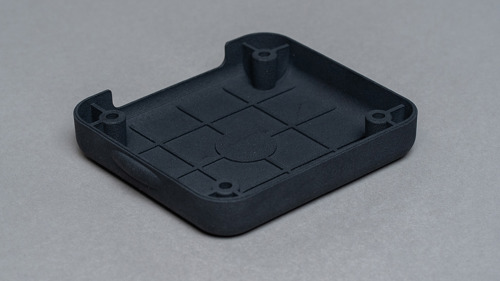
expand_less expand_more| Dyeing of stereolithography (SLA), selective laser sintering (SLS), Multi Jet Fusion (MJF), and PolyJet parts is possible at Protolabs. SLA parts can be dyed black, green, red, blue, or yellow. The finished parts are simply bathed in hot dye for a short while for a consistent color. This option is one of the fastest, lowest-cost ways to make printed parts cosmetically appealing. There’s no chance of masking off certain areas like there is with painting, but for SLA, SLS, MJF, and PolyJet parts, especially those made of translucent acrylic or polycarbonate-like materials, this is often an excellent option. |
 |
Decaling
expand_less expand_moreDecaling provides a great way to attach company logos, safety warnings, and other graphic to
increase cosmetics or functionality. We don’t supply these products, but can apply them for you.
Note that adhesive and thermal-transfer decals won’t stick to the rough surface typical of some
3D-printed parts, making sanding or otherwise smoothing of the target surface a prerequisite to
decal application.
Texturing
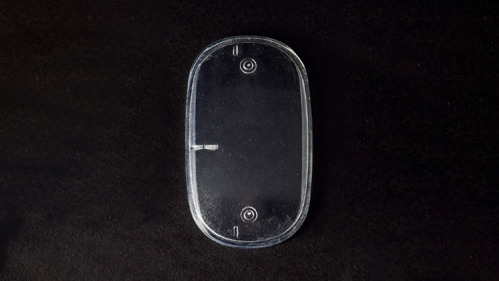
expand_less expand_more| Texturing improves the finish of 3D-printed parts by making them less slippery, improves ergonomics, and enhances cosmetic appearance. When prototyping 3D-printed parts that will later be injection molded, it’s possible to apply a spray texture to mimic a Mold-Tech brand-like finish used in many mold cavities. This same technique can be used to apply a soft-touch paint or urethane clear coat to a 3D-printed part, a process that also improves weather and sun resistance on the UV-curable materials used with SLA. |
 |
Polishing
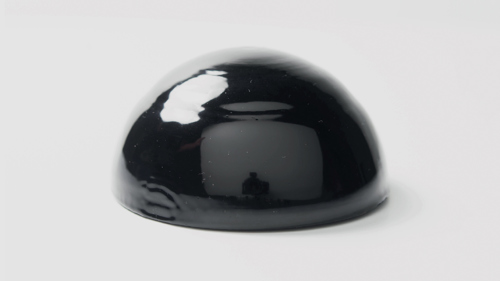
expand_less expand_more| Polishing is possible on 3D-printed parts to create a high-quality finish. Again, some level of smoothing is needed to apply paint and decals, but highly cosmetic surfaces can be taken even further. If this is a requirement, you’ll need to identify your finish expectations on your part with a drawing or screenshot. |
 |
Heat Treating
expand_less expand_moreHeat treating metal parts built with direct metal laser sintering (DMLS) eliminates heat-induced
stress and potential warping. It’s also used to harden DMLS metals, strengthen them, make them
less prone to cracking and fatigue, or make them more pliable. If you’re looking for an extremely
tough and hardened 3D-printed metal, stainless steel 17-4 PH is a solid option.
Secondary Machining
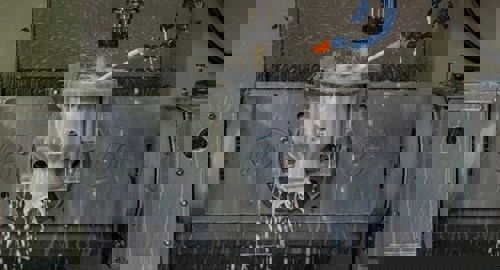
expand_less expand_more| Secondary machining is available for both metal and polymer materials if a more accurate, smooth surface is required outside of our standard offering. We also offer other high-requirement operations for our parts including boring or reaming tight tolerance holes and tapping those which require threads that cannot be printed. Depending on the material, we possess the ability to place inserts into parts through either heat- staking or gluing into place. |
 |
|
Get more information at our post-processing for 3D printing hub. |


