
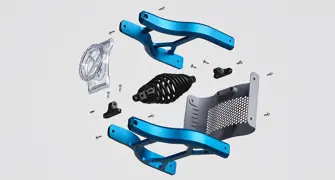

When designing parts for aerospace applications, there are considerations that go beyond just structural qualities. Equally important is your choice of finishes and finding the right one can help your parts last longer, increase durability, and enhance resistance to environmental conditions. In some cases, finishes and coatings can even help your parts look better.
Manufacturing Processes for Aerospace Components
The first step is determining what manufacturing service you need to manufacture your parts. Here’s a quick rundown of our core services:
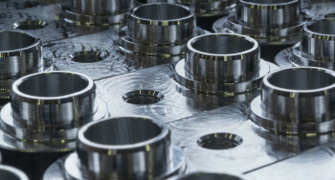
- CNC Machining: Offers precision with high-quality surfaces and an array of coatings and finishing options
- Sheet Metal: Flat surfaces that often need additional finishing options to improve aesthetics or maintain integrity
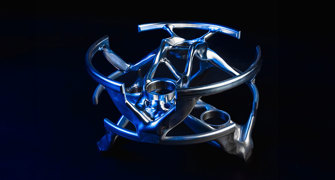
- 3D Printing: Allows for highly organic metal, plastic, and even silicone geometries that other services may have difficulty creating, as well as advanced finishing options
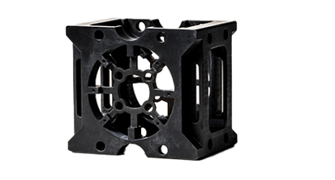
- Injection Molding: Used for plastics and elastomers, this workhorse offers numerous finishing options and the advantage of rapid higher-volume production

Types of Aerospace Finishes
There are few more challenging environments for parts than those aerospace parts encounter. They must endure incredible heat, cold, stresses, and vibrations that earthbound parts never face. Aerospace parts must meet rigorous standards such as strength, durability, and even appearance. Your choice of finish can significantly influence these required characteristics. So, what are the available choices?
Metal Finishes
- Electropolishing: Great choice if you need smooth surfaces and attractive aesthetics. Application allows for complete coverage of complex or internal surfaces
- Media Blasting: Another good choice to achieve uniform, textured finishes, and even hide machining marks
- Brushed or Polished Finishes: Adds aesthetic qualities and improves surface consistency
Plastic Finishes
- Vapor Smoothing: Vaporized chemicals melt uneven surfaces, closing pores in the plastic and enhancing water resistance
- Dyeing and Coloring: Often used with Multi Jet Fusion (MJF) parts to provide rich colors after printing
Other Coatings
- Cerakote: Tough ceramic-based coating adds head resistance and help reduce abrasion
- Powder Coating: Powdered pigment adheres to parts electrostatically followed by a bake in an over to achieve even, thick layers. Works especially well with sheet metal parts but added weight may not be optimal for aerospace applications
- Plating: Electroplating and electroless plating enhance resistance to wear and help improve part longevity in tough environmental conditions
Best Choices for Harsh Environments
Cerakote
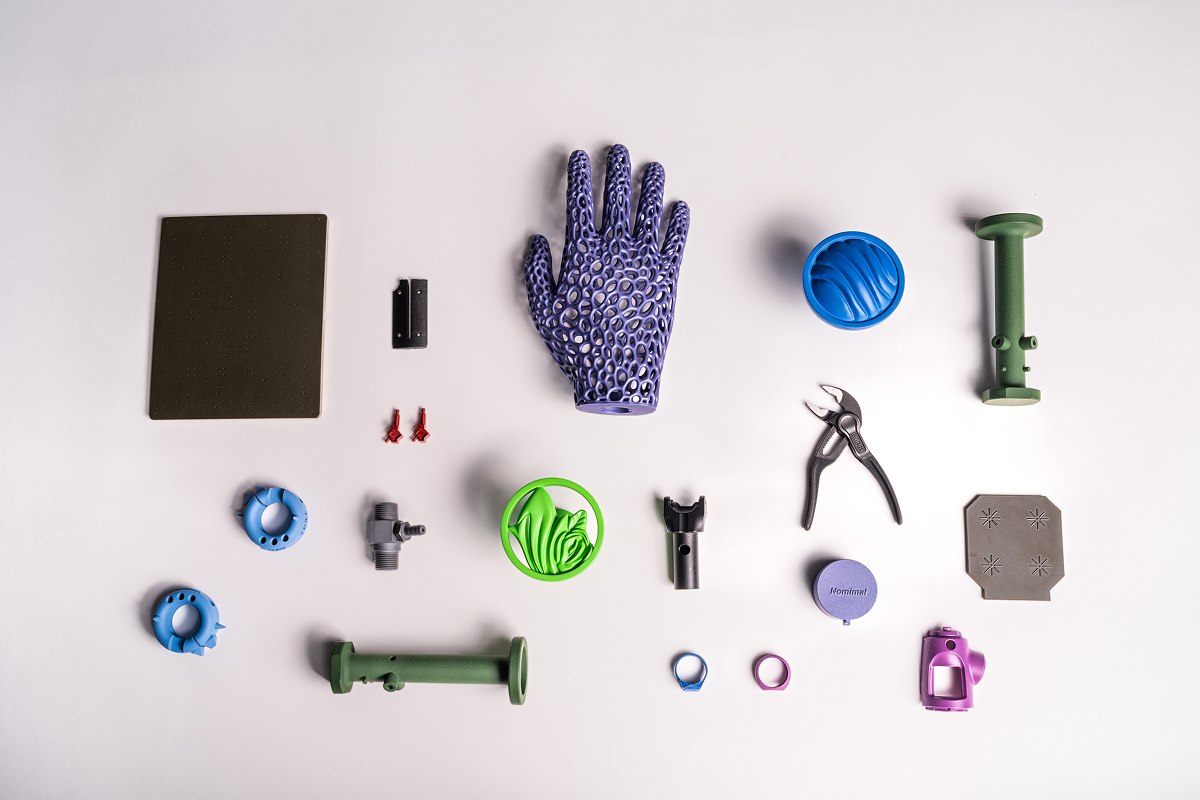
It’s tough to beat this thin, rugged RoHS- and REACH-compliant ceramic coating. It is a great choice for aerospace thanks to its strength, light weight, and tolerance of vibrations. You can apply it to a variety of 3D-printed materials to enhance resistance to chemicals, corrosion, excessive temperatures and pressures, and UV light. If aesthetics is a concern, Cerakote is available in dozens of colors, and some allow you to choose glossy, matte, or stain finish.
Electroplating
This durable, corrosion- and wear-resistant finish works by coating a material with a “sacrificial” layer of metal so that when exposed to harsh conditions, that layer will protect the main material. The process also helps prolong part life by reducing fatigue due to mechanical stresses. This is a good choice if you need to reduce friction between moving parts.
Best Choices for Corrosion Resistance
Preventing corrosion is critical in aerospace applications where longevity and safety are paramount concerns.
One of the most effective ways to control corrosion is passivation. Applied to metals, this process converts iron into more stable iron oxide on the surface, eliminating the prime culprit in the corrosion process. While rust is an iron oxide, it is hydrated ferric oxide, which actively eats away at any iron it finds. In its place, passivation adds a thin and less reactive oxide layer.
For aluminum parts in particular, you can use chromate conversion coating. The process acts much like passivation, but it yields a thin layer of chromium compounds as a protective layer. It also acts sort of like a primer, allowing additional coating with paints, for example.
Anodizing is a process that takes metal (typically aluminum) parts, runs a current through them, and places them in a sulfuric acid bath. The metal accepts oxygen atoms, creating a controlled form of corrosion that protects the parts, but is porous, allowing dyes to be introduced to give the parts a more colorful, metallic appearance. The coating is extremely thin, so it is in sync with aerospace needs. Note that there are two different kinds of anodizing so it’s important to choose the best one for your application.

Applications and Considerations
Different finishes affect the performance and application of aerospace components. Components of an aerospace engine require finishes that protect against wear and high temperatures. Parts in the interior of a plane use coatings for flame resistance and durability. Each aerospace application brings its own challenges where a finish can play a role.
While finishes are one way to protect a part or make it more aesthetically pleasing, it is equally important to design parts for longevity. Use uniform wall thicknesses to achieve optimal finishes, especially when using vapor smoothing. In the end, a properly applied finish and a thoughtful design work together to improve parts.
Protolabs comprehensive manufacturing services include an extensive finishing library accessible within each service line. Our customer support team is available to assist in selecting the best finish for your aerospace application.

