By turning a complex design into a production-ready part, Tomas was able to improve aircraft performance and continue pursuing increasingly ambitious speed milestones in RC aviation.
3D Printing Helps RC Aviation Innovator Push the Limits of Speed
Through a manufacturing partnership with Protolabs, Tomas Salvo designed a remote-controlled aircraft capable of flying 500 mph
Challenge
Designing an RC aircraft capable of approaching 500 miles per hour requires innovative engineering and manufacturing solutions that can balance performance, weight, and durability.
Solution
Protolabs helped aircraft designer Tomas Salvo bring custom components to life through metal 3D printing, providing engineering support and production expertise throughout the process.
Outcome
“We would have never been able to make this part ourselves.”
Tomas Salvo, RC Aircraft Designer
High-Speed Flight Demands Smarter Design
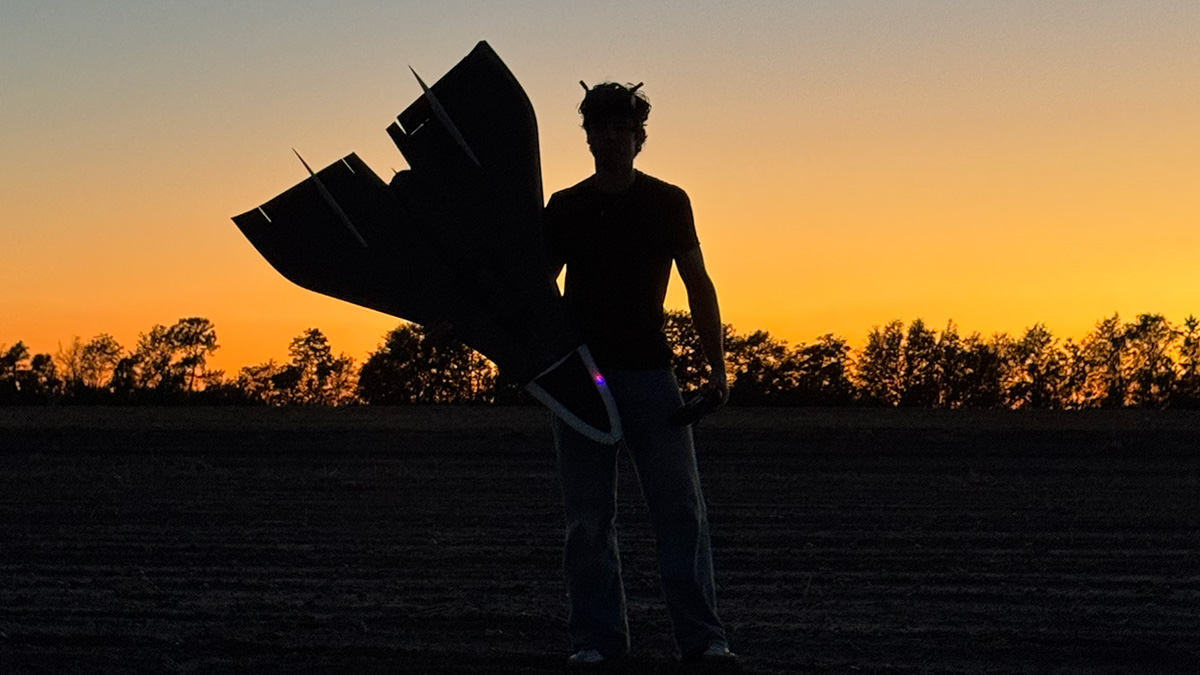
For designer Tomas Salvo, radio-controlled (RC) aviation has been a lifelong pursuit. What began with repairing toy helicopters and airplanes as a child evolved into increasingly advanced engineering projects. Over the years, he developed the skills needed to design, build, and test sophisticated aircraft. Today, he’s focused on an ambitious goal: creating an RC jet capable of reaching speeds approaching 500 miles per hour.
Reaching that level of performance requires more than a powerful engine. As speed increases, even small improvements in weight reduction and balance can have a meaningful impact on overall performance.
For Tomas, solving those challenges is a critical step toward pushing the limits of RC aviation.
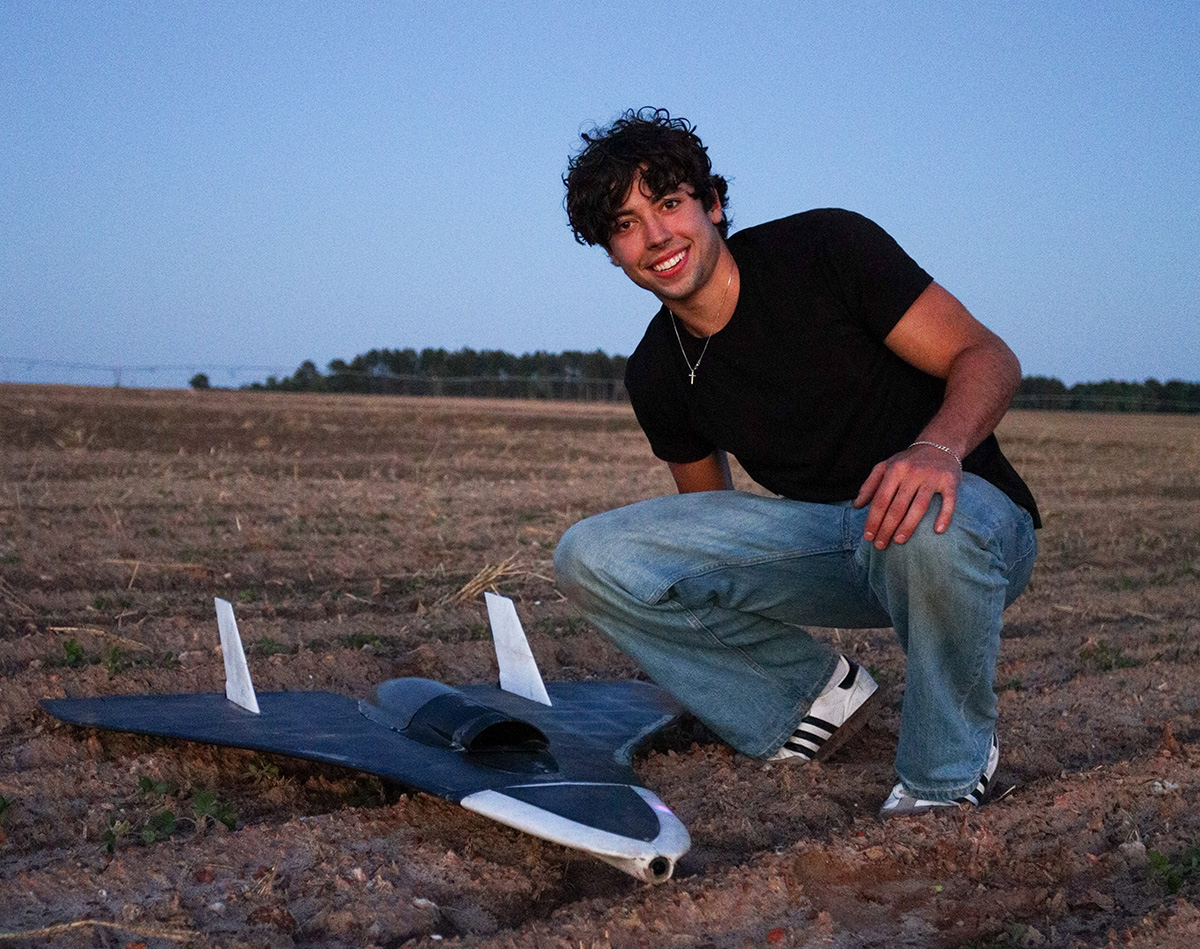
Moving Weight Forward Without Sacrificing Performance
One of the biggest engineering hurdles centered on the aircraft's turbine engine.
As the heaviest component in the aircraft, the engine's position has a major influence on balance and stability. The stock exhaust nozzle forced the turbine to sit at the rear of the airframe, shifting weight farther back than desired.
A traditional solution would have been to add ballast weight to the nose. While effective for balancing the aircraft, additional weight would reduce overall performance and work against Tomas's objective of creating the fastest aircraft possible.
Instead, he pursued a different approach. By designing a custom nozzle that extended the exhaust path, Tomas could reposition the turbine farther forward within the airframe, improving weight distribution without adding unnecessary mass. The concept solved the engineering challenge, but manufacturing the component presented another obstacle.
The part needed to withstand extreme exhaust temperatures while remaining as light as possible. It also required complex geometry that would be difficult to produce using conventional manufacturing methods.
Precision Manufacturing Through Partnership
To bring the design to life, Tomas partnered with Protolabs for our DMLS 3D printing service.
The process provided greater design freedom than traditional manufacturing methods, enabling a lightweight geometry optimized for both airflow and performance. Just as importantly, Tomas worked closely with Protolabs engineers to refine the design and ensure it could be manufactured successfully.
Protolabs' automated design for manufacturability (DFM) feedback helped address considerations such as wall thicknesses and internal transitions while preserving the performance goals of the part.
“The support from Protolabs was great. They made changes that improved manufacturability without changing the intent of the design.” —Tomas Salvo, RC Aircraft Designer
Material selection also played a critical role. Tomas chose titanium for its combination of strength, temperature resistance, and weight, making it well-suited for the demanding environment surrounding the turbine exhaust.
The precision of the manufacturing process proved especially valuable because Tomas completed the nozzle design before receiving the physical engine. Working entirely from digital models, he relied on manufacturing accuracy to ensure proper fit. When the finished component arrived, it matched the engine perfectly and required no modifications for installation.
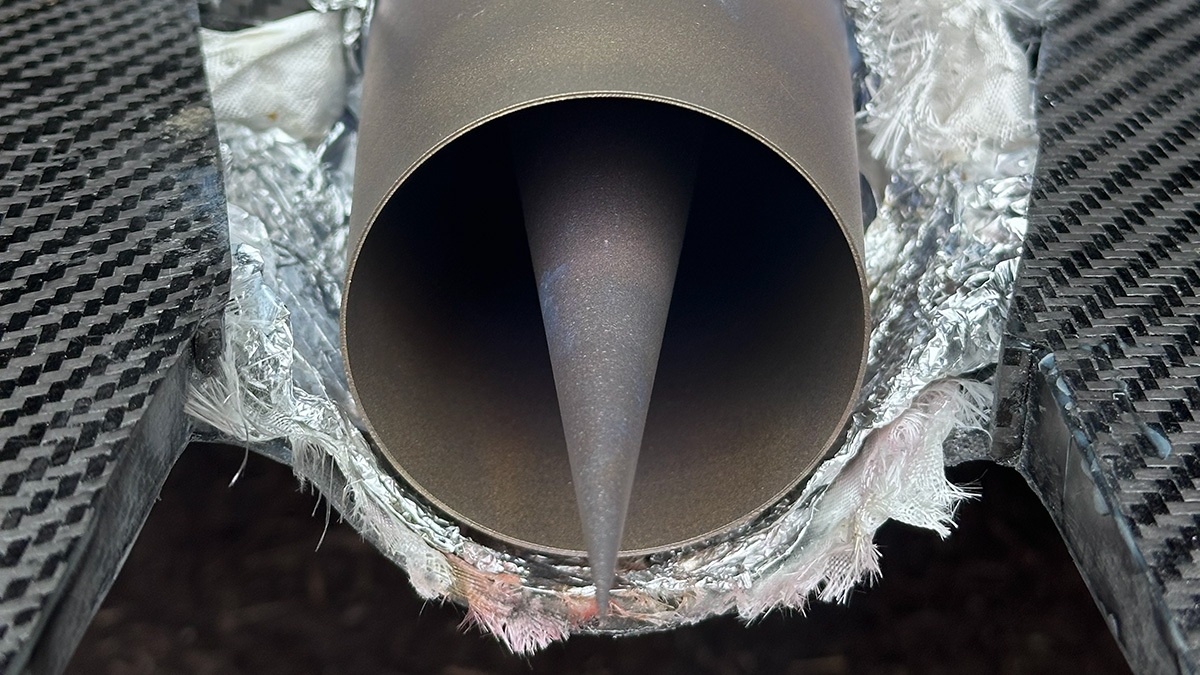
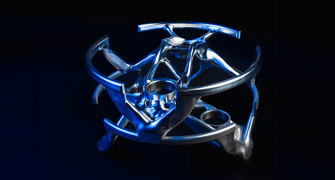
3D-Printed Titanium Nozzle
The custom titanium nozzle serves as a critical link between the turbine engine and the aircraft's exhaust system.
By extending the nozzle geometry, Tomas was able to reposition the engine farther forward in the airframe, significantly improving the aircraft's center of gravity while maintaining the performance required for high-speed flight.
The part also demonstrates the advantages of metal additive manufacturing. Complex geometry, low weight, and high-temperature resistance were achieved in a single component that would have been difficult to produce through traditional manufacturing methods.
Pushing RC Aviation Further
After his success in creating a plane capable of reaching 500 miles per hour, Tomas is continuing to pursue ambitious performance goals. His next objective is to develop an RC aircraft capable of reaching supersonic flight, a speed that has yet to be achieved among RC plane hobbyists. The project has already attracted significant attention across aerospace and engineering communities.