Design Guidelines: CNC Milling
Our basic guidelines for CNC milling include important design considerations to help improve part manufacturability, enhance cosmetic appearance, and reduce overall production time.
Size
Maximum depth that can be milled is 2 in. (50.8mm) from either side of part. For specific milling dimensions by material, see maximum part extents for machining.
| Material | US | Metric | |
| 3-axis** |
|
22 in. x 14 in. x 0.75 in. | 559mm x 356mm x 19.1mm |
| 3-axis** |
|
22 in. x 14 in. x 3.75 in. | 559mm x 356mm x 95.3mm |
| 5-axis |
|
10 in. x 7 in. x 1.75 in. | 254mm x 178mm x 44.45mm |
| 5-axis |
|
10 in. x 7 in. x 3.75 in. | 254mm x 178mm x 95.3mm |
| 5-axis |
|
4.25 in. x 3.25 in. x 3.75 in. | 107.95mm x 82.55mm x 95.25mm |
*Hard metals: Titanium (6Al-4V), Stainless Steels (303, 316, 17-4PH), Steel Alloy (4140)
**Denotes two-sided machining only
| US | Metric | |
| Size | 0.25 in. x 0.25 in | 6.35mm x 6.35mm |
| Nominal Thickness | 0.040 in. | 1.02mm |
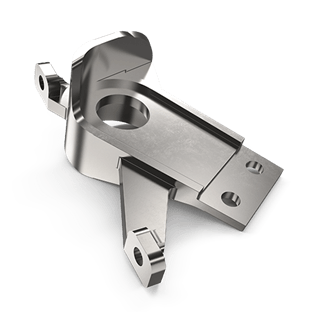
Typically, Protolabs can hold a machining tolerance of +/- 0.005 in. (0.13mm) at its fully automated facility and ISO-2768-1 medium or fine depending on the materials at its semi-automated factory and throughout the Protolabs Network. Part features are recommended to be thicker than 0.020 in. (0.51mm) throughout the part, and a nominal part thickness above 0.040 in. (1.02mm) is required. Maximum depth for factory machined parts that can be milled is 2 in. (50.8mm) from either side of the part. For specific milling dimensions by material, see maximum part extents for machining.
*These part sizes can only be milled from two sides, and in ABS, acetal, and aluminum 6061 and 7075.
**This part size can only be milled from two sides, and in Aluminum 6061 and 7075.
Advanced CNC Milling Capabilities
Production Parts
Reduce your CNC machining costs when you order higher quantities of machined parts. Our production capabilities for machining—powered by our Protolabs Network manufacturing partners—allow up to 1,000+ machined parts along with first article inspection (FAI) reporting, material certifications, part assembly, and additional finishing options like anodizing and chromate plating. Learn more about production for machining.
5-Axis Milling
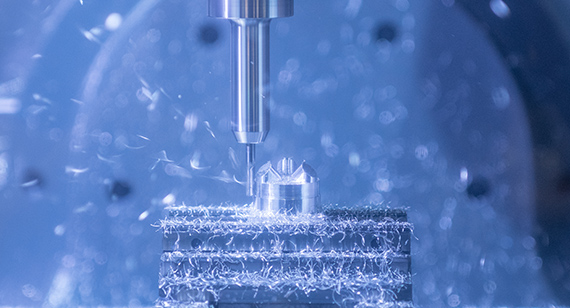
We use 5-axis indexed milling—in addition to 3-axis milling and turning—to machine parts. 5-axis indexed milling (also referred to as 3+2 milling) allows for more complex geometries and non-orthogonal features like off-axis holes. Better finishes are also possible on non-orthogonal surfaces and because 5-axis milling increases machining efficiencies, more cost-efficient parts can be had. Read about designing complete features on machined parts.

CNC Machining Surface Finish Guide
Get a realistic snapshot of the surface finishes that are possible on machined plastic and metal parts.
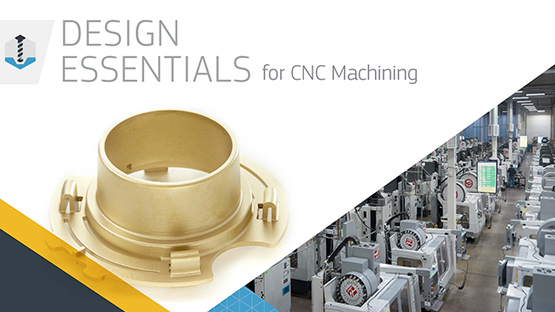
Design Essentials for CNC Machining
We've compiled some of our best design tips to help you optimize your part design for CNC machining.
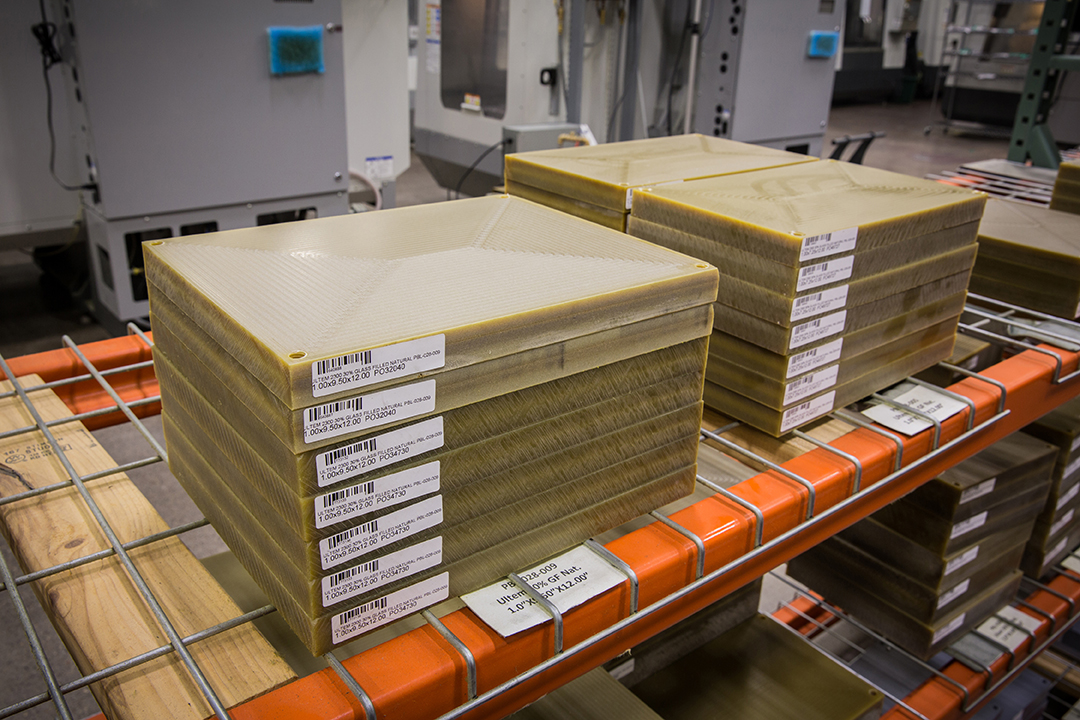
Materials
|
Coating and Plating Options
Add these specialized finishes to your order to extend the life and improve the look of your parts.
Anodizing
Reduce corrosion and add an appealing metallic coloring to your aluminum parts. Anodizing helps resist scratching, acts as an electrical insulator, and is one of the most durable finishes available.
Specifications:
- Type II
- ROHS compliant
- Class 1 (clear)
- Class 2 (black)
Chromate Plating
Protect your parts from corrosion while adding electrical conductivity and the ability to paint your part. Note that steel and iron-based metals require pretreating with zinc before applying chromate.
Specifications:
- Type I, Non-ROHS (yellow)
- Type II, ROHS (clear)
- Class 1A: For maximum protection against corrosion, painted or unpainted
- Class 3: For maximum protection against corrosion where low electrical resistance is required
Powder Coat
Powder coating offers excellent protection against corrosion, abrasion, and chemical exposure, making it an ideal choice for both functional and decorative applications in various industries. With a wide range of colors and textures available, powder coating is a versatile and environmentally friendly option for elevating the performance and appearance machined parts.
Electroless Nickel
Electroless nickel coating offers exceptional corrosion resistance, wear protection, and a smooth, durable finish. It also improves lubricity, making it ideal for components in high-friction environments. Suitable for a range of industries, from automotive to aerospace, electroless nickel plating is a cost-effective solution for optimizing the functionality and durability of complex geometries.
Passivate
Passivation for CNC machining is a specialized finishing process designed to enhance the corrosion resistance and longevity of stainless steel components. The result is a protective oxide layer that prevents oxidation and rust. Passivation is crucial for applications where parts are exposed to harsh environments, ensuring optimal performance and maintaining the integrity of the stainless steel's natural properties. Ideal for industries such as medical, aerospace, and food processing, passivation is a cost-effective and environmentally friendly method to extend the lifespan and reliability of stainless steel parts.
Specifications:
- Nitric Type 6 – AMS 2700 Method 1
- Citric - AMS 2700 Method 2
Zinc Plating
Zinc plating for CNC machining is an effective and economical surface treatment that enhances the corrosion resistance of metal components. The zinc coating offers sacrificial protection, meaning it will corrode before the underlying metal, thereby extending the part's lifespan. Zinc plating also improves the aesthetic appeal with a bright, shiny finish and can be further enhanced with chromate treatments in various colors. Ideal for applications in automotive, construction, and electronics, zinc plating is a versatile solution for safeguarding CNC-machined parts against wear and tear.
Surface Finishes
Typically, we break (debur) the edges on all machined parts. All machined plastic parts are left as-machined, which may leave visible tool marks. Some metal parts, on the other hand, allow more choice. Parts left with sharp edges should be handled with care.
| Plastic | Edges broken with visible toolmarks |
|---|---|
| Aluminum | Edges broken with visible toolmarks, edges broken with light bead blast, or sharp edges with visible toolmarks |
| All Other Metals | Edges broken with visible toolmarks or edges broken with light bead blast |
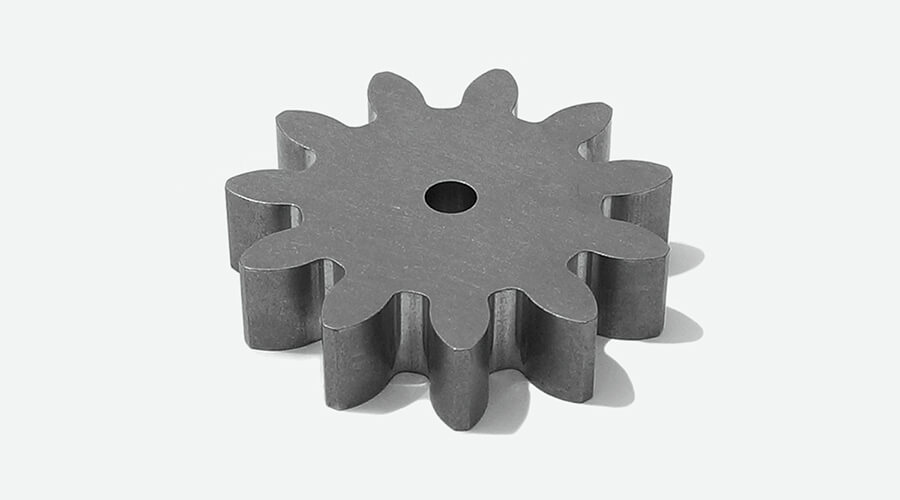
Threaded Holes
In the Protolabs automated factory, we currently support UNC and UNF threads from #2 up to 0.5 in., and metric threads from M2 to M12. Avoid modeling internal threads on your part design.
View Threaded Holes Guidelines
Radii
Sharp inside corners on a part will be radiused (rounded) as a natural result of the CNC machining process. Resulting radii will be the minimum allowable tool radius.
Text
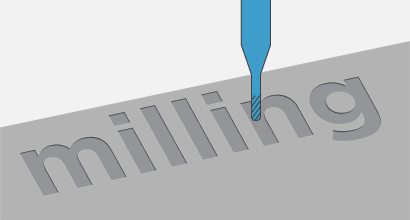
Protolabs’ fully automated factory allows you to design in engraving. Recommended text considerations for CNC milling:
- Plastic and soft metals: Minimum width of 0.018 in. (0.457mm), depth of 0.0118 in. (0.3mm). Example text size would be 16 point Arial Rounded MT font.
- Hard metals: Minimum width of 0.033 in. (0.838mm) and depth of 0.0118 in. (0.3mm). Example text size would be 22 point Arial Rounded MT font.
- If design permits it, opt for recessed text versus raised.
Protolabs also offers Laser Part Marking and Ink Stamp for our semi-automated factory capability as well as via Protolabs Network website.
| Ink Stamp | Spec |
|---|---|
| Black Ink | MIL-A-A-208, 13pt. (1/8") Characters |
| Black Epoxy Ink | MIL-A-56032, 13pt. (1/8") Characters |
| White Ink | MIL-A-A-208, 13pt. (1/8") Characters |
| White Epoxy Ink | MIL-A-56032, 13pt. (1/8") Characters |